San Marzano Tomatoes in Zone 7A — Desert Southwest
Solanum lycopersicum · Your Complete 2026 Planting Guide
Last Call for Seed Starting!
Indoor seed starting window closes in 7 days.
Start Seeds This Week
Start seeds now for transplanting later.
Or Wait for Starts
If you don’t want to start seeds, starts will be available around April 8.
How to Plant San Marzano Tomatoes in Zone 7A — Desert Southwest
Here are all your options for getting san marzano tomatoes in the ground, from the easiest method to more advanced approaches.
Start Seeds Indoors
RecommendedMid February through mid March
around February 25
Then transplant: Early April through early May
Start seeds 6-8 weeks before transplanting outdoors.
Buy Starts
Works WellEarly April through early May
around April 8
Plant purchased starts after last frost (March 25).
Direct Sow Seeds
ChallengingDirect sowing is not typical for San Marzano Tomatoes.
Transplant Outdoors
Timing InfoEarly April through early May
around April 8
Wait until nighttime temperatures stay above 50°F.
You have a nice window — no need to rush.
Overview
San Marzano tomatoes bring authentic Italian flavor to your Desert Southwest garden with their distinctive elongated shape and sweet, low-acid taste perfect for sauces and paste. These prized paste tomatoes thrive in our Zone 7A climate when you work with our two growing seasons rather than against our extreme summer heat. The payoff is substantial – homegrown San Marzanos have a complex, rich flavor that makes store-bought tomatoes taste like cardboard.
Our 230-day growing season gives you plenty of time to nurture these beauties from seed to harvest, but timing is everything in desert gardening. While our extreme heat and arid conditions require some planning, San Marzanos actually benefit from our intense sun and low disease pressure. Start them early enough to beat the worst summer heat, and you'll enjoy fresh paste tomatoes through our extended fall season.
Starting Seeds Indoors
You'll need to start San Marzano seeds indoors mid-February through mid-March, about 6 weeks before your planned transplant date. Our very early spring character means you can get seedlings established while outdoor temperatures are still mild. Fill seed trays with quality seed-starting mix and plant seeds about ¼ inch deep.
Keep your seed trays warm (70-75°F) and under grow lights or in a sunny south-facing window. The combination of warmth and light triggers reliable germination in 7-10 days. Bottom watering works best – place trays in a shallow pan of water and let the soil absorb moisture from below rather than watering from above, which can disturb seeds.
Once seedlings develop their first true leaves, thin to the strongest plant per cell. Keep them under lights or in bright windows, maintaining consistent moisture but never soggy conditions. By transplant time, you'll have sturdy 4-6 inch seedlings ready for our desert conditions.
Transplanting Outdoors
Plan to transplant your San Marzano seedlings early April through early May when nighttime temperatures consistently stay above 50°F. Our last frost typically occurs around late March, but a warm spell followed by a cold snap can still threaten tender transplants. Watch the 10-day forecast and be prepared to protect plants if temperatures drop unexpectedly.
Harden off seedlings gradually over one week by placing them outside for increasing periods daily, starting with 2-3 hours in filtered sunlight. This acclimates them to outdoor conditions including wind and temperature fluctuations. Desert Southwest spring weather can shift quickly, so monitor your plants during this transition period.
Space San Marzano plants 24-36 inches apart to ensure good air circulation, which becomes critical as summer approaches. Plant them slightly deeper than they were in their containers, burying about two-thirds of the stem to encourage strong root development. Water thoroughly after transplanting and provide temporary shade cloth if daytime temperatures already exceed 85°F.
Watering San Marzano Tomatoes in Zone 7A (Desert Southwest)
San Marzanos have high water needs and zero drought tolerance, making consistent irrigation your top priority in our arid climate. These paste tomatoes are particularly prone to blossom end rot when moisture fluctuates, so establishing a reliable watering routine prevents this frustrating problem. Check soil moisture using the finger test – stick your finger 2 inches into the soil near the plant base.
During spring establishment, provide about 1 inch of water weekly through deep, infrequent watering sessions. As summer heat builds and temperatures reach our typical 105°F highs, increase to 2-3 inches weekly, always watering at the base rather than overhead. Our arid conditions mean water evaporates quickly, and overhead watering in low humidity can stress plants unnecessarily.
The monsoon season brings relief but also challenges – sudden heavy rains after drought periods can trigger blossom end rot and fruit splitting. During active monsoon periods, reduce supplemental watering but resume immediately when rains stop. Mulch heavily around plants with wood chips or shredded leaves to retain moisture and moderate soil temperature fluctuations.
Signs of underwatering include wilting during the heat of the day (normal) that doesn't recover by evening, and brown, papery spots on fruit bottoms. Overwatering shows up as yellowing lower leaves and soggy soil that doesn't dry between waterings. In our extreme heat, err on the side of more water rather than less.
Supporting Your San Marzano Tomatoes
San Marzano tomatoes are vigorous indeterminate varieties that easily reach 6-8 feet tall with heavy fruit clusters, demanding strong, tall support systems. Install sturdy tomato cages (at least 6 feet tall) or wooden stakes at planting time rather than waiting – disturbing established roots in our hard desert soil risks plant damage.
For stake systems, use 8-foot stakes driven 18 inches deep, giving you 6+ feet of above-ground support. Tie the main stem loosely every 12-18 inches as it grows, using soft material like cloth strips or tomato ties. Our intense sun and occasional strong winds during monsoon season put extra stress on support systems, so choose materials that won't degrade quickly.
Cages work well if you can find tall, sturdy ones with wide openings for easy harvesting. The cone-shaped wire cages from garden centers typically aren't strong enough for San Marzanos in our conditions. Consider building your own from concrete reinforcing wire for a support system that lasts multiple seasons.
Pruning & Maintaining San Marzano Tomatoes
Remove suckers and lower branches throughout the growing season to maintain good airflow and direct energy into fruit production. Suckers are the shoots that emerge between the main stem and branches – pinch these out when they're small and tender, ideally in early morning when plants are fully hydrated.
Strip off lower leaves and branches that touch the soil to prevent soil-borne diseases from splashing up during watering. As plants grow taller, continue removing lower growth up to the first fruit cluster. This opens up airflow around the base, particularly important in our low-humidity environment where fungal issues develop differently than in humid climates.
As summer temperatures peak and stress increases, moderate your pruning to leave some leaf cover for fruit protection against sunscald. In late summer (around mid-August), top the plants by removing growing tips to redirect energy into ripening existing fruit before our first frost arrives in early November.
🧪Fertilizing San Marzano Tomatoes
Feeding Schedule
Organic Fertilizer Options
Harvest Time
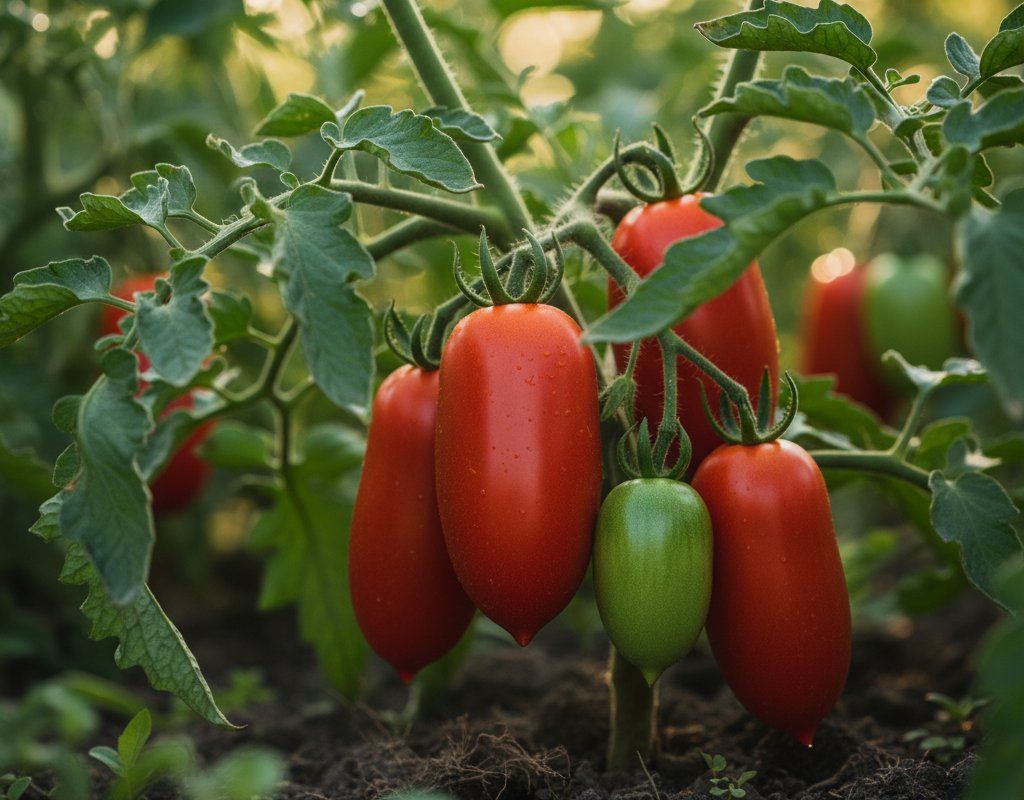
Expect your first San Marzano harvest late June through mid-August, about 80 days from transplanting. These distinctive elongated tomatoes develop their characteristic shape early but need time to achieve full flavor. Ripe San Marzanos are deep red, firm but yielding to gentle pressure, and detach easily from the stem with a slight twist.
The fruit's bottom (blossom end) should be fully colored rather than green or yellow, and the shoulders near the stem should have lost their green coloring. Unlike round tomatoes, San Marzanos maintain their elongated shape throughout ripening. Harvest in early morning when fruits are cool and fully hydrated for best flavor and storage life.
San Marzanos produce continuously until frost, so check plants every 2-3 days during peak season. Regular harvesting encourages continued production – leaving overripe fruit on the vine signals the plant to stop producing. During extreme heat periods above 100°F, fruits may develop slowly or have reduced flavor, but production picks up again as temperatures moderate.
As your first frost approaches in early November, harvest all remaining fruit regardless of ripeness. Green San Marzanos ripen well indoors when stored in a warm location out of direct sunlight. Wrap individual fruits in newspaper or place in paper bags to extend ripening over several weeks, giving you homegrown tomatoes well into winter.
Common Problems in Zone 7A (Desert Southwest)
Blossom End Rot What it looks like: Dark brown or black leathery patches on the bottom (blossom end) of fruits, often affecting the first tomatoes of the season. The spots start small but can cover half the fruit, making them inedible. What causes it: Calcium deficiency triggered by inconsistent watering – the classic boom-bust cycle of drought followed by flooding that's common in desert gardening. Our extreme heat and rapid soil drying exacerbate this problem. How to fix/prevent it: Maintain consistent soil moisture through deep, regular watering and heavy mulching. Avoid over-fertilizing with nitrogen, which interferes with calcium uptake. Once you see blossom end rot, remove affected fruits immediately and focus on steady watering practices going forward.
Early Blight What it looks like: Brown spots with distinctive concentric rings (bullseye pattern) starting on lower leaves and spreading upward. Affected leaves turn yellow and drop, weakening the plant. What causes it: Fungal disease that thrives when soil splashes onto lower leaves during watering. While less common in our arid climate than humid regions, it still occurs during monsoon season or with overhead watering. How to fix/prevent it: Remove affected leaves immediately and destroy them (don't compost). Mulch heavily to prevent soil splash, water only at plant base, and ensure good air circulation through proper spacing. Copper fungicide helps slow spread if caught early.
Fusarium Wilt What it looks like: Wilting that starts on one side of the plant, then spreads. Leaves yellow from bottom up, and cutting the stem reveals brown streaking inside. What causes it: Soil-borne fungus that enters through roots and thrives in warm soil – particularly problematic in our hot desert soils. The fungus persists for years once established. How to fix/prevent it: No cure exists once plants are infected. Remove and destroy affected plants immediately. Plant only resistant varieties marked with 'F' on seed packets, rotate crops yearly, and consider soil solarization during our intense summer heat.
Desert Southwest Specific Challenges: Our extreme heat and intense UV radiation can cause sunscald on exposed fruits, appearing as white or yellow patches that later turn brown. Provide afternoon shade cloth during peak summer, and avoid over-pruning that exposes fruit clusters. The combination of our alkaline soil and inconsistent moisture from boom-bust watering cycles makes San Marzanos particularly susceptible to blossom end rot in our region.
Best Companions for San Marzano Tomatoes
Plant these nearby for healthier San Marzano Tomatoes and better harvests.
View Full Companion Planting Chart →



Companion Planting Details
Plant basil nearby for natural pest control and improved tomato flavor – the aromatic oils repel aphids and hornworms while thriving in similar growing conditions. Carrots make excellent ground-level companions, breaking up our often-compacted desert soil while their taproots access different soil layers than tomato roots. Parsley provides beneficial insect habitat and doesn't compete heavily for nutrients, while marigolds deter nematodes that can be problematic in our warm soils.
Avoid planting brassicas (cabbage, broccoli, cauliflower) near San Marzanos as they're heavy feeders competing for the same nutrients and attract different beneficial insects. Fennel secretes compounds that inhibit tomato growth, and corn creates too much shade while attracting similar pests like hornworms. In our intense desert sun, San Marzanos need every advantage they can get, so choose companions that support rather than compete with their growth requirements.
🌸Best Flowers to Plant with San Marzano Tomatoes
These flowers protect your San Marzano Tomatoes from pests and attract pollinators for better harvests.
For Pest Control

Get a Reminder When It's Time to Plant
We'll email you when key planting windows open for your zone.