Asparagus in Zone 6A — Mountain West
Asparagus officinalis · Your Complete 2026 Planting Guide
Too Late for Asparagus
Not enough growing season left (need 744 days, only 211 remain)
📊 See the math
How to Plant Asparagus in Zone 6A — Mountain West
Here are all your options for getting asparagus in the ground, from the easiest method to more advanced approaches.
Buy Starts
RecommendedEarly May
around May 1
Plant purchased starts after last frost (May 1).
Buy 1-year-old crowns (roots). Growing from seed takes 3+ years to first harvest.
Start Seeds Indoors
ChallengingThis plant is typically not started indoors.
Direct Sow Seeds
ChallengingDirect sowing is not typical for Asparagus.
Transplant Outdoors
Timing InfoEarly May
around May 1
Can tolerate light frost, but wait for soil to be workable.
Timing is critical in your zone — don’t delay!
Overview
Growing your own asparagus is one of the most rewarding things you can do in a high-altitude garden. The flavor of a spear picked just minutes before dinner is incredible, especially since our cool nights help concentrate the sugars. It's a perennial, so once you get a patch established, it comes back year after year, giving you a reliable early-season crop before most other things have even woken up.
With our short 153-day growing season, a perennial like asparagus is a smart choice. It doesn't mind our late spring frosts and actually thrives in the intense sun. The key is getting it established correctly and having patience. It's a long-term investment that pays off for decades, even with the challenges of our Mountain West climate.
Transplanting Outdoors
The best time to plant your asparagus crowns is in early May, right around our last frost date. You'll be buying one-year-old crowns, which are basically a bundle of dormant roots. Trying to start from seed here is a test of patience most of us don't have, as it adds another year or two before you can even think about harvesting.
Even though the crowns are dormant, it’s a good idea to let them adjust for a few days. I just leave the bag open in a shady, protected spot on the porch. Plant them in a trench about 6 inches deep, spacing the crowns 18 to 24 inches apart. Be ready with frost cloth or a bucket, as we often get unexpected cold snaps or even a bit of snow in May.
Watering Asparagus in Zone 6A (Mountain West)
Watering asparagus here is a balancing act. Our intense sun and low humidity mean the soil surface dries out fast, but these plants develop deep roots that find moisture further down. For the first year or two, you'll need to water consistently to help them get established, providing about an inch of water per week.
Use the finger test: stick your finger two inches into the soil near the plant. If it's dry, it's time to water. Once your patch is mature (year three and beyond), it becomes quite drought-tolerant. You might only need to give it a deep soak every couple of weeks during the driest parts of summer, especially if you haven't had any of our infrequent rain.
Always water at the base of the plant. Our dry air means we have very low disease pressure, and we want to keep it that way. Overhead watering isn't necessary and can invite issues, even in our climate. A thick layer of straw or wood chip mulch is a huge help; it keeps the soil moisture even and protects the roots from our intense high-altitude sun.
Pruning & Maintaining Asparagus
With asparagus, what you don't prune is more important than what you do. After you finish your harvest period, let the remaining spears grow up into tall, feathery ferns. This is non-negotiable. Those ferns are the plant's solar panels, gathering energy from our intense sun all summer to feed the root crown for next year's crop.
Do not cut the ferns down while they are green. They will stay green through summer and start to yellow after our first hard frost in early October. You have two choices for cleanup: you can cut the dead, brown ferns down to the ground in late fall, or you can leave them up over winter for a bit of snow-catch and cut them down in early spring before the new spears emerge.
🧪Fertilizing Asparagus
Feeding Schedule
Organic Fertilizer Options
Harvest Time
Patience is the name of the game. Do not harvest anything the first year you plant the crowns. The second year, you can take just one or two spears per plant. By the third year, you're ready for a real harvest, which typically starts for us in late April and can run for about 6 to 8 weeks.
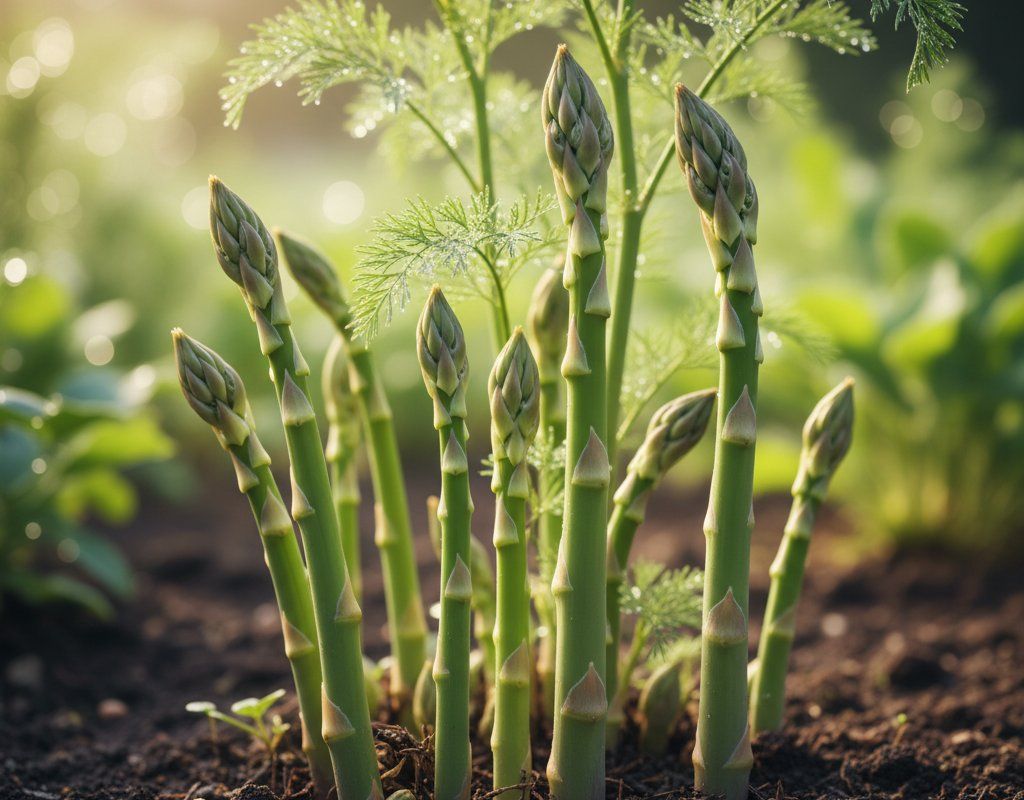
Harvest spears when they are about 6 to 8 inches tall and the tips are still tight, about the thickness of your pinky finger or larger. You can snap them off at the base or cut them with a knife just below the soil line. Check the patch every day or two, as they can grow incredibly fast in the spring sunshine.
Stop harvesting when the new spears that emerge are thin, about the width of a pencil. This is the plant's signal that its energy reserves are running low. Let all subsequent spears grow into ferns. This ensures a healthy, productive patch for the following spring.
Common Problems in Zone 6A (Mountain West)
- What it looks like: Small, dark beetles with cream-colored spots on their backs. You'll also see their dark, sticky eggs lined up on the spears and ferns. Larvae are gray and slug-like. They chew on spears, causing browning and bending, and strip the foliage off ferns.
- What causes it: These pests overwinter in garden debris and emerge in spring to feed on the new growth. They're just a common garden pest, and our climate doesn't really deter them.
- How to fix/prevent it: Hand-pick beetles and larvae and drop them into soapy water. In our dry climate, a strong spray of water can sometimes knock them off. Clean up all the dead fern debris thoroughly in fall or early spring to reduce overwintering sites.
- What it looks like: Yellowing, wilting, and stunted ferns that don't look vigorous. The base of the stalk might be reddish-brown and rotten. The whole plant just looks weak.
- What causes it: Poorly draining soil. Our native soils are often heavy clay or compacted, and asparagus crowns will rot if they sit in waterlogged soil. This is a soil structure problem, not a disease problem caused by humidity.
- How to fix/prevent it: Prevention is key. When you first plant, amend your soil heavily with compost to improve drainage. Planting in raised beds is an excellent solution for our region to ensure the crowns stay out of soggy spring soil during snowmelt.
- What it looks like: The spears emerging from the ground are consistently spindly and thin, like a pencil or even smaller.
- What causes it: Usually, this is a sign of an immature plant or, more commonly, over-harvesting in previous years. If you harvest for too long, the crown doesn't have enough energy to produce thick spears the following season.
- How to fix/prevent it: Stick to the harvest rules. Don't harvest the first year, harvest very lightly the second, and never harvest for more than 8 weeks on a mature patch. If you see thin spears, stop harvesting immediately and let everything fern out to recharge the crown for next year.
Mountain West Specific Challenges Our low humidity is a huge advantage, making fungal diseases almost a non-issue for asparagus. The intense sun fuels vigorous fern growth, which is great for the plant's energy stores. However, that same sun, combined with our dry air, can dry out the soil quickly, so mulch is important. Hail is always a risk and can shred the ferns mid-season, which can impact the following year's harvest, but there's not much to do about that besides hope for the best.
Best Companions for Asparagus
Plant these nearby for healthier Asparagus and better harvests.
View Full Companion Planting Chart →




Companion Planting Details
Good companion planting can help your asparagus patch thrive. Tomatoes are a great partner because they are planted later in the season and their large, bushy growth can help shade the soil as summer progresses. They also release a chemical that can deter the asparagus beetle. Parsley and basil are also good neighbors that are thought to repel some pests.
On the other hand, keep anything from the onion family—garlic, onions, shallots—far away from your asparagus patch. They compete for the same nutrients and can release compounds into the soil that inhibit the growth of the asparagus. It's best to give your asparagus its own dedicated bed, but if you must interplant, choose its friends wisely.
🌸Best Flowers to Plant with Asparagus
These flowers protect your Asparagus from pests and attract pollinators for better harvests.
For Pest Control


For Pollinators


Get a Reminder When It's Time to Plant
We'll email you when key planting windows open for your zone.