Asparagus in Zone 6B — Great Plains
Asparagus officinalis · Your Complete 2026 Planting Guide
Too Late for Asparagus
Not enough growing season left (need 744 days, only 235 remain)
📊 See the math
How to Plant Asparagus in Zone 6B — Great Plains
Here are all your options for getting asparagus in the ground, from the easiest method to more advanced approaches.
Buy Starts
RecommendedEarly to mid April
around April 10
Plant purchased starts after last frost (April 10).
Buy 1-year-old crowns (roots). Growing from seed takes 3+ years to first harvest.
Start Seeds Indoors
ChallengingThis plant is typically not started indoors.
Direct Sow Seeds
ChallengingDirect sowing is not typical for Asparagus.
Transplant Outdoors
Timing InfoEarly to mid April
around April 10
Can tolerate light frost, but wait for soil to be workable.
Timing is critical in your zone — don’t delay!
Overview
Nothing beats the taste of asparagus fresh from your own garden, especially after a long Plains winter. It's a perennial, so once you get it established in our fertile prairie soil, it comes back year after year. That first harvest in spring is a real reward, and it's versatile enough for just about any meal.
Our climate throws a lot at us, from late freezes to sudden summer heat, but asparagus is tough. Because it's a cool-season perennial, it does most of its growing before the worst of the summer heat and wind really kicks in. With a growing season of around 198 days, we have a good window to get it established and enjoy a harvest.
Transplanting Outdoors
You’ll want to plant one-year-old crowns, which are essentially the root systems. Growing from seed is an exercise in patience, taking over three years for a first harvest. The best time to get those crowns in the ground is from early to mid-April.
Before you plant, spend about a week hardening them off. Just set the crowns outside in a sheltered spot for a few hours the first day, gradually increasing the time they spend outdoors. This helps them adjust to our intense sun and unpredictable wind.
When you're ready to plant, dig a trench and place the crowns 18 to 24 inches apart. This spacing seems like a lot, but those ferns get big and need the airflow, which is critical here. Be ready for our typical spring temperature swings; the ground will protect the crowns, but a late cold snap can happen.
Watering Asparagus in Zone 6B (Great Plains)
Watering asparagus here is a balancing act. For the first year or two, you need to be consistent to get the roots established. Aim for about an inch of water per week, especially if we're in one of our dry spells. Use the finger test—if the soil is dry two inches down, it's time to water.
Once the patch is mature, its deep roots make it remarkably drought-tolerant, which is a huge advantage in our often-dry summers. During the peak heat of July and August, you might still need to give it a deep soak every couple of weeks if we haven't had any rain. That intense sun and wind can dry out the topsoil fast.
Always water at the base of the plants. Overhead watering is just asking for evaporation in our low-to-moderate humidity, and while we don't have the disease pressure of wetter climates, keeping the ferns dry is still good practice. A layer of straw or grass clipping mulch helps hold that precious moisture in the soil against the summer sun.
Pruning & Maintaining Asparagus
With asparagus, what you *don't* do is as important as what you do. After your harvest period is over, let the remaining spears grow into tall, feathery ferns. Don't cut them down. These ferns are the plant's solar panels, gathering energy all summer to feed the root crown for next year's crop.
The only real pruning comes at the end of the season. Once our first hard frost hits, usually around late October, the ferns will turn yellow and die back. You can cut them down to the ground then, or leave them up over winter for a bit of snow-catch and cut them in early spring before new growth starts.
The most critical part of "pruning" is knowing when to stop harvesting. Never take spears for more than about eight weeks. If you push it too long, you weaken the plant for the following year.
🧪Fertilizing Asparagus
Feeding Schedule
Organic Fertilizer Options
Harvest Time
Patience is key here. You won't harvest anything the first year you plant the crowns, and only a very light harvest the second year. By the third spring, you're ready for a real harvest, which typically starts for us in early April and can run for several weeks.
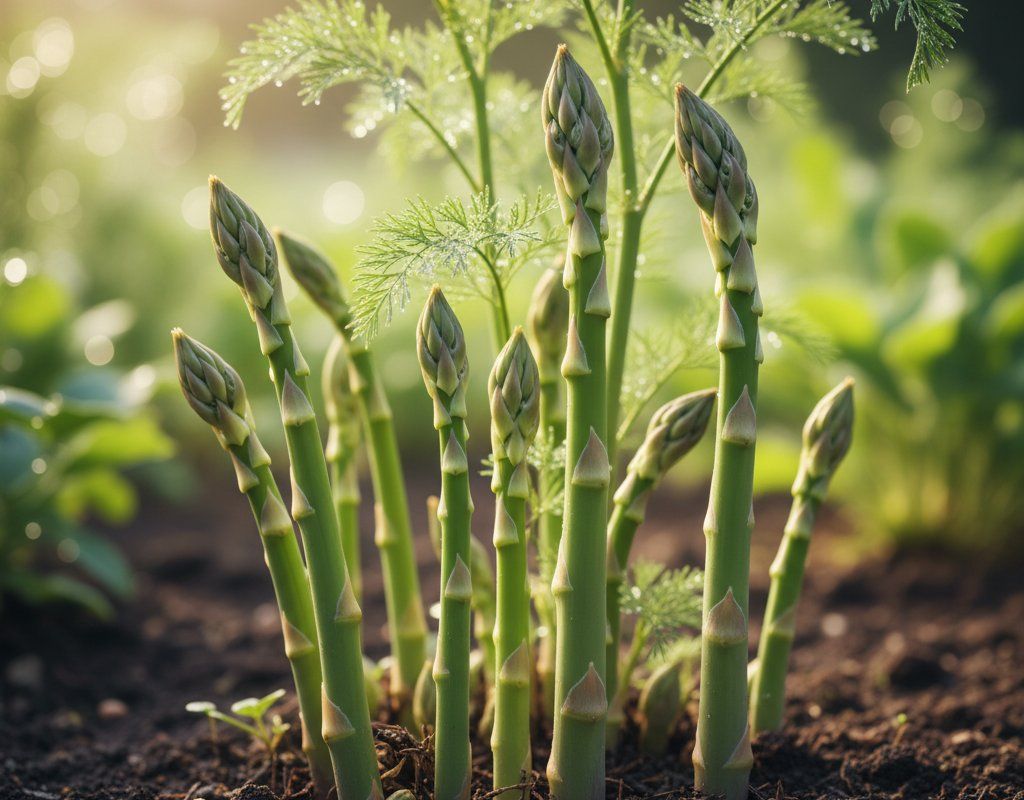
Harvest spears when they are about 6 to 8 inches tall and the tips are still tight, like a closed bud. If you let them go too long, the tips will start to open up and the spear gets woody. Simply snap the spear off at ground level; it should break cleanly.
Keep harvesting all new spears that reach the right size for about six to eight weeks. When the new spears start coming up thin, about the diameter of a pencil, that's the signal to stop. Let these thin spears grow into ferns to power the plant for next year. As our first frost approaches in late October, the plant will go dormant, and the harvest season is definitively over.
Common Problems in Zone 6B (Great Plains)
- What it looks like: You'll see small, dark beetles with cream-colored spots on the ferns. They lay dark, oblong eggs in rows on the spears. The larvae are grayish grubs that chew on the ferns.
- What causes it: These beetles are a common pest. They overwinter in garden debris and emerge in spring right when the spears do.
- How to fix/prevent it: Hand-pick the beetles and drop them in soapy water first thing in the morning when they're sluggish. For heavy infestations, insecticidal soap can work. Clean up all the dead fern debris in the fall or early spring to remove their overwintering sites.
- What it looks like: The ferns will look weak, yellow, and stunted. New spears might fail to emerge or be very thin. If you dig up a crown, it will be mushy and brown instead of firm and white.
- What causes it: This is almost always caused by poor drainage. Our prairie soil can be heavy clay, and if water sits around the crowns, especially during a wet spring or from overwatering, rot sets in.
- How to fix/prevent it: Prevention is everything. Amend your soil heavily with compost before planting to improve drainage. Planting in raised beds is an excellent solution for our heavy soils. Don't overwater established plants.
- What it looks like: Instead of thick, vigorous spears, the plant sends up only skinny, pencil-thin ones, even at the start of the harvest season.
- What causes it: This is a sign of a stressed, underfed crown. The most common cause is harvesting for too long in the previous season, not allowing enough ferns to grow and replenish the plant's energy. Drought stress during the summer can also contribute.
- How to fix/prevent it: Stick to a strict 6-8 week harvest window. After that, stop cutting and let all spears, no matter the size, grow into ferns. Ensure the patch gets adequate water during our hot, dry summer months and feed it with compost in the spring.
Great Plains Specific Challenges Our intense sun is great for fern growth, but the combination of summer heat and wind can stress the plants, making deep, infrequent watering crucial. Hail is always a risk and can shred the ferns mid-season, reducing the plant's ability to store energy. And while our low humidity reduces fungal disease, that same dryness, paired with wind, demands we pay close attention to soil moisture.
Best Companions for Asparagus
Plant these nearby for healthier Asparagus and better harvests.
View Full Companion Planting Chart →




Companion Planting Details
Good companion planting can help your asparagus patch thrive in our Plains conditions. Planting tomatoes nearby is a classic pairing; tomatoes repel the asparagus beetle, and asparagus is said to deter nematodes that can bother tomatoes. It's a mutually beneficial relationship.
Herbs like parsley and basil are also excellent neighbors. They are thought to deter some pests with their strong scent. Just be sure to give everything enough space so the large asparagus ferns don't shade out their shorter companions in the intense summer sun. Avoid planting anything from the onion family, like garlic or onions, nearby. They release compounds into the soil that can inhibit the growth of asparagus.
🌸Best Flowers to Plant with Asparagus
These flowers protect your Asparagus from pests and attract pollinators for better harvests.
For Pest Control


For Pollinators


Get a Reminder When It's Time to Plant
We'll email you when key planting windows open for your zone.