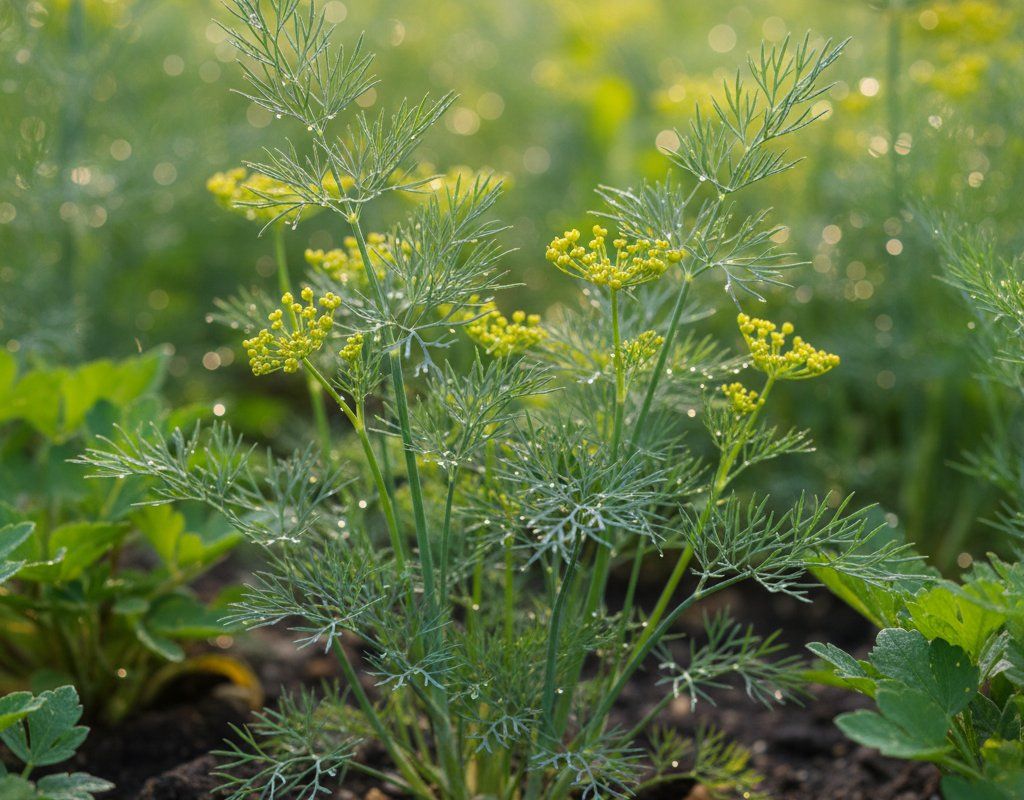
Dill in Zone 3B — Great Plains
Anethum graveolens · Your Complete 2026 Planting Guide
Planning Ahead — Great!
You’re ahead of the season. Here’s when to start.
Mark Your Calendar
How to Plant Dill in Zone 3B — Great Plains
Here are all your options for getting dill in the ground, from the easiest method to more advanced approaches.
Direct Sow Seeds
RecommendedMid May through late July
around May 20
Consider succession planting every 2-3 weeks for continuous harvest.
Dill has a taproot and prefers direct sowing, but transplants work if handled carefully.
Start Seeds Indoors
RecommendedLate April through mid May
around April 29
Then transplant: Late May through early July
Start seeds 4-6 weeks before transplanting outdoors.
Buy Starts
Works WellLate May through early July
around May 27
Plant purchased starts after last frost (May 20).
Transplant Outdoors
Timing InfoLate May through early July
around May 27
Can tolerate light frost, but wait for soil to be workable.
You have a nice window — no need to rush.
Fall Planting
Late July through mid August
August 4 ideal · Direct sow for fall harvest
Plant a second crop in mid-summer for fall harvest. Dill actually prefers the cooling temperatures of fall.
Overview
Dill brings that distinctive feathery texture and bright, tangy flavor that transforms everything from potato salad to pickles. In our Great Plains zone 3B, dill thrives in our intense sunshine and fertile prairie soil, giving you both fresh leaves for cooking and seeds for pickling during our productive summer months. The herb's quick 40-day maturity means you can succession plant every few weeks to keep fresh dill coming all season long.
Our variable spring weather and short 118-day growing season might seem challenging for herb growing, but dill actually works well with our climate patterns. The key is understanding that dill prefers our cooler spring and early summer conditions over the peak heat, so timing your plantings right keeps you in fresh herbs from late June through first frost in mid-September.
Starting Seeds Indoors
Starting dill indoors makes sense when you want earlier harvests or more control over timing in our unpredictable Great Plains spring. Sow seeds in individual cells or small pots from late April through mid-May, about 4 weeks before your planned transplant date. Dill develops a taproot quickly, so avoid large seed trays where roots get tangled.
Keep your seed trays warm (around 65-70°F) and provide good light once seedlings emerge. Bottom watering works well for dill seedlings since they're prone to damping off if kept too wet on top. Given our variable spring weather patterns, indoor starting lets you get plants ready while outside conditions are still swinging between warm spells and potential late frosts.
The main downside is that dill prefers direct seeding due to its taproot, so transplant success depends on careful handling. Indoor starting works best when you need precise timing or want to extend your growing season at both ends.
Transplanting Outdoors
Move your indoor-started dill seedlings outdoors from late May through early July, after any risk of hard frost has passed. Spend a full week hardening them off gradually – our intense Plains sunshine and variable spring winds can shock tender seedlings if you rush this step. Start with just a few hours of morning sun, gradually increasing exposure over 7 days.
Plant seedlings 12 inches apart in your prepared bed, handling the root ball carefully to avoid disturbing that important taproot. Our fertile prairie soil usually provides good drainage, but if you're dealing with heavy clay, work in some compost to improve soil structure.
Watch for those temperature swings that hit us in late May and early June. Keep row cover handy for unexpected cold snaps, and be ready to provide some afternoon shade if we get an early heat wave. Your transplants will establish better during those mild stretches between weather extremes.
Direct Sowing
Direct sowing is actually dill's preferred method since it avoids any root disturbance. You can sow from mid-May through late July, giving you multiple planting windows throughout our growing season. Wait until soil temperatures reach at least 60°F consistently – usually by mid to late May in our area.
Prepare your bed by working the prairie soil lightly to create a smooth seedbed. Sow seeds ¼ inch deep and about 6 inches apart, then thin to 12-inch spacing once seedlings emerge. The soil should be consistently moist but not waterlogged during germination, which typically takes 7-10 days in warm weather.
Direct sowing works particularly well for succession plantings through summer. Plant every 3-4 weeks through late July to ensure continuous harvests. The later sowings actually perform better during our hot summers since they'll be maturing during cooler fall weather rather than peak heat.
Watering Dill in Zone 3B (Great Plains)
Dill needs consistent moisture but won't tolerate waterlogged conditions, which makes it well-suited to our variable precipitation patterns. During our hot summers with typical highs around 93°F, plan to provide about 1 inch of water per week when rainfall doesn't deliver. The key is keeping soil evenly moist rather than letting it swing between bone-dry and saturated.
Check moisture levels using the finger test – stick your finger 2 inches down into the soil near your plants. If it's dry at that depth, it's time to water. In our low-to-moderate humidity, soil dries out faster than in more humid regions, especially with our persistent winds. Water at the base of plants rather than overhead to make every drop count and avoid water waste.
Watch for early signs of stress during heat waves. Dill that's consistently dry will bolt quickly, sending up flower stalks and making the leaves bitter. Conversely, overwatered dill develops weak, pale growth and may rot at soil level. During our variable rainfall periods, adjust your watering schedule based on what nature provides.
A thin layer of organic mulch helps moderate soil moisture and temperature swings, but keep it light in our climate. Too much mulch can hold excess moisture during wet periods or create habitat for pests during dry spells.
🧪Fertilizing Dill
Feeding Schedule
Organic Fertilizer Options
Harvest Time
You can start harvesting dill's feathery leaves about 40 days after planting, typically from late June onward depending on your planting timing. Cut individual fronds at the base or snip what you need from the outer portions of the plant. The leaves have the best flavor before the plant flowers, so harvest regularly to keep plants producing.
For dill seeds, let some plants go to flower and wait until the umbrella-shaped flower heads turn brown and dry – usually in late summer. Cut the entire head on a dry morning and shake the seeds into a paper bag, or hang bundles upside down to dry completely before collecting seeds.
Keep succession planting every 3-4 weeks through late July to maintain steady harvests. Each planting gives you about 4-6 weeks of prime leaf production before flowering. This strategy works particularly well in our climate since fall plantings mature during cooler weather and produce better quality leaves than those struggling through peak summer heat.
As first frost approaches in mid-September, harvest all remaining plants completely. You can dry the leaves or freeze them in ice cube trays with a little water for winter use, and collect any mature seeds for next year's plantings.
Common Problems in Zone 3B (Great Plains)
Bolting shows up as a sudden flower stalk shooting up from the center of your dill plant, with leaves becoming sparse and bitter-tasting. This premature flowering happens when plants experience stress from heat, drought, or extreme temperature swings – all common in our Great Plains climate. Once that central stalk appears, leaf production essentially stops as the plant focuses on seed production. Prevent bolting by succession planting every 3-4 weeks, keeping soil consistently moist during heat waves, and choosing plantings that mature during cooler periods. Late spring and early fall plantings perform much better than midsummer sowings in our climate.
Aphids appear as clusters of tiny green, black, or white soft-bodied insects on stems and leaf undersides, often leaving behind sticky honeydew residue and causing new growth to curl or distort. Our hot, dry summers create ideal conditions for aphid population explosions, especially when plants are stressed from inconsistent watering. Combat aphids with strong water sprays from your hose, which works particularly well in our low-to-moderate humidity since leaves dry quickly. Encourage beneficial insects like ladybugs and lacewings, and use insecticidal soap for heavy infestations.
Caterpillars from various moths chew holes in dill foliage, with the most common being parsley worms (black, green, and yellow striped) that can defoliate entire plants quickly. Hand-picking works well for small numbers, but check plants daily during peak summer months when caterpillar activity is highest. Bt (Bacillus thuringiensis) provides organic control for serious infestations, and encouraging birds with nearby habitat helps keep populations manageable.
Great Plains Specific Challenges: Our extreme temperature swings stress dill plants and trigger early bolting, while persistent winds can dry out soil faster than expected. The combination of intense sunshine and variable rainfall means you'll need to monitor soil moisture more closely than gardeners in more stable climates, and succession planting becomes essential for continuous harvests through our relatively short growing season.
Best Companions for Dill
Plant these nearby for healthier Dill and better harvests.


Keep Away From
Companion Planting Details
Dill makes an excellent companion for cool-season crops that appreciate similar growing conditions in our Plains climate. Plant it near cabbage family crops – the dill attracts beneficial wasps that prey on cabbage worms, while providing some light shade during hot afternoons. Cucumbers benefit from dill's ability to repel cucumber beetles and aphids, plus both crops prefer consistent moisture levels. Onions and dill work well together since onions help deter many flying pests, and their different root depths mean they don't compete for nutrients in our fertile prairie soil.
Avoid planting dill near carrots since they can cross-pollinate and affect flavor, and both have similar feathery foliage that makes pest identification difficult. Tomatoes and dill don't pair well either – tomatoes prefer more heat and deeper, less frequent watering than dill can handle, and the size difference means dill gets shaded out just when it needs full sun during our short growing season.
🌸Best Flowers to Plant with Dill
These flowers protect your Dill from pests and attract pollinators for better harvests.
For Pest Control




Get a Reminder When It's Time to Plant
We'll email you when key planting windows open for your zone.