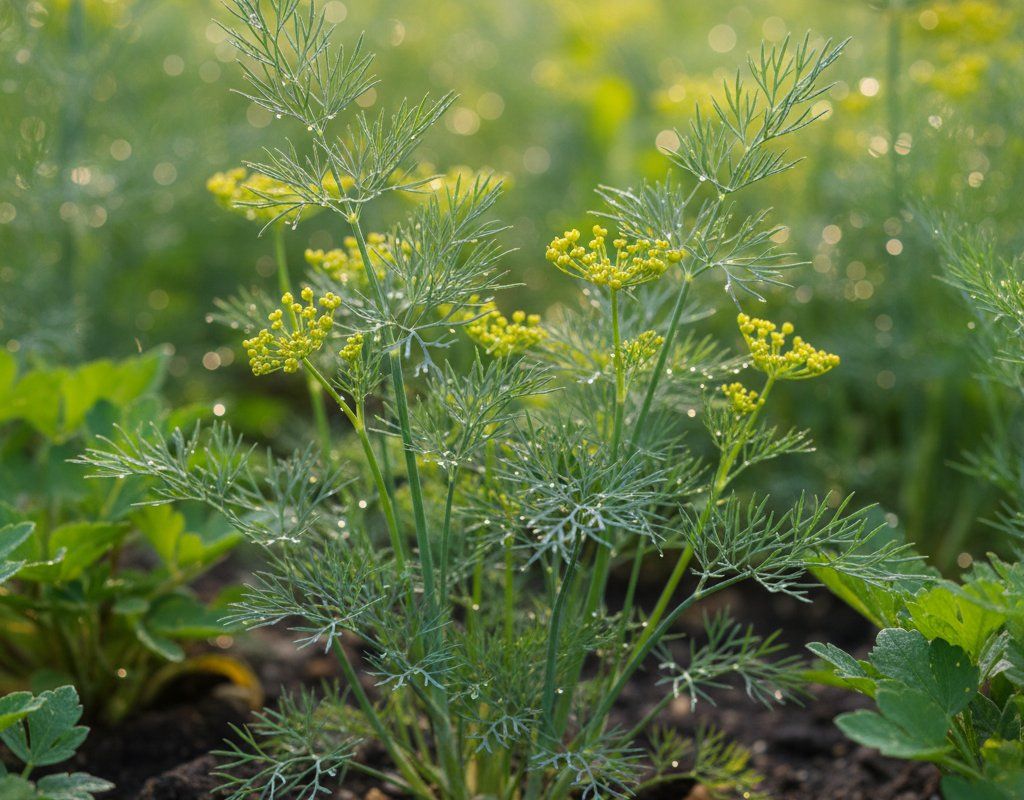
Dill in Zone 5A — Northeast
Anethum graveolens · Your Complete 2026 Planting Guide
Planning Ahead — Great!
You’re ahead of the season. Here’s when to start.
Mark Your Calendar
How to Plant Dill in Zone 5A — Northeast
Here are all your options for getting dill in the ground, from the easiest method to more advanced approaches.
Direct Sow Seeds
RecommendedEarly May through early August
around May 1
Consider succession planting every 2-3 weeks for continuous harvest.
Dill has a taproot and prefers direct sowing, but transplants work if handled carefully.
Start Seeds Indoors
RecommendedEarly to late April
around April 10
Then transplant: Early May through mid June
Start seeds 4-6 weeks before transplanting outdoors.
Buy Starts
Works WellEarly May through mid June
around May 8
Plant purchased starts after last frost (May 1).
Transplant Outdoors
Timing InfoEarly May through mid June
around May 8
Can tolerate light frost, but wait for soil to be workable.
You have a nice window — no need to rush.
Fall Planting
Early August through early September
August 20 ideal · Direct sow for fall harvest
Plant a second crop in mid-summer for fall harvest. Dill actually prefers the cooling temperatures of fall.
Overview
Dill transforms from a simple herb into garden gold here in the Northeast, where our moderate summer temperatures and cool nights create ideal conditions for this feathery annual. You'll harvest fresh fronds for pickling those late-summer cucumbers, season roasted vegetables from your fall garden, and collect seeds before our first frost in early October. The flavor stays sharp and clean in our climate, without the bitter bite that hot summers can bring.
Our 153-day growing season gives you plenty of time to succession plant dill every 2-3 weeks from late spring through late summer. Yes, we deal with late spring frosts and that inevitable early October freeze, but dill's hardy nature handles cool weather beautifully — it's actually one of the easier herbs to time right in our zone.
Starting Seeds Indoors
Starting dill indoors makes sense when you want the earliest possible harvest or need transplants for specific garden spots. Start seeds in early to late April, about 4 weeks before you plan to transplant them outside. Our late Northeast springs mean indoor starting gives you a solid head start on the growing season.
Set up seed trays in a warm spot (65-70°F) with good light — a sunny south window works, or use grow lights 12-14 hours daily. Dill seeds germinate in 7-14 days with consistent moisture. Bottom watering works best here; pour water into the tray rather than watering from above to prevent damping off in our often-humid spring conditions.
Keep in mind that dill develops a taproot quickly and prefers not to be disturbed. If you start indoors, use deeper containers and plan to transplant within 4-5 weeks before the roots get too established.
Transplanting Outdoors
Move your indoor-started dill seedlings outside from early May through mid-June, after our last frost danger passes in early May. The key timing factor here in the Northeast is waiting for soil temperature to reach 60°F consistently — usually by mid-May in most areas.
Harden off seedlings gradually over 7 days, starting with 2-3 hours outside in filtered sun and building up to full exposure. Our spring weather swings can shock tender plants, so this gradual process prevents transplant stress. Space plants 12 inches apart in your herb garden or veggie bed.
Handle the root ball gently when transplanting — dill's taproot doesn't appreciate rough treatment. Plant at the same depth as in the containers, water well, and provide some protection if late cold snaps threaten. A row cover or even overturned milk jugs work well for unexpected temperature drops.
Direct Sowing
Direct sowing is actually dill's preferred method, and it works beautifully in our Northeast climate. Sow seeds from early May through early August, giving yourself multiple harvests throughout our growing season. The soil should be workable and at least 60°F — usually achievable by mid-May here.
Prepare your planting area by working compost into that rocky New England soil we know so well. Dill tolerates poor soil but grows more vigorously with some organic matter added. Scatter seeds thinly and cover with ¼ inch of soil, spacing eventual plants about 12 inches apart.
The main advantage of direct sowing is that dill's taproot develops undisturbed, leading to stronger, more drought-tolerant plants. Seeds germinate in 7-14 days in our moderate spring temperatures. For continuous harvest, make successive sowings every 2-3 weeks through late July.
Watering Dill in Zone 5A (Northeast)
Dill needs moderate, consistent moisture — about 1 inch per week between rain and irrigation. Our Northeast summers typically provide 3-4 inches monthly through natural rainfall, but you'll need to supplement during dry spells. Check soil moisture with the finger test: if it's dry 2 inches down, it's time to water.
Water at the base of plants rather than overhead, especially during our humid summer periods. Overhead watering in high humidity encourages fungal issues that can plague herbs. A soaker hose or drip irrigation works perfectly for herb beds, delivering water right where roots need it.
Watch for signs of water stress, which causes dill to bolt prematurely to seed. Wilted foliage in the morning (not just afternoon heat stress) signals underwatering. Conversely, yellowing lower leaves and sluggish growth suggest overwatering — easier to do in our clay-heavy soils that drain slowly.
Apply 2-3 inches of organic mulch around plants to retain moisture and regulate soil temperature. Our moderate summer highs (around 82°F) rarely stress dill if soil moisture stays consistent, but those occasional heat waves combined with dry conditions will send plants straight to flower.
🧪Fertilizing Dill
Feeding Schedule
Organic Fertilizer Options
Harvest Time
Your first dill harvest comes about 40 days after planting, typically in early June if you started in early May. You'll continue harvesting fresh fronds through early October until our first hard frost ends the party. This gives you a solid 4-month harvest window with succession planting.
Start snipping the feathery foliage when plants reach 6-8 inches tall, cutting outer stems first and leaving the center growing point intact. Harvest in the morning after dew dries but before afternoon heat for the best flavor concentration. Cut stems about 2 inches above soil level to encourage new growth.
For dill seed harvest, let some plants flower and develop seed heads — they'll turn from green to brown as they mature in late summer. When seed heads feel dry and rattle slightly, cut the entire stem and hang it upside down in a paper bag. Seeds will drop naturally as they finish drying.
Keep harvesting leaves regularly to delay flowering and extend your fresh dill season. However, once our days shorten significantly in late August, plants naturally want to set seed regardless of harvesting frequency. Plan your final succession sowing for early August to have tender young plants producing into fall.
Common Problems in Zone 5A (Northeast)
Bolting shows up as a sudden tall flower stalk shooting from the center of your plant, with leaves becoming increasingly sparse and bitter. You'll notice the plant's energy shifting entirely to seed production rather than the tender foliage you want. In our Northeast climate, bolting typically happens during hot spells in July and August, or when spring-planted dill experiences the longest days of summer combined with any drought stress.
Heat triggers bolting more than day length with dill, so our moderate summer temperatures actually work in your favor compared to hotter regions. Keep soil consistently moist during warm spells, and consider planting in a spot that gets afternoon shade during peak summer. Succession planting every 2-3 weeks ensures you have young, productive plants even if earlier ones bolt.
Aphids appear as clusters of tiny green or black insects on new growth and stem tips, often leaving behind sticky honeydew residue. You'll see curled or distorted leaves where they've been feeding. Our humid summers can create perfect conditions for rapid aphid reproduction, especially on plants stressed by inconsistent watering.
Blast them off with a strong spray from the hose early in the morning — this simple approach works well in our climate where morning moisture dries quickly. Encourage beneficial insects like ladybugs by planting flowers nearby. For heavy infestations, insecticidal soap applied in early morning or evening prevents leaf burn during our sunny days.
Northeast Specific Challenges: Our moderate humidity and even rainfall actually benefit dill by reducing drought stress, but watch for fungal issues during extended wet periods in July and August. The short growing season means timing succession plantings correctly — your window for continuous harvest runs from May through early August for seeding.
Best Companions for Dill
Plant these nearby for healthier Dill and better harvests.


Keep Away From
Companion Planting Details
Dill makes an excellent companion throughout your Northeast vegetable garden, particularly with cabbage family crops where it helps repel cabbage worms and flea beetles that plague these plants in our region. Plant it near cucumbers for natural pest control and convenient access when pickling season arrives in late summer. Onions and dill grow well together since both prefer similar soil conditions and moderate moisture levels.
Avoid planting dill near carrots — while they're related, dill can actually inhibit carrot growth and attract carrot flies. Keep it away from tomatoes as well, since dill can reduce tomato growth and the timing doesn't work well anyway (tomatoes need our warmest spots while dill prefers some afternoon protection). Instead, use dill's natural pest-repelling properties in your cool-season beds where it thrives in our Northeast climate.
🌸Best Flowers to Plant with Dill
These flowers protect your Dill from pests and attract pollinators for better harvests.
For Pest Control




Get a Reminder When It's Time to Plant
We'll email you when key planting windows open for your zone.