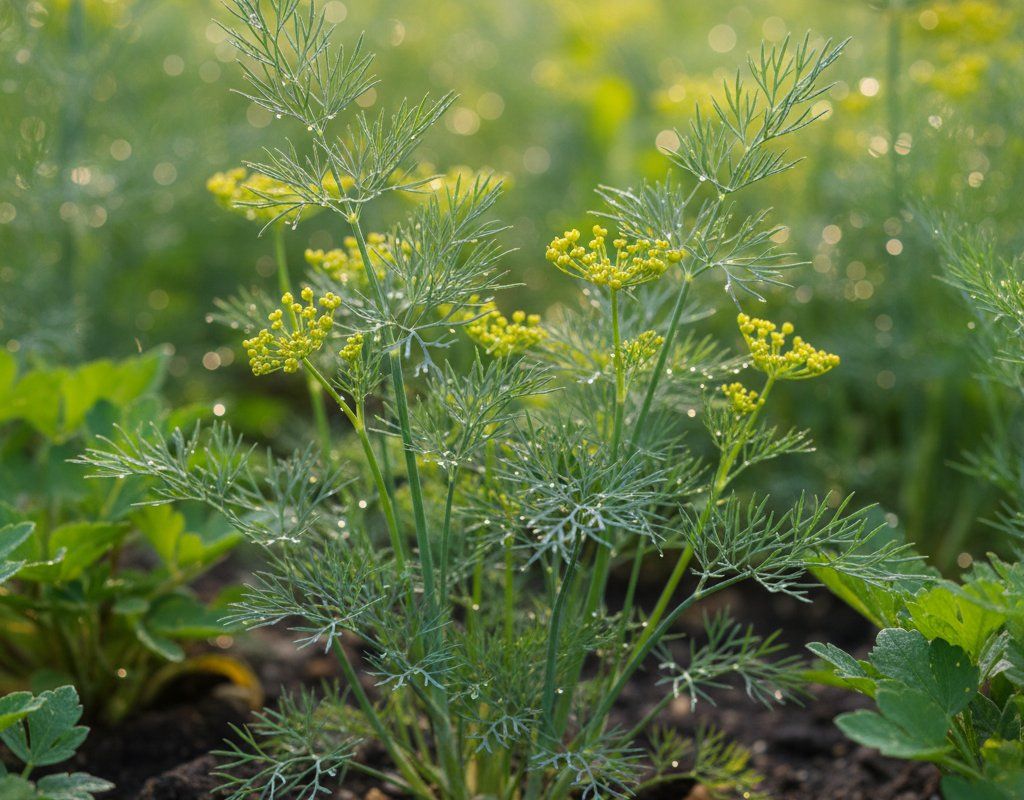
Dill in Zone 6A — Mid-Atlantic
Anethum graveolens · Your Complete 2026 Planting Guide
Planning Ahead — Great!
You’re ahead of the season. Here’s when to start.
Mark Your Calendar
How to Plant Dill in Zone 6A — Mid-Atlantic
Here are all your options for getting dill in the ground, from the easiest method to more advanced approaches.
Direct Sow Seeds
RecommendedMid April through late August
around April 15
Consider succession planting every 2-3 weeks for continuous harvest.
Dill has a taproot and prefers direct sowing, but transplants work if handled carefully.
Start Seeds Indoors
RecommendedMid March through early April
around March 25
Then transplant: Late April through early June
Start seeds 4-6 weeks before transplanting outdoors.
Buy Starts
Works WellLate April through early June
around April 22
Plant purchased starts after last frost (April 15).
Transplant Outdoors
Timing InfoLate April through early June
around April 22
Can tolerate light frost, but wait for soil to be workable.
You have a nice window — no need to rush.
Fall Planting
Late August through late September
September 8 ideal · Direct sow for fall harvest
Plant a second crop in mid-summer for fall harvest. Dill actually prefers the cooling temperatures of fall.
Overview
Dill thrives in our Mid-Atlantic climate, where our four distinct seasons and reliable rainfall create perfect conditions for this versatile herb. You'll love growing your own for fresh pickle making, fish dishes, and that bright, tangy flavor that store-bought dill just can't match. Our moderate spring weather gives dill the cool start it prefers, while our humid summers mean you'll want to focus on succession plantings for continuous harvests.
While our clay soil and variable spring weather can challenge some herbs, dill is surprisingly forgiving once you nail the timing. With our 188-day growing season, you have plenty of flexibility to grow multiple crops from spring through fall. The key is working with our humid summers rather than fighting them.
Starting Seeds Indoors
Starting dill indoors isn't always necessary, but it gives you a head start when our Mid-Atlantic springs turn unpredictable. Sow seeds in seed trays from mid-March through early April, about 4 weeks before you plan to transplant outside. Dill seeds germinate best with bottom heat around 65°F and consistent moisture through bottom watering.
Keep your seedlings under grow lights or in a sunny south window once they sprout. Our moderate spring character means you won't need to rush transplanting, giving seedlings time to develop strong root systems. However, dill has a long taproot that doesn't love being disturbed, so handle transplants gently.
The indoor route works best if you want early harvests or need to time plantings around our variable late spring weather. Otherwise, direct sowing often gives better results with less fuss.
Transplanting Outdoors
Transplant your dill seedlings outdoors from late April through early June, once you're confident the last frost has passed. In our area, that's typically after mid-April, but watch those overnight temperatures since late cold snaps can still surprise us. Harden off seedlings gradually over a week, bringing them outside for longer periods each day.
Space transplants 12 inches apart in well-draining soil. Our clay soil benefits from compost worked in beforehand to improve drainage. Choose a spot with full sun - at least 6-8 hours daily. Dill's taproot means you'll only get one chance at placement, so choose carefully.
Plant on a calm, overcast day if possible, as our spring winds can stress young transplants. Water thoroughly after planting and expect some initial wilting - that's normal as the disturbed roots re-establish.
Direct Sowing
Direct sowing is often the better choice for dill since it avoids transplant shock and lets that taproot grow undisturbed. Sow seeds from mid-April through late August, with the best results coming from spring and late summer plantings. Our humid summers can stress dill, so time your sowings accordingly.
Prepare your planting area by working compost into our typical clay soil to improve drainage. Dill seeds are small, so create a fine seedbed and sow about 1/4 inch deep. Space seeds 12 inches apart or thin to that spacing once seedlings emerge. Keep the soil consistently moist until germination, which takes 7-14 days depending on soil temperature.
For continuous harvests, succession plant every 2-3 weeks through late spring, then resume in late summer as temperatures moderate. This approach works better than trying to keep plants going through our hottest, most humid summer weeks.
Watering Dill in Zone 6A (Mid-Atlantic)
Dill needs moderate, consistent moisture to produce tender leaves, but it's not drought tolerant in our Mid-Atlantic climate. Our humid summers mean you'll need to balance adequate watering with good air circulation to prevent fungal issues. Check soil moisture using the finger test - if the top 2 inches feel dry, it's time to water.
During our typical growing season, dill needs about 1 inch of water per week, including rainfall. Since we average 40-50 inches annually with fairly even distribution, you'll often need minimal supplemental watering in spring and fall. Summer is different - our moderate-to-hot temperatures (often hitting 88°F) and high humidity create conditions where dill bolts quickly without consistent soil moisture.
Water at soil level rather than overhead to minimize leaf diseases in our humid climate. Early morning watering gives plants time to dry before evening, reducing fungal problems. Signs of underwatering include wilting and premature bolting, while overwatering shows up as yellowing leaves and poor growth.
Apply 2-3 inches of mulch around plants to retain moisture and moderate soil temperature. In our clay soil, mulch also prevents surface crusting that can make watering less effective. During hot summer stretches, dill benefits from afternoon shade if possible.
🧪Fertilizing Dill
Feeding Schedule
Organic Fertilizer Options
Harvest Time
Your first dill harvest comes about 40 days after planting, typically from late May through late October in our growing season. Start harvesting the feathery leaves when plants reach 6-8 inches tall - cut outer stems first, leaving the center to keep growing. Fresh leaves have the best flavor before the plant flowers.
For dill seeds, let the plant flower and wait until the seed heads turn brown and papery. This usually happens in mid to late summer. Cut the entire seed head and shake it into a paper bag, or hang bundles upside down to dry completely. The seeds will fall naturally when ready.
Keep harvesting leaves regularly to encourage new growth and delay flowering. In our Mid-Atlantic climate, succession planting every few weeks gives you fresh dill from late spring through early fall. Hot summer weather will cause plants to bolt quickly, so focus your heaviest harvests during cooler periods.
As our first frost approaches in mid-October, harvest remaining leaves and let any developing seed heads finish maturing. You can also pot up small plants to bring indoors for winter windowsill growing.
Common Problems in Zone 6A (Mid-Atlantic)
Bolting shows up as tall flower stalks shooting up from the center of your dill plant, making the leaves bitter and tough. This happens when plants shift into survival mode, prioritizing seed production over leaf growth. Our Mid-Atlantic climate triggers bolting through heat stress during humid summer stretches, long daylight hours, or inconsistent watering during dry spells. Plant during cooler periods (spring and late summer), provide consistent moisture, and succession plant rather than trying to keep plants going through peak summer heat.
Aphids appear as clusters of tiny green, black, or white insects on stems and leaf undersides, leaving sticky honeydew residue and causing leaves to curl or distort. Our humid summers create perfect breeding conditions for these rapid-reproducing pests, and they're often tended by ant colonies. Blast them off with strong water sprays, encourage natural predators like ladybugs, or use insecticidal soap for heavy infestations. Avoid over-fertilizing with nitrogen, which makes plants more attractive to aphids.
Caterpillars, particularly parsley worms (black swallowtail butterfly larvae), can strip dill plants quickly since they're in the same plant family. These striped green caterpillars with black bands and orange spots are actually beneficial butterfly larvae, so hand-picking and relocating them to wild plants is often the best approach. If damage is severe, Bt (Bacillus thuringiensis) spray works effectively while being safe for beneficial insects.
Mid-Atlantic Specific Challenges: Our humid summers create perfect conditions for fungal diseases, so focus on good air circulation and avoid overhead watering. Deer pressure can be significant - dill's strong scent usually deters them, but hungry deer will browse anything. Japanese beetles occasionally damage plants but rarely cause serious problems since dill isn't a preferred host.
Best Companions for Dill
Plant these nearby for healthier Dill and better harvests.


Keep Away From
Companion Planting Details
Dill makes an excellent companion for cabbage family crops, helping repel cabbage worms and flea beetles with its strong scent. Plant it near cucumbers where it attracts beneficial insects like parasitic wasps that control cucumber beetles - plus you'll have both ingredients ready for pickle making. Onions and lettuce also pair well, with onions providing natural pest deterrence while lettuce appreciates dill's light shade during our hot summer afternoons.
Avoid planting dill near carrots since they're in the same family and compete for similar nutrients, plus dill can actually inhibit carrot growth. Tomatoes and dill don't make good neighbors either - mature dill can stunt tomato growth, and they have different watering needs that are hard to balance in our humid Mid-Atlantic climate.
🌸Best Flowers to Plant with Dill
These flowers protect your Dill from pests and attract pollinators for better harvests.
For Pest Control




Get a Reminder When It's Time to Plant
We'll email you when key planting windows open for your zone.