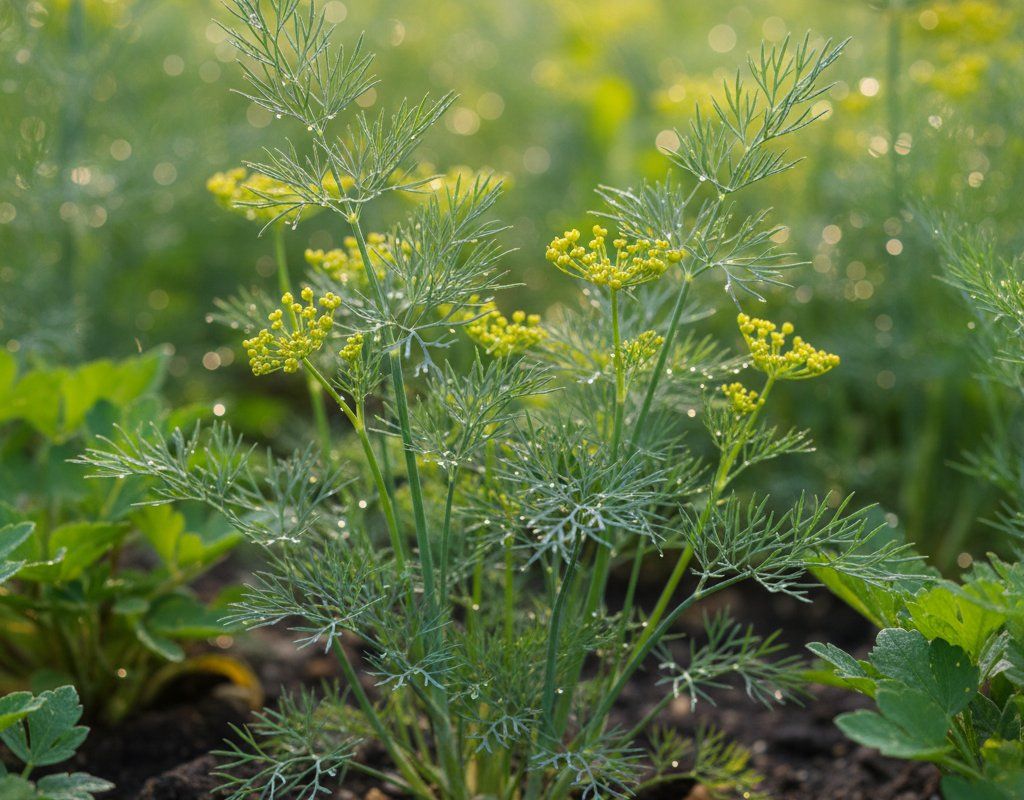
Dill in Zone 6A — Great Plains
Anethum graveolens · Your Complete 2026 Planting Guide
Planning Ahead — Great!
You’re ahead of the season. Here’s when to start.
Mark Your Calendar
How to Plant Dill in Zone 6A — Great Plains
Here are all your options for getting dill in the ground, from the easiest method to more advanced approaches.
Direct Sow Seeds
RecommendedMid April through late August
around April 15
Consider succession planting every 2-3 weeks for continuous harvest.
Dill has a taproot and prefers direct sowing, but transplants work if handled carefully.
Start Seeds Indoors
RecommendedMid March through early April
around March 25
Then transplant: Late April through early June
Start seeds 4-6 weeks before transplanting outdoors.
Buy Starts
Works WellLate April through early June
around April 22
Plant purchased starts after last frost (April 15).
Transplant Outdoors
Timing InfoLate April through early June
around April 22
Can tolerate light frost, but wait for soil to be workable.
You have a nice window — no need to rush.
Fall Planting
Late August through late September
September 8 ideal · Direct sow for fall harvest
Plant a second crop in mid-summer for fall harvest. Dill actually prefers the cooling temperatures of fall.
Overview
Fresh dill transforms your Plains garden into a culinary powerhouse, offering those distinctive feathery leaves that bring life to potato salad, pickles, and summer fish dishes. Here in the Great Plains, dill thrives in our intense sunshine and benefits from our naturally low disease pressure, while our fertile prairie soil gives it the nutrients it needs to produce abundantly. You'll find yourself harvesting armfuls of aromatic foliage throughout the season.
Our extreme temperature swings and variable precipitation can challenge dill, but the key is working with our 188-day growing season rather than fighting it. Plant at the right times, provide consistent moisture, and you'll enjoy fresh dill from late spring through fall, with multiple succession plantings keeping your harvest steady even through our hottest months.
Starting Seeds Indoors
Starting dill indoors makes sense when you want an early harvest or need protection from our unpredictable spring weather. Begin seeds mid-March through early April, about four weeks before you plan to transplant outside. This timing lets you get ahead of the season while avoiding the risk of late cold snaps that can still hit us in April.
Set up your seed trays in a warm spot (65-70°F works well) with good light once germination occurs. Bottom watering works best for dill seedlings since it prevents damping off and keeps the delicate stems from getting waterlogged. Our variable spring character means indoor starting gives you more control over timing.
Keep in mind that dill has a taproot and doesn't love transplanting, so handle seedlings gently and don't let them get rootbound in their containers. You'll want to move them outside as soon as conditions allow.
Transplanting Outdoors
Plan to transplant your dill seedlings from late April through early June, once the soil has warmed and your last frost risk has passed. Here in the Plains, that usually means waiting until nighttime temperatures stay consistently above 40°F, though dill can handle light frost better than many herbs.
Harden off your seedlings gradually over a full week, starting with just an hour or two of outdoor exposure and building up to full days. Our spring winds can be brutal on tender plants, so choose a protected spot for the hardening process. Space transplants 12 inches apart to give them room to develop their upright growth habit.
Watch the weather forecast carefully during transplant season. Our notorious spring temperature swings can drop 40 degrees overnight, and while established dill handles this fine, newly transplanted seedlings need some protection during extreme weather events.
Direct Sowing
Direct sowing is actually dill's preferred method since it develops a strong taproot that doesn't like disturbance. You can sow seeds from mid-April through late August, giving you multiple opportunities for succession plantings throughout our growing season. The soil temperature should be at least 50°F for good germination.
Prepare your planting area by working the soil well - our prairie soil is naturally fertile, but dill appreciates loose, well-draining ground. Sow seeds about ¼ inch deep and 12 inches apart, or scatter them more densely and thin later. The seeds need consistent moisture to germinate, which can be challenging during our dry spells.
Direct sown dill often outperforms transplants because the taproot develops naturally without disturbance. This gives you stronger plants that better handle our summer heat and wind. For continuous harvest, sow new seeds every 2-3 weeks through late summer.
Watering Dill in Zone 6A (Great Plains)
Dill needs moderate, consistent moisture but can't tolerate wet feet - a balance that requires attention in our variable rainfall climate. During our typical hot summers with 93°F highs, plan to water deeply once or twice per week if natural rainfall doesn't provide about an inch weekly. Check soil moisture with your finger pushed 2 inches down; if it's dry at that depth, it's time to water.
Water at soil level rather than overhead to reduce disease risk and conserve moisture in our low-to-moderate humidity. This is especially important during our windy conditions, which can quickly dry out foliage. Deep, infrequent watering encourages strong root development that helps plants handle our drought periods better than frequent shallow watering.
Watch for signs of stress during heat waves - wilting during the hottest part of the day is normal, but if plants don't perk up by evening, increase your watering frequency. Yellowing lower leaves often indicate overwatering, while rapid bolting (going to seed) usually signals heat stress combined with inconsistent moisture.
Apply a 2-inch layer of organic mulch around plants to conserve soil moisture and moderate soil temperature. This is crucial during our hot summers and helps stretch time between waterings, which is valuable when summer storms are unpredictable and drought periods can extend for weeks.
🧪Fertilizing Dill
Feeding Schedule
Organic Fertilizer Options
Harvest Time
Your first dill harvest typically arrives late May through early summer, about 40 days after planting. Start snipping the feathery outer leaves once plants reach 6-8 inches tall, cutting stems just above a leaf node to encourage continued growth. Regular harvesting actually keeps plants producing longer before they bolt to seed.
For fresh dill leaves, harvest in the morning after dew has dried but before the day's heat intensifies. Cut what you need and use immediately, or store stems in water like flowers. The flavor is most intense just before the plant flowers, so time your major harvests accordingly.
If you want dill seeds for pickling, let some plants flower and develop seed heads. Wait until the flower heads turn brown and dry - usually late summer here in the Plains - then cut the entire head and shake seeds into a paper bag. The timing works well with our cucumber harvest season.
Keep succession planting through late August to ensure continuous fresh dill through fall. Plants grown in cooler fall weather often have better flavor and take longer to bolt than those struggling through our summer heat. Your final plantings can often produce right up until our first frost in mid-October.
Common Problems in Zone 6A (Great Plains)
Bolting shows up as a sudden tall flower stalk shooting from the center of your dill plant, followed by the leaves becoming bitter and tough. Once bolting starts, leaf production essentially stops as the plant shifts energy to seed production. In our Plains climate, heat stress is the primary trigger - when temperatures spike above 85°F for several consecutive days, especially combined with irregular watering, dill races toward flowering.
The best defense is timing your plantings for cooler weather and maintaining consistent soil moisture during heat waves. Plant your main crop in early spring and again in late summer to avoid the worst heat. During unavoidable hot spells, provide afternoon shade with row covers or plant taller companions on the south side.
Aphids appear as clusters of tiny green, black, or white soft-bodied insects on stems and undersides of leaves, often accompanied by sticky honeydew and curled new growth. Our hot summers create ideal breeding conditions, and populations can explode seemingly overnight. You'll often notice ants farming the aphids for their sweet secretions.
Combat aphids with a strong spray from your hose - the water pressure knocks them off and they rarely find their way back. Encourage beneficial insects like ladybugs and lacewings by planting diverse flowers nearby. For severe infestations, insecticidal soap works well in our low humidity climate since it doesn't promote fungal issues like it might in more humid regions.
Caterpillars, particularly parsley worms (swallowtail butterfly larvae), can strip dill plants quickly since they're in the same family as their preferred parsley. These large green caterpillars with black stripes and yellow spots can defoliate a plant in days. Other smaller caterpillars may also feed on dill, creating holes and ragged edges on leaves.
Hand-picking works well for larger caterpillars - check plants every few days during growing season. Bt (Bacillus thuringiensis) provides organic control for serious infestations and won't harm beneficial insects. Row covers during peak butterfly season can prevent egg-laying, though you'll need to remove them for harvesting.
Great Plains Specific Challenges: Our combination of intense heat, variable rainfall, and constant wind creates unique stress on dill plants. The low-to-moderate humidity means plants lose moisture quickly, making consistent watering critical. Wind can physically damage the delicate foliage and increase water needs, while our extreme temperature swings can shock plants into early bolting.
Best Companions for Dill
Plant these nearby for healthier Dill and better harvests.


Keep Away From
Companion Planting Details
Dill makes an excellent companion for cabbage family crops, helping repel cabbage worms and flea beetles with its strong scent. Plant it near your broccoli, cauliflower, and kale - the dill flowers also attract beneficial wasps that parasitize cabbage pests. Cucumbers benefit from dill's presence too, and the timing works perfectly since both crops appreciate similar growing conditions in our Plains climate.
Lettuce and onions also pair well with dill, with the onions helping deter aphids while the lettuce appreciates some of the light shade dill can provide during our intense summer sun. Avoid planting dill near carrots, as they can cross-pollinate and affect carrot flavor, and keep it away from tomatoes since dill can attract hornworms and may inhibit tomato growth. The key in our windy Plains environment is using taller companions like dill to provide some protection for more tender crops.
🌸Best Flowers to Plant with Dill
These flowers protect your Dill from pests and attract pollinators for better harvests.
For Pest Control




Get a Reminder When It's Time to Plant
We'll email you when key planting windows open for your zone.