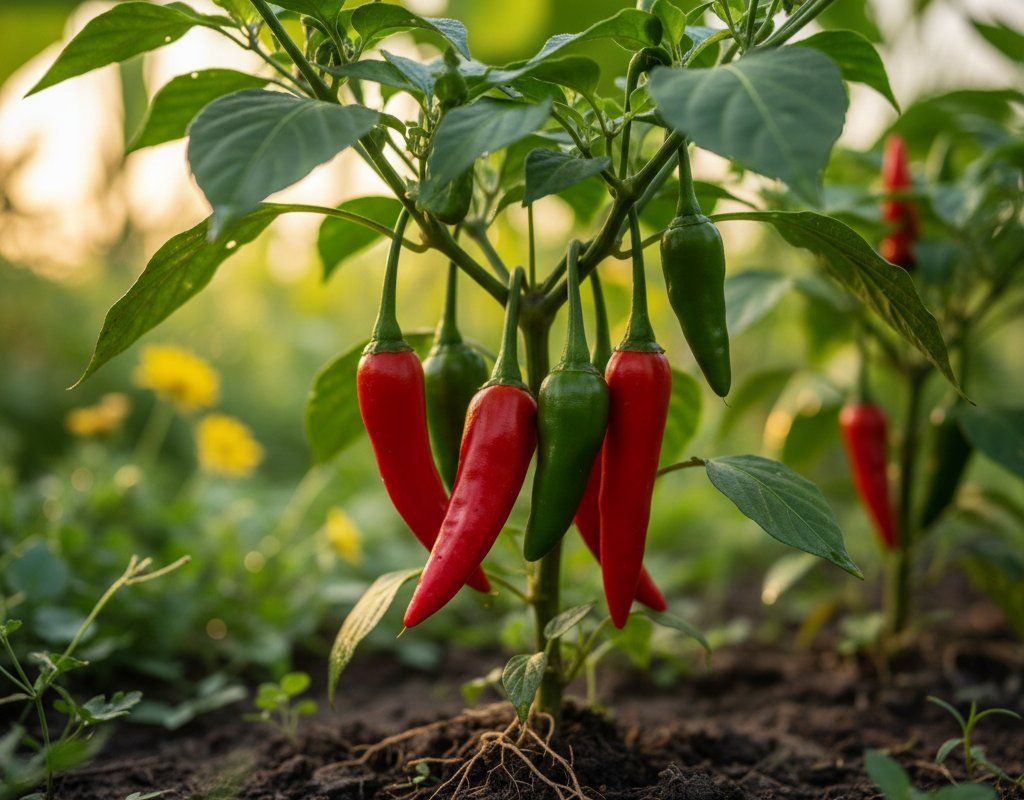
Thai Chili in Zone 5B — Northeast
Capsicum annuum 'Thai Dragon' · Your Complete 2026 Planting Guide
Planning Ahead — Great!
You’re ahead of the season. Here’s when to start.
Mark Your Calendar
How to Plant Thai Chili in Zone 5B — Northeast
Here are all your options for getting thai chili in the ground, from the easiest method to more advanced approaches.
Start Seeds Indoors
RecommendedEarly to late March
around March 14
Then transplant: Early May through early June
Start seeds 8-10 weeks before transplanting outdoors.
Buy Starts
Works WellEarly May through early June
around May 9
Plant purchased starts after last frost (April 25).
Direct Sow Seeds
ChallengingDirect sowing is not typical for Thai Chili.
Transplant Outdoors
Timing InfoEarly May through early June
around May 9
Wait until nighttime temperatures stay above 50°F.
You have a nice window — no need to rush.
Overview
Thai Chili peppers pack a serious punch, and their compact size makes them ideal for containers on a sunny deck or patio. Here in the Northeast, the cool nights actually enhance the flavor of these little firecrackers, making them even more rewarding to grow. Plus, they add a vibrant splash of color to your garden when they ripen!
Our short growing season in the Northeast can be a challenge, but starting Thai Chili seeds indoors gives you a head start. With careful timing, you can easily enjoy a bountiful harvest within our 168-day growing season.
Starting Seeds Indoors
Starting Thai Chili indoors is essential to get a jump on our short growing season. You'll want to sow seeds in early to late March, about 8 weeks before you plan to transplant them outside. I usually aim for late March myself, just to be extra safe from any late frosts.
Use seed trays or small pots filled with a good seed-starting mix. Keep them consistently warm – a heat mat really helps – and provide plenty of light. A grow light is ideal, especially since our spring weather can be unpredictable. Don't forget to water from the bottom to encourage strong root growth and prevent damping off.
Transplanting Outdoors
Once the danger of frost has passed – usually early May through early June in our area – it's time to transplant your Thai Chili seedlings outdoors. Before you do, be sure to harden them off for about a week. This means gradually exposing them to outdoor conditions, starting with just an hour or two of shade each day.
Plant them 18-24 inches apart in a sunny spot with well-drained soil. Keep an eye on the weather forecast – we can still get some chilly nights even in May, so be ready to cover them if necessary.
Watering Thai Chili in Zone 5B (Northeast)
Thai Chili peppers need consistent moisture, but they don't like to be waterlogged. In the Northeast, where we have moderate-to-humid summers and even rainfall, it's crucial to find the right balance. I usually water deeply about once a week, giving them about an inch of water, unless we've had a good soaking rain.
The best way to check if they need water is the finger test: stick your finger about two inches deep into the soil. If it feels dry, it's time to water. When you do water, aim for the base of the plant to avoid getting the leaves wet, which can encourage fungal diseases in our humid climate.
Signs of underwatering include wilting leaves and slow growth. Overwatering can lead to yellowing leaves and root rot. Adding a layer of mulch, like straw or shredded bark, helps retain moisture and keeps the soil temperature consistent.
Supporting Your Thai Chili
Thai Chili plants are relatively compact, but they can get quite loaded with peppers, which can cause the stems to bend or break. While not strictly necessary, providing some support is a good idea, especially for plants grown in containers.
A simple bamboo stake or a small tomato cage works perfectly. Install the support at planting time to avoid disturbing the roots later. As the plant grows, gently tie the stems to the stake with soft twine or plant tape.
Pruning & Maintaining Thai Chili
Pruning isn't essential for Thai Chili peppers, but pinching off the early flowers can encourage the plant to focus its energy on vegetative growth, resulting in a stronger, more productive plant later in the season. Do this early in the season, before the plant gets too big.
As the season winds down and the first frost approaches in early October, you can prune the plant back to encourage any remaining peppers to ripen. You can also bring the whole plant indoors to overwinter if you have a sunny spot.
🧪Fertilizing Thai Chili
Feeding Schedule
Organic Fertilizer Options
Harvest Time
You can expect your first harvest of Thai Chili peppers in late July through mid September, about 80 days after transplanting. The peppers are ready to pick when they turn from green to a bright red. Don't be afraid to harvest them at any stage though – they're still plenty hot when green!
To harvest, simply snip the peppers off the plant with scissors or pruning shears. Be careful not to damage the stems. Thai Chili peppers are continuous producers, so keep harvesting regularly to encourage more fruit to set.
As the first frost approaches in early October, harvest any remaining peppers, even the green ones. They will ripen indoors if you place them in a paper bag with a ripe banana or apple.
Common Problems in Zone 5B (Northeast)
Even in the Northeast, Thai Chili can face some problems, but here's how to tackle them:
Aphids:
- What it looks like: Clusters of tiny green, black, or white insects on stems and leaf undersides. You might also see a sticky honeydew residue or curled/distorted new growth.
- What causes it: Rapidly reproducing sap-sucking insects that thrive in warm weather. Ant colonies may even farm them.
- How to fix/prevent it: Knock them off with a strong spray of water. Encourage ladybugs and lacewings. Use insecticidal soap for heavy infestations or neem oil for a systemic approach. Avoid excess nitrogen fertilizer.
Blossom Drop in Heat:
- What it looks like: Flowers fall off the plant without setting fruit.
- What causes it: While the Northeast doesn't have brutal heat, a few days of sustained high temperatures can still cause blossom drop, especially if combined with inconsistent watering.
- How to fix/prevent it: Ensure consistent watering, especially during hot spells. Provide some afternoon shade if possible. Blossom set sprays can sometimes help.
Spider Mites:
- What it looks like: Fine stippling on leaves (tiny white dots). Fine webbing on leaf undersides and between stems. Leaves turn bronze or yellow.
- What causes it: Tiny arachnids that thrive in hot, dry conditions. Populations explode in drought stress.
- How to fix/prevent it: Strong water spray (daily for a week) is the best treatment. Increase humidity around plants. Use neem oil or insecticidal soap. Release predatory mites. Avoid broad-spectrum pesticides.
Northeast Specific Challenges: Our moderate summer heat and even rainfall usually keep Thai Chili pretty happy. The moderate-to-humid humidity can sometimes encourage fungal diseases, so good air circulation and avoiding overhead watering are key.
Best Companions for Thai Chili
Plant these nearby for healthier Thai Chili and better harvests.




Keep Away From

Companion Planting Details
Companion planting can really boost your Thai Chili's growth and health. Tomatoes make great companions because they share similar needs for sun and water. Basil is another good choice – it repels pests and attracts pollinators. Carrots help loosen the soil, and onions can deter aphids.
Avoid planting Thai Chili near fennel, as it inhibits their growth. Brassicas (like cabbage and broccoli) also aren't ideal companions, as they can compete for nutrients.
🌸Best Flowers to Plant with Thai Chili
These flowers protect your Thai Chili from pests and attract pollinators for better harvests.
For Pest Control


For Pollinators


Get a Reminder When It's Time to Plant
We'll email you when key planting windows open for your zone.