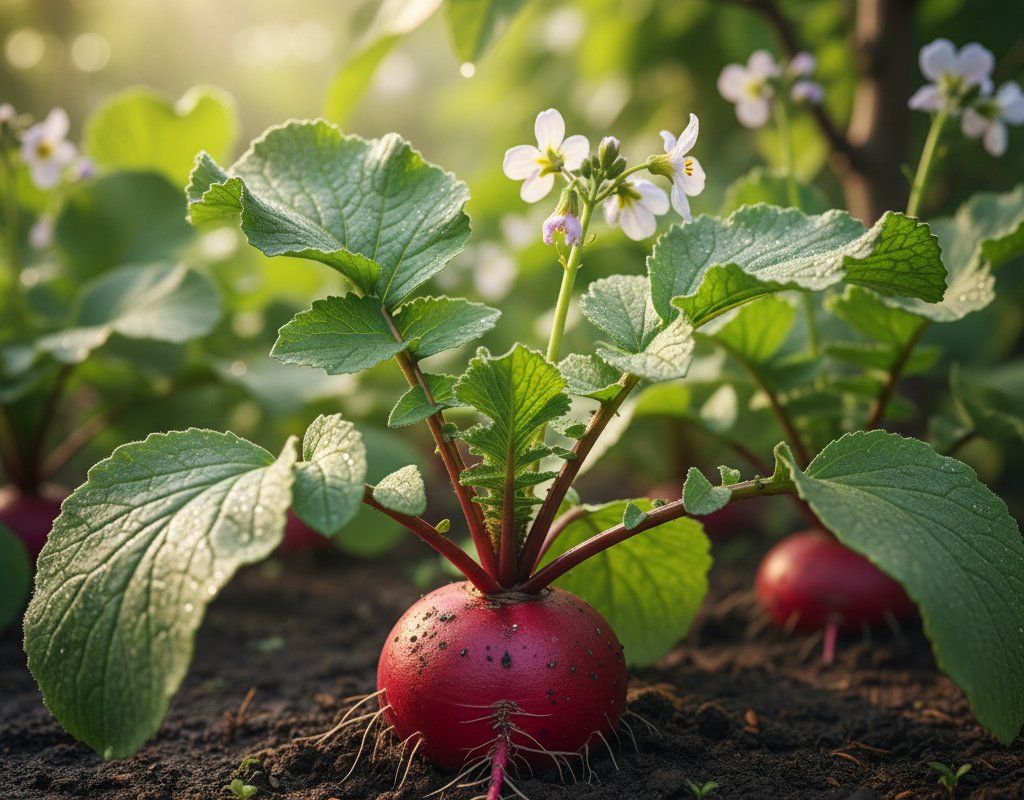
Radish in Zone 3B — Mountain West
Raphanus sativus · Your Complete 2026 Planting Guide
Planning Ahead — Great!
You’re ahead of the season. Here’s when to start.
Mark Your Calendar
How to Plant Radish in Zone 3B — Mountain West
Here are all your options for getting radish in the ground, from the easiest method to more advanced approaches.
Direct Sow Seeds
RecommendedLate April through early August
around April 27
Consider succession planting every 2-3 weeks for continuous harvest.
Fast-growing and easy. No reason to start indoors.
Buy Starts
Works WellLate April through early June
around April 27
Plant purchased starts after last frost (May 25).
Start Seeds Indoors
ChallengingThis plant is typically not started indoors.
Transplant Outdoors
Timing InfoLate April through early June
around April 27
Can tolerate light frost, but wait for soil to be workable.
You have a nice window — no need to rush.
Fall Planting
Mid July through mid August
July 30 ideal · Direct sow for fall harvest
Plant a second crop in mid-summer for fall harvest. Radish actually prefers the cooling temperatures of fall.
Overview
Radishes are perfect for Mountain West gardeners who want quick satisfaction from their high altitude gardens. In just 25 days, you'll pull crisp, peppery roots from soil that many vegetables struggle with. Our intense sun and cool nights actually improve radish flavor—the UV develops that satisfying bite while cold nights keep them from getting woody. They thrive in our alkaline soil and don't mind the temperature swings that challenge other crops.
With our 108-day growing season, radishes fit perfectly into those early spring and late summer windows when warm-season crops can't handle the cold. You can squeeze in multiple plantings from late spring through midsummer, making them ideal for succession planting. The short season that limits tomatoes and peppers actually works in favor of these fast-growing roots.
Transplanting Outdoors
There's really no reason to transplant radishes in the Mountain West—they're so fast and easy from seed that starting indoors just adds unnecessary steps. These roots don't like their taproot disturbed, and direct sowing gives you better results every time.
If you do find yourself with radish transplants, get them in the ground from late April through early June. Harden them off gradually over a week, and space them 2-4 inches apart. Our cool spring nights can shock transplants, so wait until nighttime temperatures stay consistently above 35°F.
Direct Sowing
Direct sowing is the way to go with radishes in our mountain climate. Start sowing from late April through early August for continuous harvests. The soil doesn't need to be warm—radishes actually prefer cool conditions and will germinate in soil as cold as 40°F. Work the soil to break up any clods, since compacted ground creates forked or stunted roots.
Plant seeds ¼ inch deep and space them 2-4 inches apart. In our intense sun, you can get away with closer spacing for smaller varieties. The beauty of radishes is their speed—they'll be ready to harvest before most pests figure out they're there. You can succession plant every two weeks through midsummer for a steady supply.
Our short growing season actually works perfectly for radishes since they bolt quickly in hot weather. The moderate temperatures at altitude keep them sweet longer than gardeners at lower elevations.
Watering Radish in Zone 3B (Mountain West)
Radishes need consistent moisture to develop crisp, mild roots in our dry Mountain climate. With only 10-20 inches of annual rainfall, you'll need to supplement regularly. Uneven watering creates woody, pithy roots, while drought stress makes them fiery hot instead of pleasantly peppery.
Water deeply once or twice a week, giving them about 1 inch total including any rainfall. Check soil moisture with your finger—it should feel consistently damp 2 inches down. Our low humidity means surface soil dries out quickly, but don't let that fool you into overwatering. The roots need oxygen too.
Water at soil level rather than overhead to conserve moisture in our dry air. Morning watering works best since our cool nights mean less evaporation loss. A thin layer of straw mulch helps retain moisture without creating the slug problems you'd see in humid climates.
Watch for signs of stress: drought-stressed radishes develop that harsh, fiery bite and tough texture. Overwatered plants may crack or develop soft spots. With their quick 25-day maturity, maintaining even moisture isn't a long-term commitment.
🧪Fertilizing Radish
Feeding Schedule
Organic Fertilizer Options
Harvest Time
You'll start pulling radishes from late May through mid-September, depending on your planting schedule. Most varieties are ready in 25 days when the shoulders push above the soil surface. Spring radishes should be about 1 inch in diameter—any larger and they turn woody in our intense sun.
Don't leave them in the ground too long hoping they'll get bigger. Mountain radishes develop their best flavor and texture when harvested promptly. Pull them by grasping the greens close to the root and giving a gentle tug. If the tops break off, use a trowel to dig carefully around the root.
The greens are edible too—harvest them young for salads or sauté the larger leaves. Our cool nights keep the foliage tender longer than in hotter climates. Summer plantings may need harvesting even faster as day length decreases.
As first frost approaches in early September, harvest any remaining roots immediately. Unlike some root vegetables, radishes don't improve with a frost and will become mushy. Pull everything before that first hard freeze and store the roots in the refrigerator for several weeks.
Common Problems in Zone 3B (Mountain West)
Flea Beetles Small round holes (shot-hole pattern) pepper the leaves, and you'll see tiny dark beetles that jump when disturbed. Young seedlings are most vulnerable to these pests that thrive in our warm days and cool nights.
Row covers during the first few weeks protect vulnerable seedlings. Our intense UV can stress young plants, making them more susceptible. Remove covers once plants are established—larger radishes outgrow flea beetle damage quickly.
Root Maggots Tunnels through the roots and wilting plants signal root maggot damage. These white, legless larvae attack the roots directly, often entering through cracks caused by uneven watering in our dry climate.
Prevent problems by maintaining consistent soil moisture and avoiding fresh manure. Yellow sticky traps catch the adult flies before they lay eggs. Crop rotation helps since these pests overwinter in soil.
Pithy Roots Radishes develop a woody, cotton-like center instead of crisp flesh. This happens when plants are left too long in our intense sun or when water stress occurs during our dry spells.
Harvest promptly at 1 inch diameter and maintain consistent moisture. Our low humidity accelerates this problem compared to more humid regions. Succession plant every two weeks rather than trying to extend harvest from one planting.
Mountain West Specific Challenges Our combination of intense UV, alkaline soil, and low humidity creates unique stress on radishes. The dry air pulls moisture from leaves faster than in humid regions, while our alkaline soil can tie up nutrients. Hail can shred the foliage, though the underground roots usually survive. Plant after the main hail season passes in late spring.
Best Companions for Radish
Plant these nearby for healthier Radish and better harvests.


Keep Away From
Companion Planting Details
Radishes pair beautifully with carrots in Mountain gardens—the quick-growing radishes break up soil for the slower carrots and are harvested before competing for space. Lettuce and radishes work well together since both prefer our cool spring and fall conditions and have similar water needs. Peas make excellent companions too, with their nitrogen-fixing ability benefiting the radishes while both crops thrive in cool weather.
Plant radishes near cucumbers to take advantage of space—they'll be harvested before the cucumber vines spread. Our short growing season makes this timing even more critical. Avoid planting near hyssop, which can stunt radish growth and affect their flavor. The intensive companion planting that works in longer-season climates needs adjustment here where every day of growing season counts.
🌸Best Flowers to Plant with Radish
These flowers protect your Radish from pests and attract pollinators for better harvests.



Get a Reminder When It's Time to Plant
We'll email you when key planting windows open for your zone.