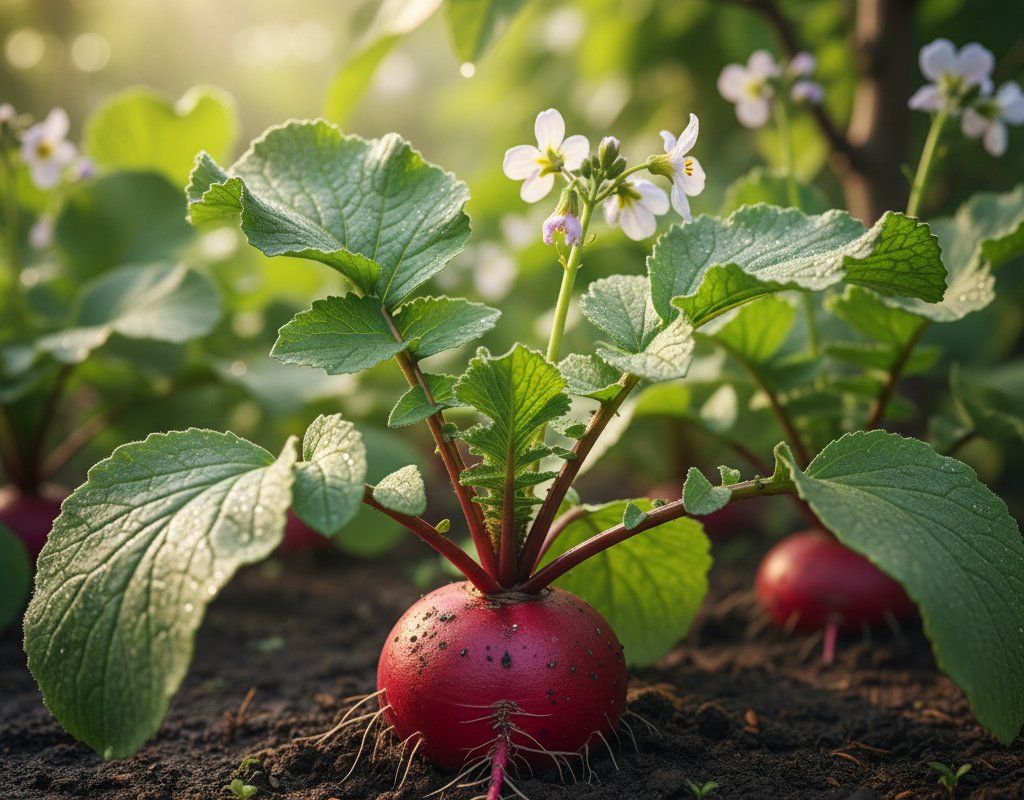
Radish in Zone 9B — Desert Southwest
Raphanus sativus · Your Complete 2026 Planting Guide
Harvest Time!
Your Radish should be producing now!
Harvest Tips
Check size by brushing soil away from crown. Pull when ready.
How to Plant Radish in Zone 9B — Desert Southwest
Here are all your options for getting radish in the ground, from the easiest method to more advanced approaches.
Direct Sow Seeds
RecommendedEarly January through early November
around January 8
Consider succession planting every 2-3 weeks for continuous harvest.
Fast-growing and easy. No reason to start indoors.
Buy Starts
Works WellEarly January through mid February
around January 8
Plant purchased starts after last frost (February 5).
Start Seeds Indoors
ChallengingThis plant is typically not started indoors.
Transplant Outdoors
Timing InfoEarly January through mid February
around January 8
Can tolerate light frost, but wait for soil to be workable.
You have a nice window — no need to rush.
Fall Planting
Mid October through mid November
November 3 ideal · Direct sow for fall harvest
Plant a second crop in mid-summer for fall harvest. Radish actually prefers the cooling temperatures of fall.
Overview
In the Desert Southwest, radishes bring reliable success when temperatures cooperate. These fast-growing roots mature in just 25 days, giving you crisp, peppery harvests throughout our mild winters and brief spring windows. Unlike fussy crops that struggle with our alkaline soil and extreme heat, radishes adapt well to our desert conditions when planted during the right seasons.
Our challenging summers mean timing is everything, but with a 313-day growing season, you have plenty of opportunities to succeed. The key is working with our climate rather than against it—plant during our cooler months and avoid the brutal summer heat that turns these quick crops woody and unbearably hot.
Transplanting Outdoors
While radishes *can* be transplanted, it's rarely worth the effort given how quickly they grow from seed. If you do start transplants, do it only during our coolest period from early January through mid-February when soil conditions are most forgiving.
Transplants need a full week of gradual hardening off to adjust to our dry desert air and intense sun, even during winter months. Space them 2-4 inches apart in prepared beds, and expect some transplant shock that may delay harvest by several days.
The taproot nature of radishes makes them naturally resistant to transplanting, so you'll get better results and faster harvests by direct sowing instead.
Direct Sowing
Direct sowing is absolutely the way to grow radishes in the Desert Southwest. You can plant from early January through early November, avoiding only our most extreme summer months when soil temperatures stay above 85°F even at night. These seeds germinate quickly in cool soil and establish strong taproots without transplant stress.
Prepare your soil by working in compost to improve drainage and help with our alkaline pH. Plant seeds ½ inch deep and 2-4 inches apart when soil temperature stays between 45-75°F. In our desert climate, this means winter through early spring planting, then again in fall once temperatures drop.
The beauty of radishes is their speed—they'll be ready to harvest before most pests become a serious problem. Water gently after planting and keep the soil consistently moist until germination, which usually takes 4-6 days in cool weather.
Watering Radish in Zone 9B (Desert Southwest)
Radishes need consistent moisture throughout their short 25-day growing cycle, making them more demanding than many desert-adapted crops. In our arid climate with just 8-15 inches of annual rainfall, you'll need to water regularly to prevent the stress that creates woody, fiery-hot roots.
Aim for about 1 inch of water per week, applied at soil level to avoid wetting the leaves unnecessarily in our dry air. Use the finger test—soil should stay moist 2 inches down but never soggy. During our mild winters, this might mean watering twice weekly, while spring plantings before extreme heat arrives may need daily attention.
Watch for signs of water stress: leaves wilting in afternoon heat (even mild heat), or roots that taste excessively hot and have a pithy texture when harvested. Overwatering shows up as splitting roots or yellowing leaves. The key is steady, even moisture rather than feast-or-famine cycles.
A thin layer of mulch helps retain moisture in our low-humidity environment, but keep it light since radishes need good air circulation around their crowns. During monsoon season, adjust watering based on natural rainfall, but don't rely on sporadic storms to provide consistent moisture these fast-growing crops need.
🧪Fertilizing Radish
Feeding Schedule
Organic Fertilizer Options
Harvest Time
Your first radishes will be ready from early February through late December, depending on when you planted. In the Desert Southwest, spring-planted radishes often mature faster due to longer daylight hours, while winter crops grow more slowly but develop better flavor in cool weather.
Check for harvest readiness when the shoulders start pushing above the soil surface—this usually happens around day 20-25. Pull one to test: properly sized radishes are about 1 inch in diameter for most varieties, with smooth skin and crisp texture. Don't wait too long, as our temperature swings can quickly turn perfect radishes woody and overly pungent.
Harvest by grasping the leaves close to the root and pulling straight up. If the greens are healthy, they're excellent in salads or stir-fries. Unlike storage crops, radishes don't improve after pulling, so harvest only what you'll use within a few days.
As your growing season ends in mid-December with our first frost, harvest all remaining radishes at once. They won't survive freezing temperatures, and there's no benefit to leaving them in the ground once cold weather arrives.
Common Problems in Zone 9B (Desert Southwest)
Flea Beetles Small round holes appearing in radish leaves, creating a shot-hole pattern, signal flea beetle damage. These tiny dark beetles jump when disturbed and can quickly devastate young seedlings. In the Desert Southwest, they're most problematic during our spring growing season when warming soil brings them out of winter hiding.
The dry spring conditions in our region seem to concentrate these pests, making protection essential for young plants. Use lightweight row covers during the first two weeks after germination when plants are most vulnerable. Remove covers once plants reach 3-4 inches tall, as larger radishes can typically outgrow the damage.
Root Maggots Tunneling damage inside radish roots, often accompanied by stunted growth and wilting leaves, indicates root maggot infestation. These white, legless larvae of small flies are attracted to the organic matter we add to combat our alkaline desert soil. The problem worsens when we overwater trying to combat our arid conditions.
Prevent root maggots by avoiding fresh manure in planting beds and ensuring good drainage. Yellow sticky traps placed near plants can catch the adult flies before they lay eggs. If maggots appear, there's no cure for affected plants—remove and destroy them, then wait at least a month before replanting radishes in that area.
Pithy Roots Radishes that develop woody, dry centers with an overly hot taste have gone pithy, usually from inconsistent watering or temperature stress. In our desert climate, this commonly happens when day-night temperature swings exceed 40°F or when we let soil dry out between waterings.
Prevent pithy roots by maintaining steady soil moisture and harvesting promptly at maturity. Plant during stable weather periods rather than during spring temperature swings, and consider shade cloth if afternoon temperatures climb above 85°F even during the "cooler" growing season.
Desert Southwest Specific Challenges: Our extreme heat, alkaline soil, and low humidity create unique stresses for radishes. The rapid temperature changes between our cool nights and warm days can shock plants, while our mineral-heavy water and caliche subsoil affect root development. Success comes from timing plantings during stable weather periods and maintaining consistent moisture despite our challenging climate.
Best Companions for Radish
Plant these nearby for healthier Radish and better harvests.


Keep Away From
Companion Planting Details
Radishes work beautifully with carrots in the Desert Southwest since radishes break up our occasionally clay-hardened soil and mature quickly, leaving space for slower-growing carrots. Plant them with lettuce for efficient space use—the radishes will be harvested just as lettuce needs more room to spread. Peas make excellent neighbors during our cool season, as both crops prefer the same mild temperatures and moderate moisture levels that work well in our winter gardens.
Cucumbers benefit from radishes as companions during our brief spring window, since radishes can deter cucumber beetles while not competing for space due to their different root zones. Avoid planting radishes near hyssop, which can stunt their growth and affect their flavor—not something you want when dealing with our already challenging desert growing conditions.
🌸Best Flowers to Plant with Radish
These flowers protect your Radish from pests and attract pollinators for better harvests.



Get a Reminder When It's Time to Plant
We'll email you when key planting windows open for your zone.