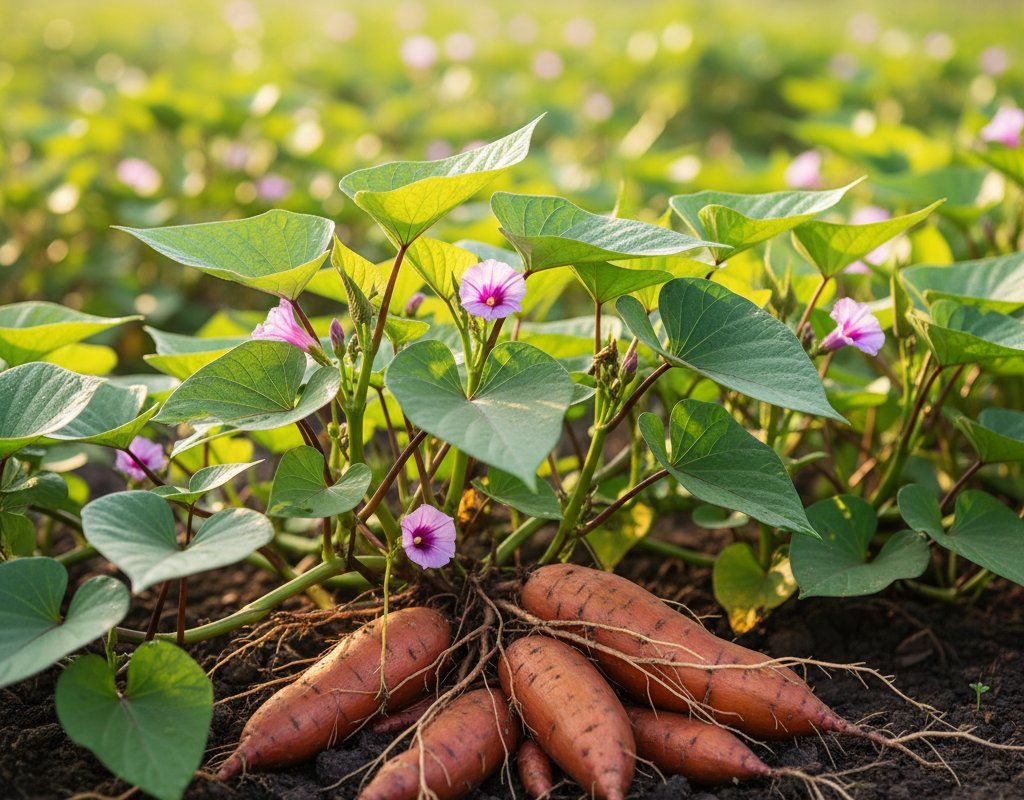
Sweet Potato in Zone 9B — Desert Southwest
Ipomoea batatas · Your Complete 2026 Planting Guide
Time to Buy Starts!
Seed starting window passed, but starts are available now.
Buy Starts Now
Head to your local nursery, Home Depot, or farmers market for transplants.
- Look for stocky plants with dark green leaves
- Avoid leggy seedlings or plants already flowering
- Check that roots aren't circling the pot (rootbound)
How to Plant Sweet Potato in Zone 9B — Desert Southwest
Here are all your options for getting sweet potato in the ground, from the easiest method to more advanced approaches.
Buy Starts
RecommendedLate February through mid March
around February 26
Plant purchased starts after last frost (February 5).
Plant slips (rooted sprouts) after soil is warm. Buy slips or grow your own from a sweet potato.
Start Seeds Indoors
Works WellLate December through mid January
around January 1
Then transplant: Late February through mid March
Start seeds 8-10 weeks before transplanting outdoors.
Direct Sow Seeds
ChallengingDirect sowing is not typical for Sweet Potato.
Transplant Outdoors
Timing InfoLate February through mid March
around February 26
Wait until nighttime temperatures stay above 50°F.
Plan to transplant within a few weeks of your target date.
Overview
Sweet potatoes thrive in our Desert Southwest heat, transforming our long, blazing summers into productive growing time while many other crops struggle. These nutrient-dense tubers develop their best flavor in hot soil, making our extreme temperatures an advantage rather than a challenge. With proper timing, you'll harvest pounds of orange-fleshed sweetness that stores beautifully through our mild winters.
While our arid climate and alkaline soil present challenges, sweet potatoes are surprisingly adaptable to desert conditions. Our 313-day growing season gives you flexibility to plant early and harvest before the first frost in mid-December. The key is getting your slips established before the extreme heat arrives and maintaining consistent moisture through our dry months.
Starting Seeds Indoors
Starting sweet potatoes from seed isn't the typical approach — most gardeners grow slips from whole sweet potatoes or purchase them. However, if you do find true seed, start them indoors from late December through mid-January, about 8 weeks before your transplant window.
Set up seed trays with quality potting mix and maintain soil temperature around 75-80°F using a heat mat. Our Desert Southwest homes often lack the consistent warmth seeds need during winter months. Use bottom watering to prevent fungal issues, keeping soil moist but not waterlogged.
The more common method is growing your own slips by placing a sweet potato half in water or moist sand around the same time period. This produces rooted sprouts you can separate and transplant outdoors when soil warms in late February.
Transplanting Outdoors
Transplant sweet potato slips outdoors from late February through mid-March, once soil temperature consistently reaches 60°F. Our very-early spring character means soil warms quickly, giving you a generous window before extreme heat arrives. Purchase healthy slips from local nurseries or separate your home-grown slips when they're 4-6 inches tall with good root development.
Harden off slips for one week by gradually exposing them to outdoor conditions. Start with 2-3 hours of morning sun, increasing daily exposure while protecting from our intense afternoon rays. Space slips 12-18 inches apart in rows, as sweet potato vines spread extensively once established.
Plant slips deeply, burying two-thirds of the stem to encourage strong root development. Our alkaline soil benefits from amendments — work in compost to improve drainage and add sulfur if your pH tests above 7.5. Water thoroughly after transplanting and provide temporary shade cloth if daytime temperatures exceed 85°F during the establishment period.
Watering Sweet Potato in Zone 9B (Desert Southwest)
Sweet potatoes need moderate water once established, making them surprisingly well-suited to our water-scarce environment. During the first month after transplanting, water deeply twice weekly to encourage root development. Check soil moisture using the finger test — stick your finger 2 inches deep, and water when dry at that depth.
Once vines begin spreading in late spring, sweet potatoes become quite drought-tolerant. Reduce watering to once weekly, providing about 1 inch of water each time. Our monsoon moisture from July through September often provides sufficient rainfall, but supplement during dry spells. Always water at the base of plants rather than overhead — our arid climate means foliar watering evaporates quickly without benefiting the roots.
Watch for signs of stress during our extreme summer heat. Wilting in early morning or evening indicates underwatering, while yellowing leaves often signal overwatering in our clay-heavy desert soils. Apply 2-3 inches of gravel mulch around plants to conserve moisture and reflect heat away from developing tubers.
Reduce watering significantly 3-4 weeks before harvest to concentrate sugars and prevent tuber cracking. This timing usually coincides with our fall season when temperatures drop below 100°F consistently.
🧪Fertilizing Sweet Potato
Feeding Schedule
Organic Fertilizer Options
Harvest Time
Your first sweet potatoes will be ready from early June through mid-July, about 100 days after transplanting. Unlike other root crops, sweet potatoes don't give obvious above-ground signals when ready — you'll need to carefully dig around plants to check tuber development. Look for potatoes that are 3-4 inches long and have developed their characteristic orange color.
Harvest carefully using a digging fork, working from the outside of the vine toward the center. Sweet potato skin is delicate and easily damaged, which reduces storage life. Brush off soil gently — don't wash them until ready to use. Our alkaline soil can be quite hard, so water the area lightly the day before harvest to soften ground.
Plan your main harvest before our first frost, typically in mid-December. Sweet potatoes continue growing until frost kills the vines, so later harvest means larger tubers. Cure freshly dug sweet potatoes in a warm (80-85°F), humid location for 1-2 weeks before storage. Our dry desert air makes curing challenging — use a small humidifier or damp towels in a closed room.
After curing, sweet potatoes store beautifully in our mild winter temperatures. Keep them in a cool, dark place around 55-60°F with good ventilation. Properly cured sweet potatoes from your desert garden can last 6-8 months.
Common Problems in Zone 9B (Desert Southwest)
Sweet Potato Weevils Small, dark beetles with elongated snouts that bore into tubers, creating tunnels filled with their larvae. You'll notice small, round holes in harvested sweet potatoes with dark, bitter-tasting interior damage. These pests thrive in our warm Desert Southwest climate and can destroy entire crops.
Sweet potato weevils overwinter in soil and plant debris, emerging when soil warms in spring. Our long growing season provides multiple generations per year. Remove and destroy affected tubers immediately, and rotate sweet potato plantings to different areas of your garden annually. Clean cultivation and removing volunteer sweet potato vines helps break the pest cycle.
Wireworms Hard-bodied, yellowish-brown larvae that tunnel into developing tubers, creating smooth, round holes. You'll discover the damage at harvest when perfectly shaped sweet potatoes reveal hollow tunnels inside. These soil-dwelling pests are particularly problematic in areas previously planted with grasses or weeds.
Wireworms prefer moist soil conditions but can survive our arid climate by burrowing deep. Our irrigated desert soils provide ideal conditions when we maintain consistent moisture for sweet potato growth. Trap wireworms using cut potato pieces buried near sweet potato plants — check and remove trapped larvae weekly.
Cracking Splits in sweet potato skin that appear as either concentric circles or radial lines radiating from one end. These cracks expose the flesh to rot and reduce storage life significantly. Heavy watering or monsoon rains after dry periods cause tubers to absorb water faster than the skin can expand.
Our inconsistent water availability — from drought to sudden monsoon downpours — creates perfect conditions for cracking. Maintain consistent soil moisture through regular irrigation and mulching. During monsoon season, reduce supplemental watering and ensure good drainage around plants to prevent waterlogged conditions.
Desert Southwest Specific Challenges Our extreme heat and arid conditions stress sweet potato vines during summer, potentially reducing tuber development. The combination of alkaline soil and low humidity can cause nutrient uptake issues, while our intense UV radiation may damage exposed tubers. Monsoon moisture patterns create wet-dry cycles that promote both cracking and fungal issues if drainage is poor.
Best Companions for Sweet Potato
Plant these nearby for healthier Sweet Potato and better harvests.


Keep Away From
Companion Planting Details
Sweet potatoes pair excellently with beans, corn, and squash in Desert Southwest gardens, forming a modified version of the traditional Three Sisters planting. Beans fix nitrogen in soil that sweet potato vines can utilize, while their vertical growth habit maximizes space usage in our water-efficient garden beds. Corn provides natural trellising for beans and creates afternoon shade that protects sweet potato vines from our most intense summer sun.
Winter squash planted nearby benefits from the ground-covering nature of sweet potato vines, which suppress weeds and retain soil moisture during our dry months. The sprawling sweet potato foliage also helps moderate soil temperature fluctuations that can stress shallow-rooted companions. Avoid planting sweet potatoes near other root crops like carrots or beets, as they compete for the same soil space and nutrients in our often-compacted desert soils.
🌸Best Flowers to Plant with Sweet Potato
These flowers protect your Sweet Potato from pests and attract pollinators for better harvests.
For Pest Control




Get a Reminder When It's Time to Plant
We'll email you when key planting windows open for your zone.