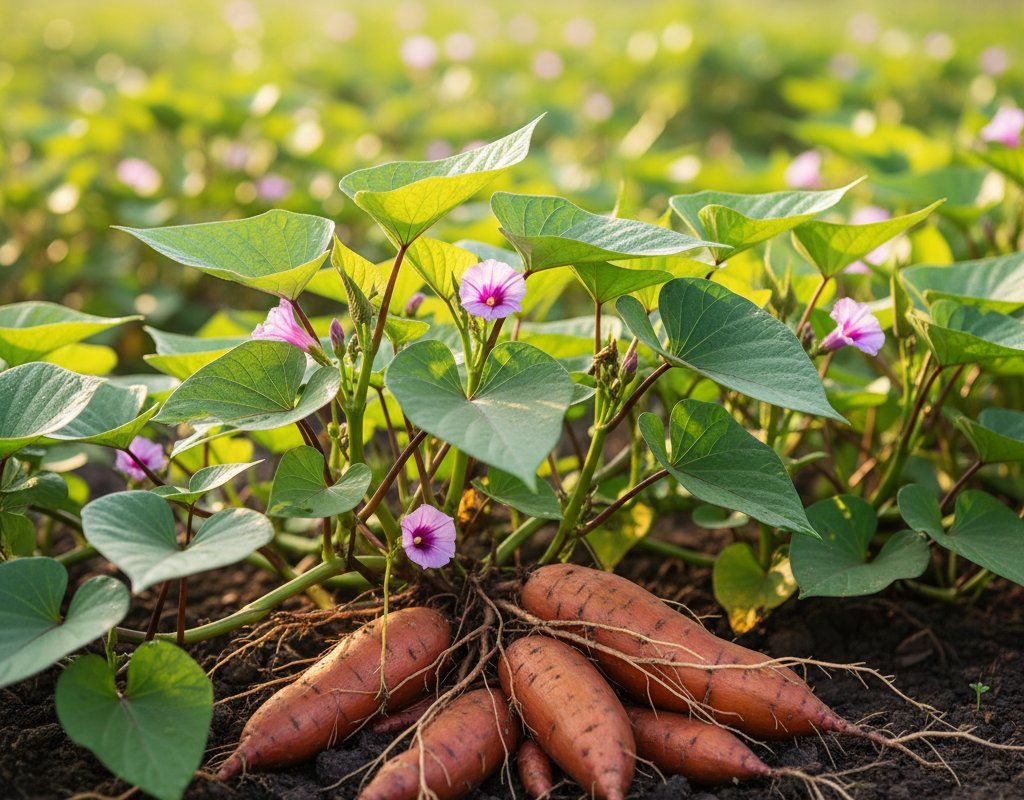
Sweet Potato in Zone 6B — Southeast
Ipomoea batatas · Your Complete 2026 Planting Guide
Last Call for Seed Starting!
Indoor seed starting window closes in 11 days.
Start Seeds This Week
Start seeds now for transplanting later.
Or Wait for Starts
If you don’t want to start seeds, starts will be available around April 26.
How to Plant Sweet Potato in Zone 6B — Southeast
Here are all your options for getting sweet potato in the ground, from the easiest method to more advanced approaches.
Buy Starts
RecommendedLate April through mid May
around April 26
Plant purchased starts after last frost (April 5).
Plant slips (rooted sprouts) after soil is warm. Buy slips or grow your own from a sweet potato.
Start Seeds Indoors
Works WellLate February through mid March
around March 1
Then transplant: Late April through mid May
Start seeds 8-10 weeks before transplanting outdoors.
Direct Sow Seeds
ChallengingDirect sowing is not typical for Sweet Potato.
Transplant Outdoors
Timing InfoLate April through mid May
around April 26
Wait until nighttime temperatures stay above 50°F.
Plan to transplant within a few weeks of your target date.
Overview
Sweet potatoes are a perfect match for our hot, humid Southeast summers. While grocery store varieties often lack flavor, homegrown sweet potatoes develop incredible sweetness and creamy texture that makes them worth the garden space. You can roast them, make pies, or simply bake them whole – and they store for months when properly cured. Plus, the vigorous vines create excellent ground cover that suppresses weeds during our long growing season.
Our Zone 6B climate does present some challenges with its clay soil and disease pressure from all that humidity, but sweet potatoes actually thrive in our conditions. With a 208-day growing season, you have plenty of time to grow these heat-loving vines from slips to harvest. The key is timing your planting after the soil warms up and staying ahead of our first frost in late October.
Starting Seeds Indoors
Starting sweet potatoes from seed isn't the typical approach – most gardeners work with slips (rooted sprouts) instead. However, if you want to try growing your own slips, you can start the process in late February through mid-March, about 8 weeks before transplanting time.
To create slips, place a sweet potato halfway in a jar of water with toothpicks supporting it. Keep it in a warm spot (75-80°F) and wait for sprouts to emerge from the top. Our moderate spring temperatures mean you might need a heating mat to maintain consistent warmth. Once sprouts are 4-6 inches long, twist them off and root them in water.
Bottom watering works well for maintaining consistent moisture without creating the soggy conditions that lead to rot. Most Southeast gardeners find it easier to simply purchase certified disease-free slips from reputable suppliers rather than starting their own.
Transplanting Outdoors
Plant your sweet potato slips outdoors from late April through mid-May, once soil temperatures consistently stay above 60°F and nighttime lows don't dip below 50°F. Our spring weather can be unpredictable with late cold snaps, so don't rush this timing even if you're eager to get started.
Harden off your slips gradually over a week, starting with a few hours of morning sun and building up to full outdoor exposure. Sweet potatoes need that full 6-8 hours of direct sunlight to develop properly. Space your slips 12-18 inches apart in rows, as these vines will spread 3-4 feet in all directions during our long, hot summer.
Prepare your planting area by working compost into our heavy clay soil to improve drainage. Sweet potatoes actually prefer slightly sandy soil, but they'll adapt to clay as long as water doesn't sit around the roots. Plant slips deep, burying two-thirds of the stem to encourage strong root development.
Watering Sweet Potato in Zone 6B (Southeast)
Sweet potatoes have moderate water needs once established, which works perfectly with our wet-summer pattern of afternoon thunderstorms. During the first few weeks after transplanting, keep the soil consistently moist but not soggy – check by sticking your finger 2 inches down into the soil.
Once your vines start spreading in early summer, they become surprisingly drought-tolerant. Our 45-55 inches of annual rainfall usually provides enough moisture, but during dry spells, give them about 1 inch of water per week. Water at the base of the plants rather than overhead to reduce disease pressure from our humid conditions.
The key timing shift comes 3-4 weeks before harvest: reduce watering significantly to concentrate sugars in the tubers and prevent them from splitting. Our late summer can still bring heavy rains, so this is when good drainage becomes critical. If you've been supplemental watering, stop completely unless you hit an unusual dry spell.
Mulch around your plants with straw or shredded leaves to maintain even moisture levels and suppress weeds. This helps prevent the wet-dry cycles that can cause tubers to crack during our unpredictable late summer weather patterns.
🧪Fertilizing Sweet Potato
Feeding Schedule
Organic Fertilizer Options
Harvest Time
Your sweet potatoes will be ready for harvest from early August through mid-September, typically about 100 days after transplanting. Unlike many crops, sweet potatoes don't give obvious visual cues when they're ready – you'll need to do a little detective work by carefully digging around one plant to check tuber size.
Start harvesting when tubers reach a good size for your needs, usually 3-4 inches in diameter. The skin should be firm and the color well-developed for your variety. Be extremely gentle when digging – sweet potato skin is thin and easily damaged, and any nicks or cuts will lead to storage problems.
Use a digging fork rather than a shovel, working from the side to avoid spearing the tubers. Dig the entire hill at once since the tubers can spread surprisingly far from the main plant. Brush off soil gently but don't wash them – wet tubers are prone to rot.
You must finish harvesting before our first frost in late October, as even a light frost will damage the tubers underground. If frost threatens unexpectedly, prioritize harvesting over size – smaller tubers will still cure and store well. After harvest, cure your sweet potatoes in a warm (80-85°F), humid place for 1-2 weeks to develop their sweetness and storage life.
Common Problems in Zone 6B (Southeast)
Sweet Potato Weevils These small, dark beetles create small holes in tubers and their larvae tunnel inside, creating a bitter taste and destroying storage quality. Adult weevils are about 1/4 inch long with a distinctive snout. You'll notice small entry holes in harvested tubers, and cut tubers may show dark tunnels inside.
The humid Southeast climate provides ideal conditions for weevil reproduction. These pests overwinter in crop debris and spread quickly in warm weather. Remove all sweet potato debris after harvest and rotate crops to different areas of your garden each year. Avoid storing damaged tubers, as this attracts more weevils to your storage area.
Wireworms These thin, yellow-brown larvae create smooth, round holes in sweet potato tubers, making them look like they've been drilled. The damage often appears as tunnels running through the flesh, and severely damaged tubers may crack or split open. Wireworms are actually click beetle larvae that live in the soil for several years.
Our clay soil tends to hold moisture, which wireworms prefer. They're especially problematic in areas that were previously lawn or pasture. Improve soil drainage by adding compost and avoid planting in areas where you've had wireworm problems before. Crop rotation helps, but since wireworms live in soil for 2-5 years, it takes patience.
Cracking Sweet potato tubers split open with either circular cracks around their middle or long splits running lengthwise. The exposed flesh quickly attracts insects and develops rot, ruining storage quality. Fresh cracks show white or cream-colored flesh inside.
Heavy watering or sudden rain after a dry period causes tubers to absorb water faster than their skin can expand. Our unpredictable late summer weather – with afternoon thunderstorms following dry spells – creates perfect conditions for this problem. Water consistently throughout the growing season, and reduce irrigation 3-4 weeks before harvest to prevent rapid water uptake.
Southeast Specific Challenges: Our hot, humid summers create constant disease pressure, especially for sweet potato plants growing close to the ground. The combination of clay soil and heavy rainfall can lead to waterlogged conditions that stress plants and attract pests. Japanese beetles may feed on the foliage but rarely cause serious damage to the underground tubers.
Best Companions for Sweet Potato
Plant these nearby for healthier Sweet Potato and better harvests.


Keep Away From
Companion Planting Details
Sweet potatoes pair beautifully with beans and corn in a modified three sisters planting. The beans fix nitrogen that sweet potatoes can use later in the season, while the sweet potato vines provide living mulch that suppresses weeds around corn stalks. Plant beans between sweet potato hills, and use corn as a natural trellis – though keep corn at least 3 feet away so the spreading sweet potato vines don't compete for root space.
Squash works as another excellent companion since all three crops appreciate similar hot, humid growing conditions and have different root depths. The large leaves of winter squash provide additional ground cover alongside sweet potato vines, creating a dense canopy that keeps soil cool and moist during our intense summer heat. Avoid planting sweet potatoes near plants that need consistent moisture late in the season, since you'll be reducing water during the final weeks before harvest.
🌸Best Flowers to Plant with Sweet Potato
These flowers protect your Sweet Potato from pests and attract pollinators for better harvests.
For Pest Control




Get a Reminder When It's Time to Plant
We'll email you when key planting windows open for your zone.