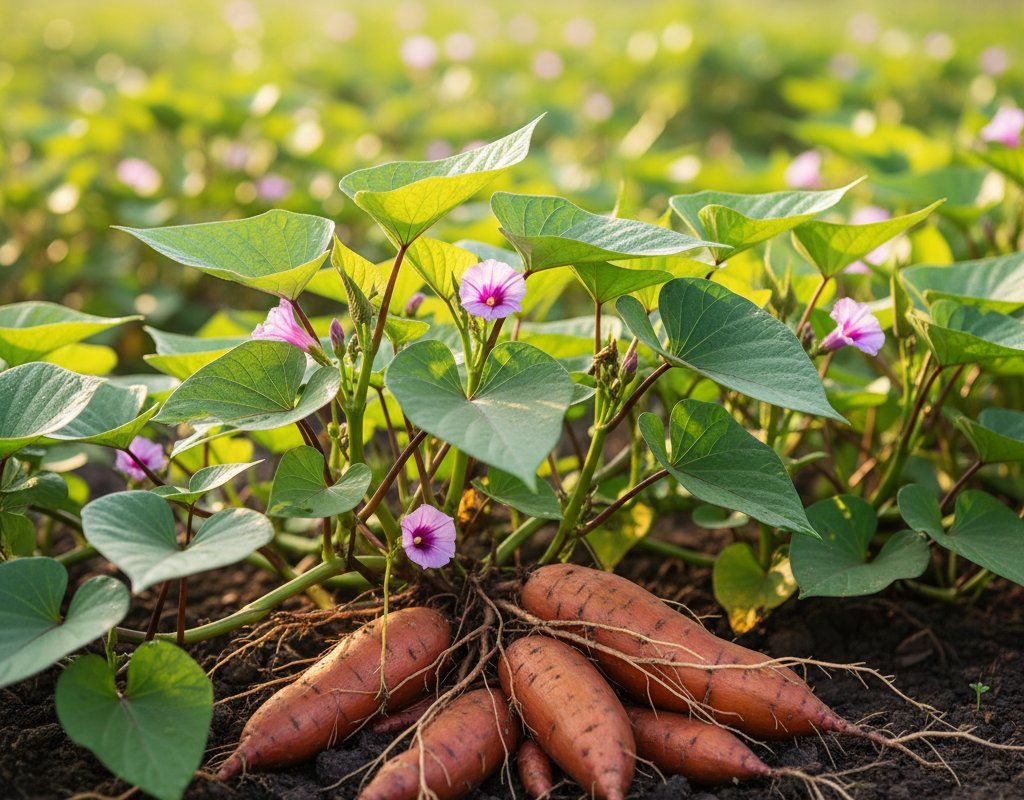
Sweet Potato in Zone 7B — Mid-Atlantic
Ipomoea batatas · Your Complete 2026 Planting Guide
Last Call for Seed Starting!
Indoor seed starting window closes in 7 days.
Start Seeds This Week
Start seeds now for transplanting later.
Or Wait for Starts
If you don’t want to start seeds, starts will be available around April 22.
How to Plant Sweet Potato in Zone 7B — Mid-Atlantic
Here are all your options for getting sweet potato in the ground, from the easiest method to more advanced approaches.
Buy Starts
RecommendedLate April through mid May
around April 22
Plant purchased starts after last frost (April 1).
Plant slips (rooted sprouts) after soil is warm. Buy slips or grow your own from a sweet potato.
Start Seeds Indoors
Works WellMid February through mid March
around February 25
Then transplant: Late April through mid May
Start seeds 8-10 weeks before transplanting outdoors.
Direct Sow Seeds
ChallengingDirect sowing is not typical for Sweet Potato.
Transplant Outdoors
Timing InfoLate April through mid May
around April 22
Wait until nighttime temperatures stay above 50°F.
Plan to transplant within a few weeks of your target date.
Overview
Sweet potatoes thrive in our Mid-Atlantic climate, giving us one of the most rewarding crops for our warm, humid summers. These nutritious tubers store beautifully through our cold winters and offer incredible versatility in the kitchen — from roasted wedges to pies to simply baked with butter. The satisfaction of digging up a cache of orange treasures in fall makes the patience worthwhile, especially when you taste the difference between your homegrown crop and store-bought versions.
While sweet potatoes need a long growing season, our 214-day window gives them plenty of time to develop those sweet, dense tubers. Yes, they're frost-tender and need warm soil to get started, but with proper timing around our variable spring weather, you'll have a successful harvest before our first frost arrives in early November.
Starting Seeds Indoors
Starting sweet potatoes from seed isn't the typical approach — most gardeners grow their own slips (rooted sprouts) from whole sweet potatoes or purchase slips from suppliers. However, if you do find true sweet potato seeds, start them indoors from mid-February through mid-March, about 8 weeks before you plan to transplant outdoors.
Use seed starting trays filled with quality potting mix, keeping the soil consistently warm (75-80°F works best). Place trays on a heat mat if your house runs cool during our unpredictable spring weather. Bottom watering works well here — set trays in shallow pans of water and let the soil absorb moisture from below.
Most Mid-Atlantic gardeners skip seeds entirely and either buy slips in late spring or create their own by rooting sweet potato sections in water during late winter. This method proves more reliable in our moderate spring conditions.
Transplanting Outdoors
Transplant your sweet potato slips outdoors from late April through mid-May, once soil temperatures consistently reach 60°F and nighttime temperatures stay above 50°F. In our Mid-Atlantic region, soil warms more gradually than air temperature, so don't rush this step even if we get an early warm spell.
Harden off slips for a full week before transplanting — start with 2-3 hours of morning sun, gradually increasing outdoor exposure. Our variable spring weather can shock tender plants, so this gradual transition prevents setbacks. Space slips 12-18 inches apart in loose, well-draining soil (especially important if you're dealing with our heavy clay).
Plant slips deep, burying about two-thirds of the stem and leaving only the top leaves above ground. This encourages strong root development along the buried stem. Choose a consistently sunny spot that gets 6-8 hours of direct sunlight — sweet potatoes need our full summer heat to develop properly.
Watering Sweet Potato in Zone 7B (Mid-Atlantic)
Sweet potatoes need moderate watering once established, but they're surprisingly drought-tolerant compared to many garden crops. In our Mid-Atlantic climate with 40-50 inches of annual rainfall, you'll often find natural precipitation covers much of their water needs, especially during our humid summers.
Water deeply when the soil feels dry 2 inches down — stick your finger right into the earth to check. During typical summer weeks, aim for about 1 inch of water total (including rain). Our humid conditions mean soil holds moisture longer than in drier climates, so avoid overwatering which can lead to rot in our clay soils.
Water at the base of plants rather than overhead, especially important given our humid summers that can encourage fungal issues. Morning watering gives plants time to dry before evening. Watch for signs of stress: wilting leaves during the hottest part of the day (normal), but persistent wilting or yellowing leaves (underwatering), or soft, mushy stems (overwatering).
Apply a 2-3 inch layer of organic mulch around plants to maintain consistent soil moisture and keep weeds down. About 3-4 weeks before harvest (early to mid-August in our region), reduce watering to encourage the plants to focus energy on tuber development rather than leaf growth.
🧪Fertilizing Sweet Potato
Feeding Schedule
Organic Fertilizer Options
Harvest Time
Your first sweet potatoes will be ready from late July through mid-September, roughly 100 days after transplanting. Unlike many crops, sweet potatoes don't give obvious above-ground signals when ready — you'll need to do some careful excavation to check tuber size and development.
Start checking by gently digging around the base of plants in late July, looking for tubers that are 3-4 inches long and well-formed. The skins should be firm and the flesh should have developed its characteristic orange color (or purple/white depending on variety). Sweet potatoes continue sizing up until frost, so you can harvest selectively or wait for larger tubers.
Dig carefully with a garden fork, working from the outside of the vine inward to avoid puncturing tubers. Sweet potato roots can extend 3-4 feet from the main plant, so excavate a wide area. Handle harvested tubers gently — even small nicks can lead to storage problems.
Complete your harvest before our first frost arrives in early November, even if tubers aren't fully mature. A light frost will kill the vines immediately and can damage tubers left in the ground. After harvest, cure sweet potatoes in a warm (80-85°F), humid location for 1-2 weeks to develop their full sweetness and improve storage life.
Common Problems in Zone 7B (Mid-Atlantic)
Sweet Potato Weevils Adult weevils look like small, dark beetles with elongated snouts, while larvae are cream-colored grubs that tunnel through tubers. You'll see small holes in sweet potatoes and brown, bitter-tasting areas where larvae have fed. This pest thrives in our warm, humid Mid-Atlantic summers and can devastate entire crops. Rotate planting locations each year, remove all plant debris after harvest, and consider floating row covers during peak weevil season in midsummer. Inspect stored tubers regularly and discard any showing damage.
Wireworms These thin, hard-bodied, yellowish larvae bore perfectly round holes into developing sweet potatoes, creating entry points for rot. You'll often find the worms still inside damaged tubers at harvest. Wireworms are especially problematic in areas that were recently lawn or pasture, common in our suburban Mid-Atlantic gardens. Till soil thoroughly in fall to expose pupae to winter cold, and avoid planting in newly converted grass areas for 2-3 years if possible.
Cracking and Splitting Sweet potato tubers develop cracks or splits, either as concentric circles or radial lines from the growing point. This occurs when heavy rain or watering follows dry periods — the tuber absorbs water faster than the skin can expand. Our variable Mid-Atlantic weather patterns, especially late summer thunderstorms after dry spells, create perfect conditions for this problem. Maintain consistent soil moisture with mulch and regular watering schedules. Harvest promptly when tubers reach maturity rather than leaving them to continue sizing.
Mid-Atlantic Specific Challenges: Our moderate-to-hot summers with high humidity create ideal conditions for fungal diseases, while our clay soils can hold too much moisture around developing tubers. The combination of warm days and humid nights means sweet potatoes grow well but need careful attention to air circulation and soil drainage.
Best Companions for Sweet Potato
Plant these nearby for healthier Sweet Potato and better harvests.


Keep Away From
Companion Planting Details
Sweet potatoes work beautifully in three sisters plantings with beans and corn, though you'll need to plan spacing carefully since sweet potato vines spread widely. Beans fix nitrogen in the soil, providing gentle fertilization throughout the growing season, while corn offers vertical structure that vines can climb if desired. This combination makes efficient use of garden space in our Mid-Atlantic growing season.
Avoid planting sweet potatoes near crops that need frequent cultivation or have similar spacing requirements, as the spreading vines will interfere with maintenance of other plants. Their vigorous growth habit means they can overwhelm smaller companions, so give them plenty of room or use them as living mulch around established perennial crops. In our humid climate, good air circulation between plants helps prevent fungal issues, so resist the urge to plant companions too closely.
🌸Best Flowers to Plant with Sweet Potato
These flowers protect your Sweet Potato from pests and attract pollinators for better harvests.
For Pest Control




Get a Reminder When It's Time to Plant
We'll email you when key planting windows open for your zone.