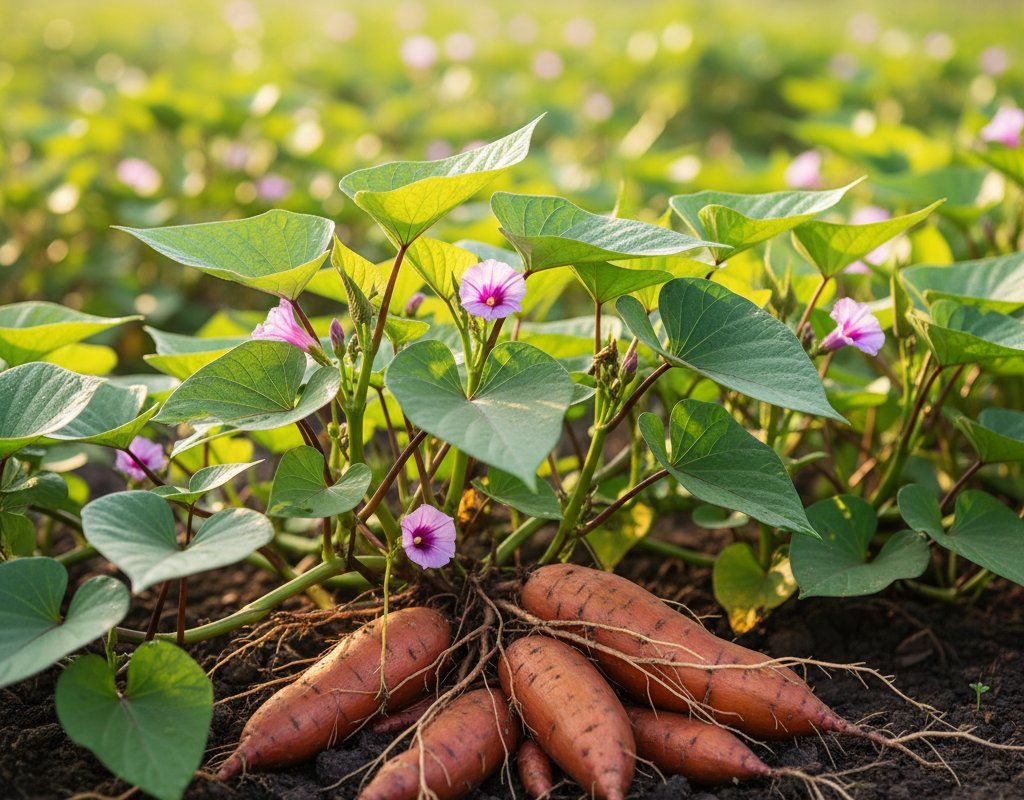
Sweet Potato in Zone 7B — Pacific Northwest
Ipomoea batatas · Your Complete 2026 Planting Guide
Ideal Time: Start Seeds Indoors!
This is the perfect time for the biggest, best harvest.
Start Seeds Now
- Start seeds in trays or pots with seed-starting mix
- Keep soil moist and warm (70-80°F)
- Transplant outdoors Early to late May
Not Starting from Seed?
Buy starts around May 6 — that works great too!
How to Plant Sweet Potato in Zone 7B — Pacific Northwest
Here are all your options for getting sweet potato in the ground, from the easiest method to more advanced approaches.
Buy Starts
RecommendedEarly to late May
around May 6
Plant purchased starts after last frost (April 15).
Plant slips (rooted sprouts) after soil is warm. Buy slips or grow your own from a sweet potato.
Start Seeds Indoors
Works WellEarly to late March
around March 11
Then transplant: Early to late May
Start seeds 8-10 weeks before transplanting outdoors.
Direct Sow Seeds
ChallengingDirect sowing is not typical for Sweet Potato.
Transplant Outdoors
Timing InfoEarly to late May
around May 6
Wait until nighttime temperatures stay above 50°F.
Plan to transplant within a few weeks of your target date.
Overview
Sweet potatoes thrive in our Pacific Northwest climate once you understand their needs. While they need more heat than our typical cool-season favorites, the 193-day growing season and mild summers give you plenty of time to grow these nutritious tubers. The moderate summer temperatures and dry conditions actually work in your favor — sweet potatoes appreciate consistent warmth without excessive heat stress.
Our cool spring soil and limited summer heat do present challenges, but starting with purchased slips and timing your transplant correctly makes sweet potato growing quite manageable here. You'll need to be patient in spring and strategic about soil warming, but the payoff is homegrown sweet potatoes with incredible flavor that store well through our wet winters.
Starting Seeds Indoors
Starting sweet potatoes from seed isn't the typical approach — most gardeners work with slips (rooted sprouts) instead. However, if you want to try seed starting, begin in early to late March, about 8 weeks before your transplant window. Sweet potato seeds need consistent warmth (75-80°F) and take longer to germinate than most vegetables.
Use seed trays with good drainage and bottom watering to maintain even moisture without waterlogged conditions. Our slow spring warming means you'll need supplemental heat and grow lights for proper development. Given our overcast spring days, strong artificial lighting becomes especially important for stocky growth.
The reality is that purchasing slips from reputable suppliers often gives better results than seed starting in our climate. The controlled growing conditions they provide typically produce more vigorous plants ready for our transplant timing.
Transplanting Outdoors
Sweet potatoes need soil temperatures consistently above 60°F, which typically happens in early to late May here. Wait until nighttime temperatures stay above 50°F — our cool nights can shock warm-season crops even when days feel pleasant. Purchase slips or grow your own by placing a sweet potato in water until it sprouts.
Harden off your slips gradually over a week, starting with just a few hours outdoors in a protected spot. Our spring weather can be unpredictable, so watch for late cold snaps that could damage tender transplants. Space plants 12-18 inches apart in raised beds or mounded soil that warms faster than flat ground.
Consider using row covers or black plastic mulch to boost soil temperature in the weeks leading up to transplant. This extra warmth helps establish roots quickly in our relatively cool soil conditions.
Watering Sweet Potato in Zone 7B (Pacific Northwest)
Sweet potatoes need moderate water to get established, but become surprisingly drought-tolerant once their vines spread. During our dry summer months, deep watering once or twice weekly works better than frequent shallow watering. Check soil moisture by inserting your finger 2 inches deep — water when the top inch feels dry.
Aim for about 1 inch of water per week during active growth, including any rainfall. Our mild summers mean less evaporation than hotter climates, so you'll likely need less supplemental water than expected. Water at the base of plants rather than overhead to keep foliage dry and prevent disease issues.
Our dry summer conditions actually benefit sweet potatoes by reducing fungal problems. Reduce watering to almost nothing 3-4 weeks before harvest — this concentrates sugars and prevents tubers from cracking if we get unexpected late-season rain.
Apply a light mulch around plants to maintain consistent soil moisture, but keep it away from stems to prevent slug problems. The mulch also helps warm soil temperature, which sweet potatoes appreciate throughout the growing season.
🧪Fertilizing Sweet Potato
Feeding Schedule
Organic Fertilizer Options
Harvest Time
Sweet potatoes are ready to harvest in mid-August through late September, after about 100 days from transplanting. The vines may yellow slightly, but don't wait for obvious signs — harvest timing is more about calendar days and approaching frost than visual cues. Our first frost typically arrives in late October, giving you a comfortable harvest window.
Dig carefully with a garden fork, working from the outside of the planting area inward. Sweet potato tubers can extend 12-18 inches from the main plant and break easily. Brush off soil but don't wash them immediately — curing works better with some soil still attached.
Cure your harvest in a warm (80-85°F), humid location for 1-2 weeks before storage. This process converts starches to sugars and toughens the skin for longer storage. A sunny, enclosed porch or spare room with a humidifier works well during our mild fall weather.
Store properly cured sweet potatoes in a cool (55-60°F), well-ventilated area. They'll keep for months through our wet winter season, providing homegrown nutrition when fresh garden produce becomes scarce.
Common Problems in Zone 7B (Pacific Northwest)
Sweet Potato Weevils These small beetles create small holes in tubers and stems, with larvae tunneling inside the sweet potatoes. You'll notice wilting vines and damaged tubers at harvest with dark tunnels throughout the flesh. The weevils thrive in warm, humid conditions but can establish even in our drier climate.
What causes it: Adult weevils lay eggs on stems and tubers, particularly when plants are stressed or soil remains too moist. How to fix it: Rotate crops and avoid planting sweet potatoes in the same area for 2-3 years. Remove all plant debris after harvest and cultivate soil to expose overwintering adults. Consider beneficial nematodes as a biological control.
Wireworms These thin, yellow-brown larvae create perfectly round holes in sweet potato tubers, often tunneling completely through. The damage looks like someone used a pencil to poke holes in your harvest. Wireworms are particularly common in areas that were previously lawn or pasture.
What causes it: Adult click beetles lay eggs in grassy areas, and the larvae feed on roots and tubers for 2-5 years. How to fix it: Trap adults using shallow pans of soapy water near garden lights. Cultivate soil in late fall to expose larvae to predators and freezing. Avoid planting sweet potatoes in newly converted lawn areas.
Cracking Sweet potato tubers split open, creating deep cracks that expose flesh to rot and storage problems. The cracks usually run lengthwise along the tuber and can be quite dramatic. This problem often appears during periods of variable moisture.
What causes it: Inconsistent watering, especially heavy rain or irrigation after a dry period, causes tubers to expand faster than their skin can stretch. How to fix it: Maintain consistent soil moisture with regular deep watering during our dry summer months. Mulch around plants to buffer moisture fluctuations. Stop watering 3-4 weeks before harvest to prevent late-season cracking.
Pacific Northwest Specific Challenges: Our cool spring soil delays planting and can slow establishment, while our mild summers provide just enough heat for good production without stress. The dry summer conditions actually benefit sweet potatoes by reducing disease pressure, but require attention to consistent watering. Our long, mild fall extends the growing season nicely, giving tubers extra time to size up before harvest.
Best Companions for Sweet Potato
Plant these nearby for healthier Sweet Potato and better harvests.


Keep Away From
Companion Planting Details
Sweet potatoes work well with traditional "Three Sisters" companions — beans and corn. Bush beans fix nitrogen that sweet potatoes can use later in the season, while their compact growth doesn't compete with spreading sweet potato vines. Corn provides vertical structure and partial shade during the hottest part of our mild summers, which sweet potatoes appreciate.
Avoid planting sweet potatoes with heavy feeders like tomatoes or squash that compete for the same nutrients. The sprawling vines also need space to spread, so keep them away from plants that require frequent cultivation or harvest access. In our Pacific Northwest growing conditions, companion planting becomes more about space management than pest control, since we face fewer insect pressures than other regions.
🌸Best Flowers to Plant with Sweet Potato
These flowers protect your Sweet Potato from pests and attract pollinators for better harvests.
For Pest Control




Get a Reminder When It's Time to Plant
We'll email you when key planting windows open for your zone.