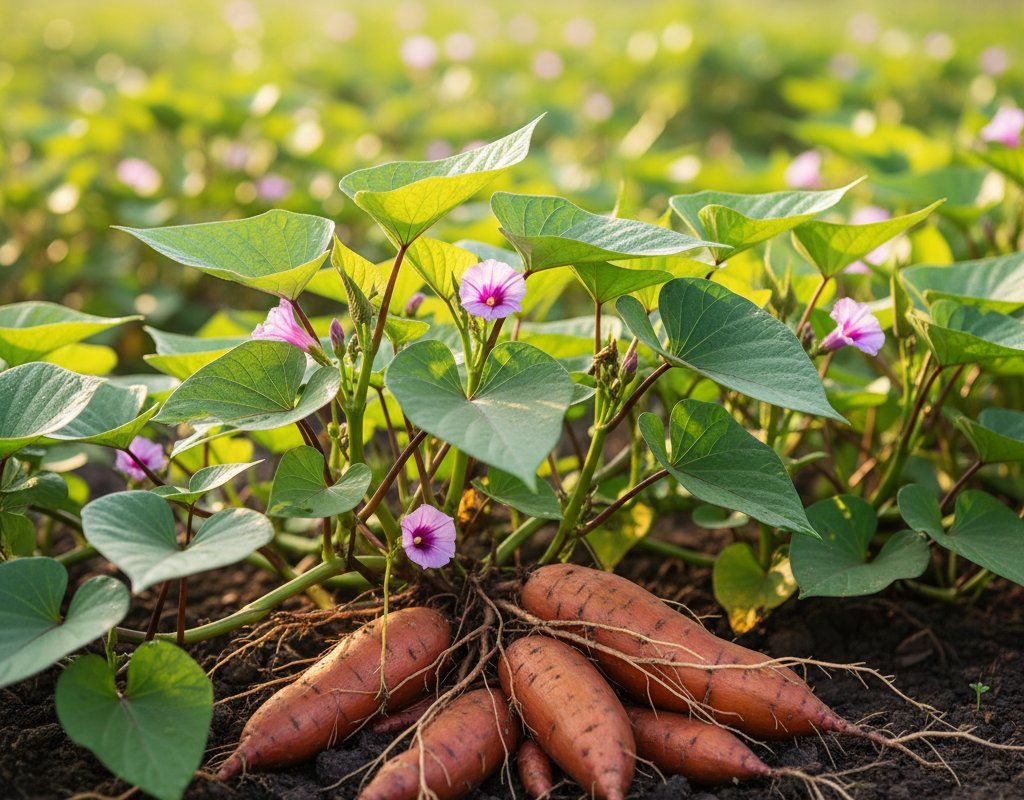
Sweet Potato in Zone 9B — Florida
Ipomoea batatas · Your Complete 2026 Planting Guide
Check Planting Details Below
See the full planting guide for timing information.
How to Plant Sweet Potato in Zone 9B — Florida
Here are all your options for getting sweet potato in the ground, from the easiest method to more advanced approaches.
Buy Starts
RecommendedEarly February through early March
around February 10
Plant purchased starts after last frost (January 20).
Plant slips (rooted sprouts) after soil is warm. Buy slips or grow your own from a sweet potato.
Start Seeds Indoors
Works WellEarly to late December
around December 16
Then transplant: Early February through early March
Start seeds 8-10 weeks before transplanting outdoors.
Direct Sow Seeds
ChallengingDirect sowing is not typical for Sweet Potato.
Transplant Outdoors
Timing InfoEarly February through early March
around February 10
Wait until nighttime temperatures stay above 50°F.
Plan to transplant within a few weeks of your target date.
Overview
Sweet potatoes are a perfect match for Florida's subtropical climate, thriving in our long, warm growing season when many other root vegetables would struggle. Unlike their northern cousins who battle short seasons, you can take advantage of our reversed growing calendar to plant slips in early spring and harvest hefty tubers through summer. These versatile vines not only produce nutritious orange-fleshed roots but also edible leaves that make excellent cooked greens - a bonus crop that's particularly valuable in our year-round growing climate.
Florida's intense summer humidity and heat can challenge many crops, but sweet potatoes actually prefer these conditions once established. With our 344-day growing season, you have plenty of time to grow substantial harvests, and the timing works perfectly - plant after our last frost risk in late winter, let them establish in spring's mild weather, then watch them flourish through summer's heat when cool-season crops have long since bolted.
Starting Seeds Indoors
Starting sweet potatoes from seeds isn't the typical approach - most Florida gardeners work with slips (rooted sprouts) from stored sweet potatoes instead. If you do want to try seeds, start them indoors from early to late December, about 8 weeks before your transplant window. You'll need consistent warmth (75-80°F) and bright light, which can be challenging during our mild winter months without supplemental heat and grow lights.
Set up seed trays with well-draining potting mix and use bottom watering to prevent fungal issues that love Florida's humidity. Keep the soil consistently moist but not soggy. Since sweet potatoes need warm soil to germinate and grow well, this early indoor start gives them time to develop strong root systems before facing our variable spring weather.
Most successful Florida sweet potato growers skip seed starting entirely and either purchase slips from local nurseries in early spring or create their own by sprouting stored sweet potatoes in water or sand during late winter.
Transplanting Outdoors
Transplant your sweet potato slips outdoors from early February through early March, once soil temperatures consistently reach 60°F and night temperatures stay above 55°F. This timing takes advantage of Florida's reversed growing season - while northern gardeners are still dealing with snow, you're getting your heat-loving crops established before summer's intensity arrives.
Harden off slips gradually over one week by increasing their outdoor exposure daily, starting with just a couple hours in filtered light. Florida's spring weather can swing dramatically, so watch for cold snaps that might require bringing plants back indoors temporarily. Space slips 12-18 inches apart in rows, giving these vigorous vines room to spread - they'll easily cover 3-4 feet once established.
Plant slips slightly deeper than they were growing in containers, burying about two-thirds of the stem to encourage strong root development. The loose, sandy soil common in much of Florida actually works well for sweet potatoes, though adding compost improves water retention and provides slow-release nutrients.
Watering Sweet Potato in Zone 9B (Florida)
Sweet potatoes need moderate water to get established but become surprisingly drought-tolerant once their root systems develop. During your first month after transplanting, water deeply twice weekly, applying about 1 inch total. Use the finger test - stick your finger 2 inches into the soil, and water when it feels dry at that depth.
Florida's wet summer season usually provides adequate natural irrigation, but our sandy soils drain quickly and may need supplemental watering during dry spells. Water at the base of plants rather than overhead - our extreme humidity already creates perfect conditions for fungal diseases, and wet foliage makes problems worse. Deep, infrequent watering encourages roots to grow down rather than staying shallow.
Reduce watering significantly during the last 3-4 weeks before harvest to concentrate sugars and prevent tubers from cracking. This timing usually coincides with Florida's heaviest summer rains, so you may need to create drainage or cover plants if we get excessive rainfall. Mulch around plants with organic matter to maintain consistent soil moisture and suppress weeds, but keep mulch away from the main stem to prevent pest problems.
Signs of underwatering include wilted leaves during the heat of the day that don't recover by evening. Overwatering shows as yellowing leaves, soft stems, or that distinctive musty smell of root rot that Florida's humidity can quickly amplify.
🧪Fertilizing Sweet Potato
Feeding Schedule
Organic Fertilizer Options
Harvest Time
Your first sweet potatoes will be ready from late May through early July, approximately 100 days after transplanting. Unlike many vegetables, sweet potatoes don't give obvious visual cues when ready - you'll need to carefully dig around the base of plants to check tuber size. Start harvesting when tubers reach 3-4 inches in diameter, though you can leave them in the ground longer for larger yields.
Harvest carefully using a digging fork rather than a shovel, working from the outer edges of the vine inward to avoid puncturing tubers. Florida's sandy soil makes this easier than heavy clay, but sweet potato roots can spread surprisingly far from the main plant. Brush off excess soil but don't wash them immediately - wet tubers are more prone to rot in our humid conditions.
Sweet potatoes must be cured properly to develop their characteristic sweetness and store well. In Florida's climate, this is actually easier than in drier regions - place freshly dug tubers in a warm (80-85°F), humid location for 1-2 weeks. A covered porch or garage works well, or you can create a makeshift curing chamber with plastic sheeting.
Since our first frost doesn't typically arrive until late December, you have flexibility in harvest timing. However, don't wait too long - tubers left in increasingly wet fall soil may begin to rot, and any damaged by digging tools won't store properly.
Common Problems in Zone 9B (Florida)
Sweet Potato Weevils These small, dark beetles create holes in both vines and tubers, with larvae tunneling through the roots creating bitter-tasting damage. Adult weevils are about 1/4 inch long and metallic blue-black, while their white grubs with brown heads do the real damage inside tubers. Florida's year-round warmth allows multiple generations per season, making this our most serious sweet potato pest.
The humid conditions that sweet potatoes love also favor weevil reproduction. Prevent problems by rotating crops - don't plant sweet potatoes in the same area for at least 3 years. Remove all plant debris at harvest since weevils overwinter in leftover roots and vines. Inspect slips carefully before planting and destroy any showing signs of damage.
Wireworms These yellow-brown, hard-bodied larvae create round holes in sweet potato tubers, often tunneling straight through. They're particularly problematic in areas that were previously in grass or weedy ground cover, which is common in Florida's rapidly developing landscape. Wireworms thrive in our sandy soils and can persist for several years.
Crop rotation helps break the cycle, and thorough soil preparation before planting can expose larvae to predators. Some Florida gardeners report success with beneficial nematodes applied to soil before planting, though results vary. Deep cultivation in fall can help reduce populations for next season.
Cracking Sweet potato tubers develop splits or cracks, either in concentric circles or radiating lines, which expose flesh to rot and make storage impossible. This happens when heavy rain or irrigation follows a dry period - the tuber absorbs water faster than the skin can expand. Florida's intense summer thunderstorms create perfect conditions for this problem.
Maintain consistent soil moisture through mulching and regular watering schedules. During Florida's wet season, ensure good drainage to prevent waterlogged conditions. Harvest promptly when tubers reach maturity rather than leaving them in variable soil conditions.
Florida Specific Challenges: Our extreme humidity creates ideal conditions for fungal diseases, while nematodes in sandy soils can weaken plants and create entry points for other pests. Summer's heat stress, combined with hurricane season's potential for waterlogged soils, requires careful attention to drainage and plant health monitoring.
Best Companions for Sweet Potato
Plant these nearby for healthier Sweet Potato and better harvests.


Keep Away From
Companion Planting Details
Sweet potatoes make excellent companions for beans and corn in a modified version of the traditional "three sisters" planting. The beans fix nitrogen that sweet potatoes can use, while the spreading sweet potato vines help suppress weeds around corn stalks. In Florida's intense sun, the broad sweet potato leaves also provide beneficial ground shading that helps conserve soil moisture during our hot summers.
Avoid planting sweet potatoes near other root vegetables like regular potatoes or carrots, as they compete for the same soil space and nutrients. The vigorous vines can also overwhelm smaller plants, so give them plenty of room or pair them with equally robust companions. Squash works well since both crops spread widely and appreciate similar growing conditions in our subtropical climate.
🌸Best Flowers to Plant with Sweet Potato
These flowers protect your Sweet Potato from pests and attract pollinators for better harvests.
For Pest Control




Get a Reminder When It's Time to Plant
We'll email you when key planting windows open for your zone.