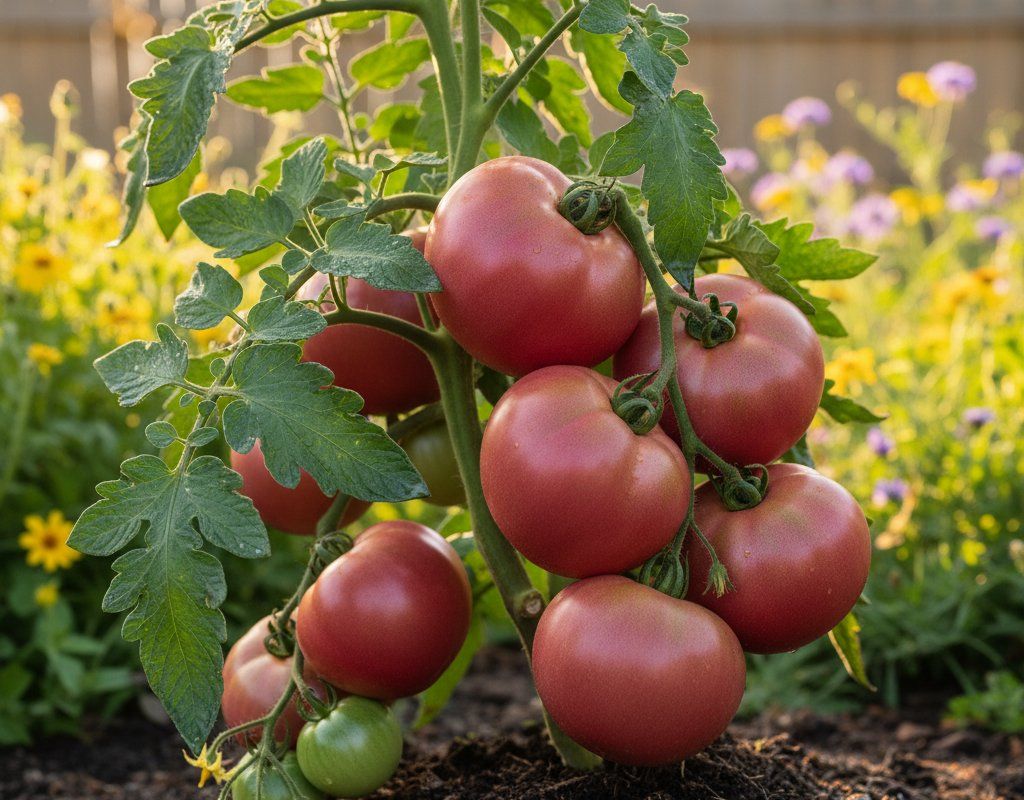
Brandywine Tomatoes in Zone 6B — Mountain West
Solanum lycopersicum · Your Complete 2026 Planting Guide
Planning Ahead — Great!
You’re ahead of the season. Here’s when to start.
Mark Your Calendar
How to Plant Brandywine Tomatoes in Zone 6B — Mountain West
Here are all your options for getting brandywine tomatoes in the ground, from the easiest method to more advanced approaches.
Start Seeds Indoors
RecommendedLate March through mid April
around March 28
Then transplant: Early to late May
Start seeds 6-8 weeks before transplanting outdoors.
Buy Starts
Works WellEarly to late May
around May 9
Plant purchased starts after last frost (April 25).
Direct Sow Seeds
ChallengingDirect sowing is not typical for Brandywine Tomatoes.
Transplant Outdoors
Timing InfoEarly to late May
around May 9
Wait until nighttime temperatures stay above 50°F.
Plan to transplant within a few weeks of your target date.
Overview
Brandywine tomatoes are the crown jewel of heirloom varieties, and in our Mountain West climate, they develop an extraordinary depth of flavor that's hard to match. The combination of intense high-altitude sunlight and cool nights creates perfect conditions for these large, pink-red beauties to develop their legendary sweet-tart complexity. While they take patience—90 days from transplant to harvest—the payoff is incredible: massive, beefsteak-style tomatoes that can weigh over a pound each.
Yes, Brandywines present some challenges in our short 163-day growing season, and they're more finicky than modern hybrids. But with proper indoor starting and careful timing around our late spring frosts, you can absolutely grow spectacular Brandywines here. The key is working within our compressed timeline and taking advantage of our region's natural advantages.
Starting Seeds Indoors
Start your Brandywine seeds indoors from late March through mid-April, about 6 weeks before your planned transplant date. This timing accounts for our characteristically late spring—you need those extra weeks indoors to get a jump on our compressed growing season.
Set up your seeds in quality seed-starting mix in trays or cells, keeping soil temperature around 70-75°F for best germination. A heat mat helps significantly during our cool spring nights. Once sprouted, provide strong light—either a south-facing window supplemented with grow lights, or LED grow lights for 14-16 hours daily.
Water from the bottom whenever possible to prevent damping-off disease. Brandywine seedlings can be more susceptible to fungal issues than hybrids, so bottom watering helps keep the foliage dry while ensuring consistent moisture at root level. Transplant to larger containers once they have their first true leaves.
Transplanting Outdoors
Wait until early to late May to transplant your Brandywines outdoors, after all danger of frost has passed. Our last average frost falls around late April, but temperature swings are common well into May, so patience pays off here.
Harden off your seedlings gradually over a full week, starting with just a couple hours of morning sun and building up to full outdoor exposure. Space plants 36-48 inches apart—Brandywines are vigorous indeterminate vines that need plenty of room for air circulation, especially important in our dry climate where good airflow helps prevent disease.
Plant on a calm, overcast day if possible, as our intense high-altitude UV can shock tender transplants. Install support structures at planting time, and consider row covers for the first week if nighttime temperatures are still dipping into the 40s.
Watering Brandywine Tomatoes in Zone 6B (Mountain West)
Brandywines need consistent, deep watering throughout our dry Mountain growing season—they're not drought tolerant and actually require more water than most hybrid varieties. In our arid climate with only 10-20 inches of annual rainfall, plan to provide about 1-2 inches of water per week through deep, infrequent irrigation.
Check soil moisture using the finger test: stick your finger 2 inches deep near the base of the plant. If it's dry at that depth, it's time to water. During our peak summer heat in July and August, you may need to water every 2-3 days, especially as fruits are sizing up.
Water at the base of plants rather than overhead—our low humidity means less disease pressure from wet foliage, but ground-level watering is still more efficient and reduces water loss to evaporation. Brandywines are particularly prone to fruit cracking when they go through dry-wet cycles, so consistency is crucial.
Apply 2-3 inches of organic mulch around plants to help retain moisture and moderate soil temperature swings. In our intense sun and dry air, unmulched soil can dry out surprisingly quickly even with regular watering.
Supporting Your Brandywine Tomatoes
Install heavy-duty cages or strong stakes at planting time—Brandywines are vigorous indeterminate vines that can easily reach 6-8 feet tall and will be loaded with heavy fruit by late summer. Standard tomato cages often aren't substantial enough for these large heirloom varieties.
For staking, use sturdy 8-foot stakes driven at least 2 feet deep, and tie plants loosely with soft cloth strips as they grow. For caging, choose tall, wide cages made of thick wire that won't buckle under the weight of mature plants and fruit.
Train main stems upward and tie them regularly as plants grow. Brandywines have potato-leaf foliage that provides less natural shade than regular tomato leaves, so the strong support structure becomes even more important for keeping heavy fruit off the ground in our intense UV environment.
Pruning & Maintaining Brandywine Tomatoes
Prune Brandywines moderately throughout the growing season, focusing on removing suckers that emerge between the main stem and branch joints. This helps concentrate the plant's energy into fruit production rather than excessive foliage, particularly important given our short 163-day growing season.
Remove lower leaves that touch the ground and any yellowing or diseased foliage promptly. Brandywines are more disease-susceptible than modern hybrids, so good air circulation through selective pruning helps prevent problems in our sometimes humid microclimates near irrigation zones.
Around mid to late August, pinch off the growing tips to stop upward growth and redirect energy into ripening existing fruit before our first frost in early October. Remove any new flower clusters that appear after this point—they won't have time to develop and ripen in our short season.
🧪Fertilizing Brandywine Tomatoes
Feeding Schedule
Organic Fertilizer Options
Harvest Time
Expect your first ripe Brandywines from early August through mid-September, roughly 90 days from transplant. These large heirlooms take their time to ripen, but the wait is worth it for that incredible flavor that develops in our cool nights and intense sun.
Harvest when fruits show a pink-red color with slight give when gently squeezed. Don't worry if the shoulders stay somewhat green—that's normal for Brandywines and doesn't affect eating quality. The fruit should feel heavy and have that distinctive tomato aroma at the stem end.
Pick regularly to encourage continued production. A single plant can produce 10-15 large fruits over the season if well-maintained. Handle carefully when harvesting—the skin is thinner than hybrid varieties and can bruise easily.
As your first frost approaches in early October, harvest any full-sized green fruits and ripen them indoors on a countertop or in paper bags. Brandywines ripen beautifully off the vine, allowing you to extend your harvest even after frost ends the growing season. You can also cut entire branches with green fruit and hang them in a cool, dry location for gradual ripening.
Common Problems in Zone 6B (Mountain West)
Fruit Cracking Deep splits appear in the tomato skin, either as concentric circles around the stem or radial lines from stem to bottom. The exposed flesh often develops rot. In our Mountain climate, this typically happens when heavy irrigation or sudden rainstorms follow dry periods—the fruit absorbs water faster than the skin can stretch. Brandywines are particularly susceptible to cracking. Prevent this by maintaining consistent soil moisture through regular watering and mulching, and harvest promptly when fruits start to show color.
Low Yields Despite healthy-looking plants, you get fewer tomatoes than expected. Heirloom varieties like Brandywine naturally produce less than modern hybrids, but in our short growing season, yields can suffer from our compressed timeline and cool night temperatures during early flowering. Ensure adequate nutrition with balanced fertilizer (avoid excess nitrogen which promotes leaves over fruit), maintain consistent watering, and consider using row covers during cool spells in May and June to keep soil and air temperatures optimal for fruit set.
Disease Susceptibility Leaves develop spots, yellowing, or wilting despite adequate care. Brandywines lack the disease resistance genes bred into modern hybrids, making them more vulnerable to fungal and bacterial issues. Our intense UV can stress plants and make them more susceptible. Improve air circulation with wider spacing and selective pruning, apply preventative organic fungicides during humid periods, and remove affected foliage immediately. Consider drip irrigation instead of overhead watering to keep foliage dry.
Catfacing Fruits develop deep crevices, scars, and lumpy deformities on the blossom end, looking misshapen and ugly. This occurs when cool temperatures during flowering (below 55°F at night) interfere with proper pollination—common in our Mountain climate with cool nights even in summer. Large-fruited varieties like Brandywine are especially prone. Prevent by avoiding too-early planting and using row covers when nighttime temperatures drop. The deformed fruits are perfectly edible, just not pretty.
Mountain West Specific Challenges: Our combination of intense high-altitude UV, low humidity, and cool nights creates unique stress conditions for Brandywines. The dry air can increase water needs significantly, while cool nights can slow ripening just when you need every day to reach harvest before frost. Focus on consistent watering, UV protection through adequate spacing for air circulation, and season extension techniques like row covers and protected microclimates.
Best Companions for Brandywine Tomatoes
Plant these nearby for healthier Brandywine Tomatoes and better harvests.
View Full Companion Planting Chart →



Companion Planting Details
Plant basil alongside your Brandywines—it's said to improve tomato flavor and definitely helps repel aphids and hornworms. Carrots and parsley make excellent companions because they don't compete for nutrients and actually help break up soil around tomato roots. Marigolds planted nearby can deter nematodes and some insect pests while adding beneficial color to your tomato patch.
Avoid planting brassicas (cabbage, broccoli) or fennel near Brandywines. Brassicas can inhibit tomato growth, and fennel releases compounds that stunt most other plants. Also skip corn as a companion—it attracts similar pests like hornworms and creates too much shade in our already-compressed growing season where every bit of sun exposure counts for ripening.
🌸Best Flowers to Plant with Brandywine Tomatoes
These flowers protect your Brandywine Tomatoes from pests and attract pollinators for better harvests.
For Pest Control

Get a Reminder When It's Time to Plant
We'll email you when key planting windows open for your zone.