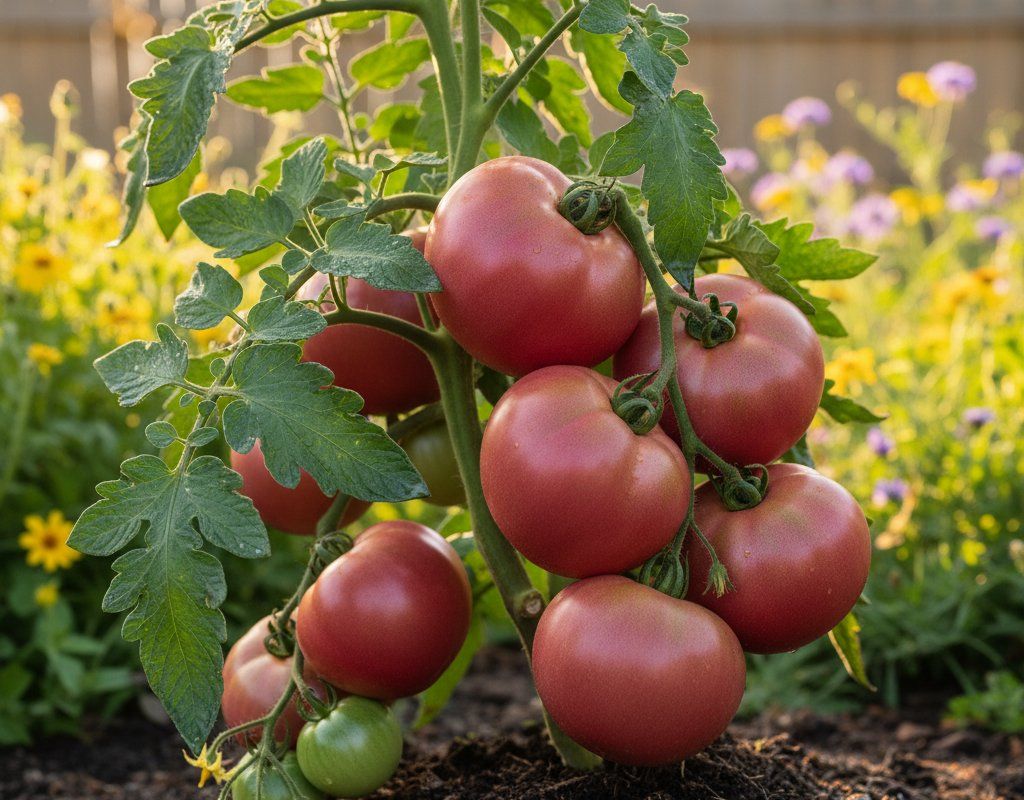
Brandywine Tomatoes in Zone 9B — Desert Southwest
Solanum lycopersicum · Your Complete 2026 Planting Guide
Time to Buy Starts!
Seed starting window passed, but starts are available now.
Buy Starts Now
Head to your local nursery, Home Depot, or farmers market for transplants.
- Look for stocky plants with dark green leaves
- Avoid leggy seedlings or plants already flowering
- Check that roots aren't circling the pot (rootbound)
How to Plant Brandywine Tomatoes in Zone 9B — Desert Southwest
Here are all your options for getting brandywine tomatoes in the ground, from the easiest method to more advanced approaches.
Start Seeds Indoors
RecommendedEarly to late January
around January 8
Then transplant: Mid February through mid March
Start seeds 6-8 weeks before transplanting outdoors.
Buy Starts
Works WellMid February through mid March
around February 19
Plant purchased starts after last frost (February 5).
Direct Sow Seeds
ChallengingDirect sowing is not typical for Brandywine Tomatoes.
Transplant Outdoors
Timing InfoMid February through mid March
around February 19
Wait until nighttime temperatures stay above 50°F.
Plan to transplant within a few weeks of your target date.
Overview
Brandywine tomatoes bring something special to Desert Southwest gardens that our extreme heat can't destroy – that legendary sweet, complex flavor that makes store-bought tomatoes taste like cardboard. These pink heirloom beauties thrive in our very-early spring conditions, producing massive 1-2 pound fruits with the kind of taste that reminds you why you started gardening in the first place. In our desert climate, getting them established before the brutal summer heat arrives is the key to success.
Yes, Brandywines need more attention than hybrid varieties, especially with our arid conditions and extreme temperature swings. But with our 313-day growing season and mild winters, you have plenty of flexibility to time things right. Start seeds indoors during our cool January weather, transplant in February, and you'll be harvesting incredible tomatoes before the summer survival mode kicks in.
Starting Seeds Indoors
Start your Brandywine seeds indoors during early to late January, about 6 weeks before you plan to transplant. This timing works perfectly with our very-early spring character – you'll have strong seedlings ready to go out when February's mild weather arrives.
Set up seed trays with quality seed-starting mix in a warm spot, ideally 70-75°F. A heat mat helps tremendously during our cool January nights. Once seeds germinate (usually 7-10 days), move them under grow lights or to your brightest south-facing window. Water from the bottom by placing trays in a shallow pan of water – this prevents damping off and keeps moisture consistent.
Desert gardeners often have success starting seeds on top of the water heater or refrigerator for that initial warmth. Once your seedlings develop their first true leaves, transplant to individual 4-inch pots and begin weekly fertilizing with diluted liquid fertilizer.
Transplanting Outdoors
Transplant your Brandywine seedlings outdoors from mid February through mid March, once nighttime temperatures stay consistently above 45°F. Our desert spring arrives early, so don't wait too long – you want plants established before summer's extreme heat arrives.
Harden off seedlings gradually over 7-10 days, starting with just 2-3 hours outdoors in filtered light and working up to full days. Watch for our occasional late-winter temperature swings that can shock tender transplants. Space plants 36-48 inches apart – Brandywines get massive and need room for air circulation in our low humidity climate.
Plant on a calm day when possible, as our spring winds can stress newly transplanted seedlings. Dig holes twice as wide as the root ball and plant deeply, burying 2/3 of the stem to encourage strong root development. This deep planting helps plants access moisture deeper in our alkaline soil.
Watering Brandywine Tomatoes in Zone 9B (Desert Southwest)
Brandywines have high water needs and absolutely cannot tolerate the boom-bust watering cycles that our desert climate encourages. In our arid conditions with extreme summer heat, consistent moisture becomes even more critical than in humid regions. These heirloom tomatoes are notorious for cracking when watered heavily after dry spells.
Water deeply 2-3 times per week rather than daily shallow watering, providing about 2 inches total per week. During our extreme summer heat (105°F+ days), you may need to increase to every other day. Always water at the base of plants rather than overhead – our low humidity means foliar diseases aren't the main concern, but soil moisture conservation is crucial.
Use the finger test to check soil moisture 2 inches down before watering. The soil should feel like a wrung-out sponge, never bone dry or soggy. Underwatered plants show wilting and smaller fruit, while overwatered ones develop yellow leaves and root problems.
Apply 3-4 inches of organic mulch around plants, keeping it 3 inches from the stem. This helps maintain even moisture through our temperature extremes and reduces water evaporation in our arid climate. During monsoon season, be prepared to adjust watering as those brief intense storms can saturate soil quickly.
Supporting Your Brandywine Tomatoes
Install heavy-duty tomato cages or sturdy stakes at planting time – Brandywines produce enormous fruits on vigorous indeterminate vines that will easily topple weak supports. Choose cages at least 6 feet tall and made from thick wire, or use 8-foot stakes driven 2 feet deep into our often-difficult desert soil.
These plants grow aggressively in our mild spring weather, reaching 6-8 feet tall with potato-leaf foliage that offers less natural shade than regular tomato leaves. This means the heavy fruit clusters get more sun exposure, making strong support even more essential to prevent branches from breaking under weight.
Train main stems loosely to supports using soft ties, checking weekly as plants grow rapidly in our long growing season. The large fruits need support too – use fabric slings or pantyhose to cradle heavy clusters that might otherwise snap branches as they ripen.
Pruning & Maintaining Brandywine Tomatoes
Prune Brandywines moderately throughout the growing season, focusing on removing suckers (shoots between main stem and branches) and lower leaves that touch the ground. These heirloom varieties are more disease-susceptible than hybrids, so improving air circulation through our dense desert plantings becomes important.
Remove suckers when they're small (2-3 inches), pinching them off with your fingers rather than using tools that might spread disease. Also prune the lowest set of leaves once fruits start forming – this prevents soil splash and improves airflow around the base.
As our mid-December first frost approaches, stop pruning suckers about 6-8 weeks earlier to allow remaining fruits to size up. You can also "top" plants by pinching growing tips in early fall, redirecting energy into ripening existing fruits rather than new growth that won't have time to mature.
🧪Fertilizing Brandywine Tomatoes
Feeding Schedule
Organic Fertilizer Options
Harvest Time
Your first Brandywines will be ready from mid May through early July, about 90 days from transplant. Look for fruits that turn from green to pink-red with a slight softness when gently squeezed. Don't worry if shoulders stay greenish – that's normal for this variety and doesn't affect flavor.
Harvest fruits when they give slightly to pressure but before they become soft. Brandywines can ripen off the vine beautifully, so pick them at first color change during our extreme heat periods to prevent sunscald and overripening. The flavor actually improves when ripened indoors during summer.
Harvest regularly to encourage continued production through our growing season. A healthy plant will produce 10-15 pounds of fruit over the season if you keep picking ripe ones. Twist and pull fruits gently, or use clean shears to avoid damaging the vine.
As our first frost approaches in mid-December, harvest all remaining fruits regardless of size. Green tomatoes ripen well indoors when wrapped in newspaper and stored in a cool, dark place. You'll often have fresh Brandywines into January this way, extending your harvest well into our mild winter months.
Common Problems in Zone 9B (Desert Southwest)
Cracking Brandywines split around the stem (concentric cracks) or in lines radiating outward when heavy watering follows dry periods. In our desert climate with monsoon storms and irrigation cycles, this becomes a major issue. The rapid water uptake causes fruit to expand faster than the skin can stretch.
Maintain consistent soil moisture through regular deep watering and thick mulching. During monsoon season, cover plants temporarily if heavy rains threaten after a dry spell. Harvest fruits at first color change rather than waiting for full ripeness during summer heat.
Low Yields Despite healthy-looking plants, fruit production disappoints compared to hybrid varieties. Our extreme heat can interfere with pollination, while our alkaline soils may lack balanced nutrition. Heirloom varieties naturally produce fewer but larger fruits than modern hybrids.
Hand-pollinate flowers during extreme heat by transferring pollen with a small brush between 6-10 AM when it's viable. Reduce nitrogen fertilizer and increase phosphorus for better fruiting. Accept that Brandywines prioritize size and flavor over quantity – 10-15 pounds per plant is normal.
Disease Susceptibility Leaves develop brown spots, wilting, or other disease symptoms more readily than hybrid tomatoes. While our arid climate reduces many fungal diseases, Brandywines lack the resistance genes of modern varieties and stress from extreme heat makes them vulnerable.
Space plants wider (48 inches) for better air circulation in our dense desert gardens. Apply preventative organic fungicide early in the season. Remove affected leaves immediately and dispose in trash, not compost. Consider this variety's trade-off: amazing flavor but higher maintenance.
Catfacing Fruits develop deep crevices and deformities on the blossom end, looking lumpy and scarred. Cool spring nights below 55°F during flowering cause incomplete pollination in large-fruited varieties like Brandywine. Late winter temperature swings in our desert can trigger this.
Plant after consistently warm weather arrives, or use row covers during cold snaps in February and March. While ugly, catfaced fruits are perfectly edible and often have the best flavor. Choose smaller-fruited varieties if this becomes a persistent problem.
Desert Southwest Specific Challenges: Our extreme summer heat can halt fruit production and cause sunscald on exposed fruits. The combination of intense UV, low humidity, and temperature swings stresses these large-fruited heirlooms more than compact varieties. Success comes from getting plants established early and providing afternoon shade during peak summer.
Best Companions for Brandywine Tomatoes
Plant these nearby for healthier Brandywine Tomatoes and better harvests.
View Full Companion Planting Chart →



Companion Planting Details
Plant basil near your Brandywines – it thrives in our heat and may help repel insects while improving tomato flavor. Carrots work well underneath as they appreciate the light shade and don't compete for surface water. Marigolds planted around the edges can deter nematodes, which become more problematic in our warm desert soils.
Avoid planting brassicas like cabbage or broccoli nearby, as they attract different pests and prefer cooler conditions that conflict with heat-loving tomatoes. Fennel's allelopathic properties can stunt tomato growth, while corn attracts similar pests like hornworms and competes for the high nutrition that Brandywines demand in our challenging desert soils.
🌸Best Flowers to Plant with Brandywine Tomatoes
These flowers protect your Brandywine Tomatoes from pests and attract pollinators for better harvests.
For Pest Control

Get a Reminder When It's Time to Plant
We'll email you when key planting windows open for your zone.