Heirloom Tomatoes in Zone 8A — Pacific Northwest
Solanum lycopersicum · Your Complete 2026 Planting Guide
Planning Ahead — Great!
You’re ahead of the season. Here’s when to start.
Mark Your Calendar
How to Plant Heirloom Tomatoes in Zone 8A — Pacific Northwest
Here are all your options for getting heirloom tomatoes in the ground, from the easiest method to more advanced approaches.
Start Seeds Indoors
RecommendedEarly to late March
around March 13
Then transplant: Late April through late May
Start seeds 6-8 weeks before transplanting outdoors.
Buy Starts
Works WellLate April through late May
around April 24
Plant purchased starts after last frost (April 10).
Direct Sow Seeds
ChallengingDirect sowing is not typical for Heirloom Tomatoes.
Transplant Outdoors
Timing InfoLate April through late May
around April 24
Wait until nighttime temperatures stay above 50°F.
You have a nice window — no need to rush.
Overview
Heirloom tomatoes thrive in our Pacific Northwest Zone 8A climate, offering flavors that make store-bought varieties taste like cardboard. Our mild summers with cool nights actually enhance flavor development, while the long growing season gives these slower-maturing varieties plenty of time to reach their potential. The dry summer months mean less disease pressure than humid regions, and you'll appreciate the incredible diversity of colors, shapes, and tastes that only heirlooms provide.
While heirloom tomatoes need more attention than hybrids and our cool spring soil can delay getting started, the 203-day growing season gives you plenty of flexibility. Starting seeds indoors during our wet spring months and transplanting after soil warms ensures success. The mild summer temperatures rarely stress these plants like they would in hotter climates.
Starting Seeds Indoors
Start your heirloom tomato seeds indoors from early to late March, about 6 weeks before you plan to transplant outdoors. Our slow spring warming means indoor starting is essential - direct sowing simply won't work with soil temperatures staying cool well into May.
Set up seed trays with quality seed-starting mix and place them on a heat mat or warm surface to maintain 70-75°F soil temperature. Seeds germinate best with bottom heat during our still-chilly March days. Once seedlings emerge, provide strong light from grow lights or a sunny south-facing window, keeping them 2-3 inches from the light source.
Water from the bottom by placing seed trays in shallow water until the soil surface feels moist, then drain. This prevents damping-off and encourages strong root development. During our overcast spring days, supplemental lighting becomes even more important for stocky, healthy transplants.
Transplanting Outdoors
Transplant your heirloom tomatoes outdoors from late April through late May, once soil temperatures consistently reach 55°F and nighttime lows stay above 50°F. Our wet springs can delay this timing, so don't rush - cold soil stunts growth and invites disease problems.
Harden off seedlings for a full week before transplanting by gradually exposing them to outdoor conditions. Start with 2-3 hours of morning sun, increasing daily until they're outside overnight. Our cool spring nights require this gradual transition to prevent shock.
Space plants 36-48 inches apart to ensure good air circulation - crucial for preventing disease in our humid spring conditions. The wide spacing also accommodates the vigorous growth of indeterminate heirlooms. Plant after the soil has had a few dry days to work properly, as our spring clay can compact when worked wet.
Watering Heirloom Tomatoes in Zone 8A (Pacific Northwest)
Heirloom tomatoes need consistent, deep watering throughout our dry summer months, requiring about 1-2 inches per week once established. Unlike regions with summer rainfall, you'll need to provide all moisture from June through September, making a consistent schedule essential.
Water deeply at soil level rather than overhead, taking advantage of our dry summer humidity that reduces fungal disease risk. Check soil moisture by inserting your finger 2 inches deep - if dry at that depth, it's time to water. During our mild summers with highs around 82°F, plants rarely suffer heat stress but still need steady moisture for fruit development.
Inconsistent watering causes more problems with heirlooms than hybrids, especially the dreaded cracking when heavy watering follows dry spells. Apply 2-3 inches of organic mulch around plants to maintain even soil moisture during our dry months. Signs of underwatering include wilting during afternoon heat and blossom end rot, while overwatering shows as yellowing lower leaves and poor fruit development.
The transition from wet spring to dry summer requires adjusting your approach - reduce watering frequency as spring rains taper off in late May, then establish a deep watering routine for summer. Our cool nights help plants recover from any daytime stress, but don't let this fool you into underwatering.
Supporting Your Heirloom Tomatoes
Install sturdy cages or stakes at transplant time, as most heirloom varieties are indeterminate and will grow 6-8 feet tall in our long growing season. Heavy-duty tomato cages or 8-foot stakes work best since heirloom fruits are often larger and oddly shaped, creating more weight than compact hybrids.
Tie plants loosely to supports using soft materials like fabric strips or plant ties, allowing for stem growth. Check ties monthly and adjust as needed - our mild summers promote steady growth that can quickly outgrow restrictive ties.
Train main stems vertically and secure them every 12-18 inches as they grow. The combination of our cool, moist springs and vigorous heirloom growth means you'll need strong support systems that won't topple under the weight of a full plant loaded with fruit by late summer.
Pruning & Maintaining Heirloom Tomatoes
Remove suckers (shoots growing between main stem and branches) when they're small, focusing on those below the first flower cluster. This improves air circulation, which is especially important for disease-prone heirlooms during our humid spring months.
Prune lower leaves that touch the soil once plants are established, and continue removing any yellowing or diseased foliage throughout the season. Our wet springs can encourage foliar diseases, so maintaining good airflow becomes critical for heirloom varieties that lack hybrid disease resistance.
As first frost approaches in late October, stop pruning suckers and pinch growing tips in early September to encourage existing fruit to ripen. Remove any new flower clusters that appear after early September, as they won't have time to develop before frost ends the season.
🧪Fertilizing Heirloom Tomatoes
Feeding Schedule
Organic Fertilizer Options
Harvest Time
Expect your first ripe heirloom tomatoes from mid-July through late August, depending on variety and spring weather. The 80-day maturity clock starts from transplant, not seeding, so late spring transplanting delays harvest accordingly.
Harvest when fruits show full color development (varying by variety) and yield slightly to gentle pressure. Many heirlooms retain green shoulders even when ripe - this is normal, not underripeness. The fruit should detach easily from the vine with a gentle twist and lift motion.
Pick tomatoes every 2-3 days once harvest begins to encourage continued production. Our mild summers allow plants to keep producing well into fall, unlike hotter climates where production drops during heat waves. Check plants daily as cool nights followed by warm days can cause rapid ripening.
As first frost threatens in late October, harvest all remaining fruit regardless of ripeness. Green tomatoes will continue ripening indoors if placed in a warm, dark location. Wrap larger green fruits individually in newspaper for slower, more even ripening that can extend your harvest into December.
Common Problems in Zone 8A (Pacific Northwest)
Fruit Cracking Look for splits in tomato skin, either as circles around the stem end or lines radiating outward. Severe cracks expose flesh to rot and ruin the fruit. This happens when heavy watering or sudden rain follows dry periods, causing fruit to absorb water faster than skin can stretch. Our transition from wet spring to dry summer, followed by occasional late-summer rain, creates perfect cracking conditions. Water consistently throughout summer, maintain 2-3 inches of mulch, and harvest promptly when ripe.
Disease Susceptibility Heirloom varieties show yellowing leaves, dark spots, or wilting more readily than hybrids because they lack bred-in disease resistance. Our cool, wet springs favor fungal diseases like early blight and late blight that particularly target tomatoes. Space plants widely (36-48 inches), prune for airflow, and remove affected foliage immediately. Consider copper-based fungicides applied preventatively during spring, and rotate planting locations annually.
Lower Yields Expect fewer but larger, more flavorful fruits compared to hybrid varieties. Heirloom plants put energy into flavor and size rather than quantity. Our mild summer temperatures actually help by reducing plant stress, but cool spring soil can delay establishment. Accept the trade-off - you're growing for taste, not volume. Choose determinate heirloom varieties if space requires maximum production.
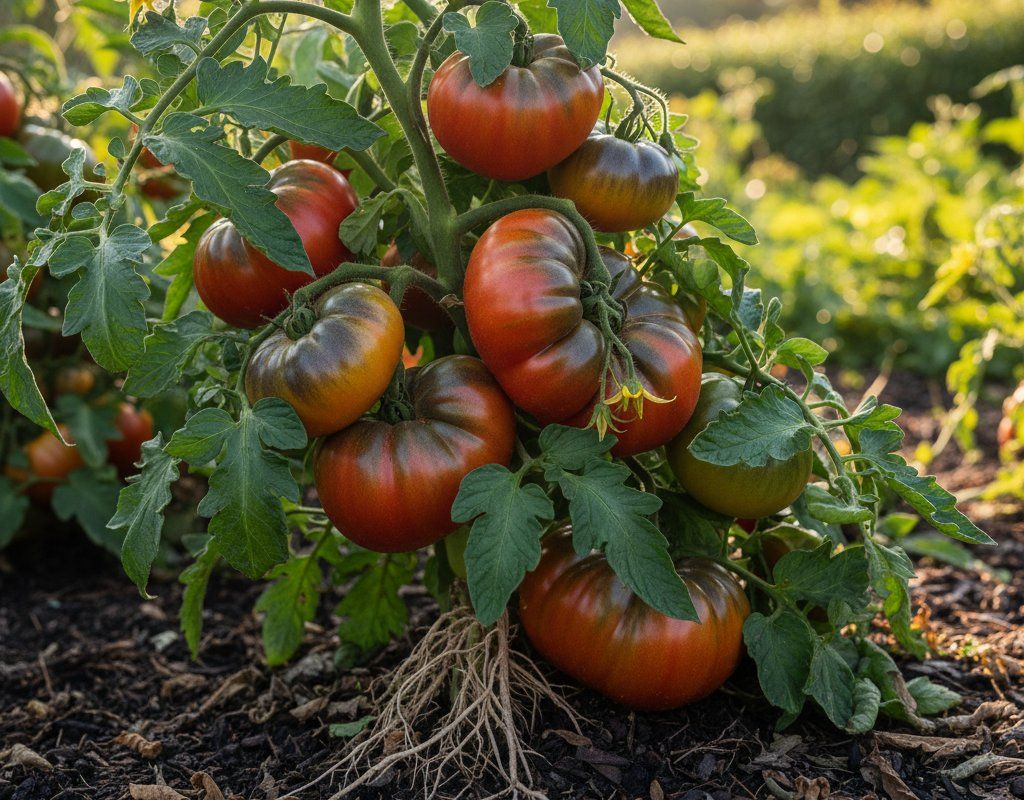
Irregular Shapes Heirloom tomatoes often develop unusual bumps, ridges, or uneven forms that look like mistakes but are actually variety characteristics. Poor pollination during cool spring weather can worsen irregular development. These "ugly" tomatoes typically have the most complex flavors. Our cool spring nights sometimes interfere with proper pollination - if appearance matters for fresh eating, save the odd-shaped ones for cooking and choose more uniform hybrid varieties for slicing.
Pacific Northwest gardeners face unique challenges with late blight during wet springs and the need for consistent summer watering in our dry climate. However, our mild temperatures and low humidity reduce many pest pressures that plague heirloom tomatoes in other regions.
Best Companions for Heirloom Tomatoes
Plant these nearby for healthier Heirloom Tomatoes and better harvests.
View Full Companion Planting Chart →



Companion Planting Details
Plant basil near your heirloom tomatoes - it reportedly improves tomato flavor while deterring pests, and you'll have both ingredients ready for caprese salad. Carrots work well as they don't compete for space or nutrients, and their taproots help break up our clay soil. Parsley and marigolds provide beneficial insect habitat and add color to the garden while taking up minimal space around tomato cages.
Avoid planting brassicas like cabbage or broccoli near tomatoes, as they can inhibit each other's growth and compete for nutrients during our intense spring growing period. Skip fennel entirely - it releases compounds that stunt tomato growth. Keep corn away from tomatoes since both are heavy feeders that will compete for nutrients in our naturally fertile but sometimes depleted soils.
🌸Best Flowers to Plant with Heirloom Tomatoes
These flowers protect your Heirloom Tomatoes from pests and attract pollinators for better harvests.
For Pest Control

Get a Reminder When It's Time to Plant
We'll email you when key planting windows open for your zone.