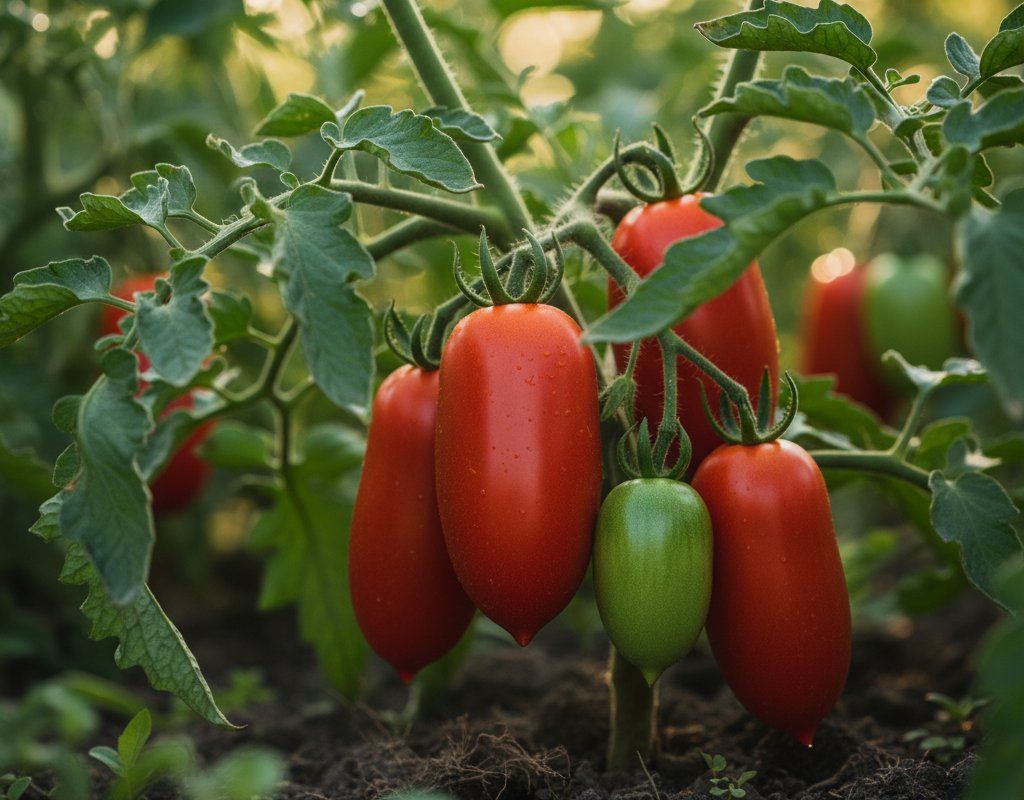
San Marzano Tomatoes in Zone 9B — Desert Southwest
Solanum lycopersicum · Your Complete 2026 Planting Guide
Time to Buy Starts!
Seed starting window passed, but starts are available now.
Buy Starts Now
Head to your local nursery, Home Depot, or farmers market for transplants.
- Look for stocky plants with dark green leaves
- Avoid leggy seedlings or plants already flowering
- Check that roots aren't circling the pot (rootbound)
How to Plant San Marzano Tomatoes in Zone 9B — Desert Southwest
Here are all your options for getting san marzano tomatoes in the ground, from the easiest method to more advanced approaches.
Start Seeds Indoors
RecommendedEarly to late January
around January 8
Then transplant: Mid February through mid March
Start seeds 6-8 weeks before transplanting outdoors.
Buy Starts
Works WellMid February through mid March
around February 19
Plant purchased starts after last frost (February 5).
Direct Sow Seeds
ChallengingDirect sowing is not typical for San Marzano Tomatoes.
Transplant Outdoors
Timing InfoMid February through mid March
around February 19
Wait until nighttime temperatures stay above 50°F.
You have a nice window — no need to rush.
Overview
San Marzano tomatoes bring authentic Italian flavor to your Desert Southwest garden, delivering those prized elongated fruits perfect for sauce-making and canning. These paste tomatoes thrive in our region's intense sunshine and dry heat, producing heavy clusters of meaty, low-moisture fruits that concentrate flavors beautifully in our arid climate.
While our extreme summer heat and water scarcity present challenges, San Marzano tomatoes are surprisingly well-suited to desert gardening when timed correctly. With our 313-day growing season and very early spring start, you can establish strong plants before the brutal heat arrives and enjoy a productive harvest through late spring into early summer.
Starting Seeds Indoors
Start your San Marzano seeds indoors during early to late January, giving yourself about 6 weeks before transplanting outdoors. Use seed starting trays filled with quality seed starting mix, and place them in a warm location where temperatures stay around 70-75°F – a heat mat helps tremendously in our cool desert winter mornings.
Bottom watering works best for tomato seedlings, preventing damping-off disease while keeping soil consistently moist. Set up grow lights or place trays in your brightest south-facing window, as our January days are short even here in the Desert Southwest.
Once seedlings develop their first true leaves (usually 2-3 weeks after germination), transplant them into individual 4-inch pots. This timing aligns perfectly with our very early spring character, allowing plants to develop strong root systems before facing outdoor conditions.
Transplanting Outdoors
Transplant your San Marzano seedlings outdoors from mid-February through mid-March, timing this with our last frost period. Even though hard freezes are rare, those unexpected temperature swings can still damage tender tomato plants, so watch nighttime lows carefully.
Spend a full week hardening off your seedlings before transplanting. Start with 2-3 hours outdoors in filtered light, gradually increasing exposure to our intense desert sun and dry winds. This process prevents transplant shock and sunscald on those tender leaves.
Space plants 24-36 inches apart to ensure good air circulation – critical in our low humidity environment where fungal diseases can still develop around plant bases despite the dry air. Plant after soil temperatures consistently reach 60°F, which typically happens by mid-February in Zone 9B.
Watering San Marzano Tomatoes in Zone 9B (Desert Southwest)
San Marzano tomatoes have high water needs and zero drought tolerance, making consistent irrigation absolutely critical in our arid Desert Southwest climate. With only 8-15 inches of annual rainfall concentrated in summer monsoons, you'll be providing nearly all their water needs through drip irrigation or deep hand watering.
Establish a deep watering schedule immediately after transplanting: 1-2 inches per week delivered slowly at the base of plants. Use the finger test – stick your finger 2 inches deep into soil, and if it's dry, water deeply. As temperatures climb toward our typical 105°F summer highs, increase to 2-3 inches weekly, delivered in 2-3 sessions rather than daily light watering.
Water at the base rather than overhead to conserve moisture in our arid environment and prevent leaf diseases. Signs of underwatering include wilting during heat, blossom end rot, and stunted growth. Overwatering shows as yellowing lower leaves and soft, weak growth. Apply 3-4 inches of organic mulch around plants to conserve moisture and moderate soil temperature swings.
Consistent watering prevents blossom end rot, which San Marzano paste tomatoes are particularly prone to. This physiological disorder – not a disease – occurs when inconsistent moisture prevents calcium uptake, creating those telltale dark, sunken spots on fruit bottoms.
Supporting Your San Marzano Tomatoes
Install sturdy tomato cages or stake systems at planting time, as San Marzano tomatoes are vigorous indeterminate varieties that can reach 6-8 feet tall in our long growing season. Heavy-duty cages work better than light wire ones, which often collapse under the weight of fruit clusters and our occasional strong winds.
For staking, use 6-foot wooden or metal stakes driven 18 inches deep, then tie the main stem loosely every 12 inches as plants grow. Use soft materials like cloth strips or tomato ties rather than wire, which can cut into stems during our temperature swings.
Train the main stem upward and secure major branches that develop heavy fruit clusters. San Marzano varieties produce abundant fruit in clusters, so strong support prevents branches from snapping under the weight, especially when plants are stressed by extreme heat.
Pruning & Maintaining San Marzano Tomatoes
Remove suckers (shoots growing between main stems and branches) when they're 2-3 inches long, focusing on lower suckers that divert energy from fruit production. San Marzano tomatoes benefit from moderate pruning that maintains good air circulation without removing too much foliage needed for photosynthesis.
Strip lower leaves that touch the ground or show any disease symptoms throughout the growing season. This prevents soil-splash diseases and improves airflow around the plant base – important in our low humidity environment where fungal spores can still develop in microclimates around plant bases.
As first frost approaches around mid-December, stop pruning and allow plants to focus energy on ripening existing fruit. About 6 weeks before expected frost, pinch growing tips to redirect energy into maturing tomatoes rather than new growth that won't have time to produce.
🧪Fertilizing San Marzano Tomatoes
Feeding Schedule
Organic Fertilizer Options
Harvest Time
Expect your first San Marzano harvest from early May through late June, approximately 80 days from transplanting. These elongated paste tomatoes are ready when they develop deep red color, feel firm but give slightly to pressure, and detach easily from the stem with a gentle twist.
Harvest regularly every 2-3 days during peak season to encourage continued production. Pick fruits at the "breaker" stage (showing pink blush) if extreme heat above 95°F is forecast, as high temperatures can cause poor color development and split skins. These will ripen perfectly indoors at room temperature.
San Marzano tomatoes continue producing until first frost, typically extending your harvest season into early winter in our Zone 9B climate. As nighttime temperatures drop into the 40s in late November and early December, harvest all remaining green tomatoes before the first frost around mid-December.
Green tomatoes can ripen indoors wrapped in newspaper or placed in boxes with ripe bananas. This extends your harvest well into winter, taking full advantage of our long growing season and the variety's continuous production habit.
Common Problems in Zone 9B (Desert Southwest)
Blossom End Rot Dark, sunken leathery patches appear on the bottom end of developing fruits, starting as small brown spots that expand into large black areas. This affects the first fruit clusters most severely and can devastate your early harvest if not addressed quickly.
This isn't a disease but a calcium deficiency caused by inconsistent watering – extremely common in our water-scarce desert environment where irrigation schedules often fluctuate. The calcium is present in soil, but drought-flood cycles prevent proper uptake through roots.
Maintain absolutely consistent soil moisture with drip irrigation or deep, regular hand watering. Apply 3-4 inches of mulch to buffer moisture swings and avoid over-fertilizing with nitrogen, which interferes with calcium uptake. Remove affected fruits immediately so plants redirect energy to healthy developing tomatoes.
Early Blight Brown spots with distinctive concentric rings (bullseye pattern) appear on lower leaves first, gradually moving upward as leaves yellow and drop. Despite our arid climate, this fungal disease can develop around plant bases where irrigation creates localized humidity.
The fungus spreads through soil splash onto lower leaves, thriving in our warm temperatures even with low humidity. Poor air circulation and overhead watering worsen the problem, especially during monsoon season when humidity briefly increases.
Remove affected leaves immediately and destroy them – never compost diseased material. Mulch heavily to prevent soil splash and water only at plant bases, never overhead. Space plants properly for air movement and consider copper fungicide applications during monsoon season when conditions favor disease development.
Fusarium Wilt Plants wilt on one side first, with yellow leaves progressing from bottom upward, eventually affecting the entire plant. Cut stems reveal brown streaking inside, and plants often die despite adequate watering and otherwise healthy growing conditions.
This soil-borne fungal disease persists in desert soils for years and enters through root systems, favored by our warm soil temperatures. It's particularly problematic in areas with alkaline soil and caliche, common throughout the Desert Southwest.
No cure exists once plants are infected – remove and destroy affected plants immediately. Choose resistant varieties marked with 'F' on seed packets and rotate planting locations on a 4-year cycle. Consider soil solarization during summer months when soil temperatures can reach 140°F under clear plastic.
Desert Southwest Specific Challenges Our extreme summer heat above 105°F can cause flower drop and poor fruit set, while intense UV radiation leads to sunscald on exposed fruits. The combination of alkaline soil, caliche hardpan, and water scarcity creates perfect conditions for blossom end rot and stress-related problems in tomatoes with high water requirements like San Marzano varieties.
Best Companions for San Marzano Tomatoes
Plant these nearby for healthier San Marzano Tomatoes and better harvests.
View Full Companion Planting Chart →



Companion Planting Details
Plant basil alongside your San Marzano tomatoes – it repels aphids and whiteflies while thriving in similar growing conditions and water requirements. Carrots make excellent companions since their deep taproots break through caliche layers, improving soil drainage around tomato root zones. Parsley attracts beneficial insects and provides ground cover that helps conserve moisture in our arid climate.
Marigolds planted around tomato beds deter nematodes and other soil pests while adding bright color that attracts pollinators during our long growing season. Avoid planting brassicas like cabbage or broccoli nearby, as they compete for similar nutrients and their cool-season timing conflicts with tomato growing schedules. Skip fennel and corn as companions – fennel inhibits tomato growth while corn attracts hornworms that devastate tomato plants in our pest-friendly desert environment.
🌸Best Flowers to Plant with San Marzano Tomatoes
These flowers protect your San Marzano Tomatoes from pests and attract pollinators for better harvests.
For Pest Control

Get a Reminder When It's Time to Plant
We'll email you when key planting windows open for your zone.