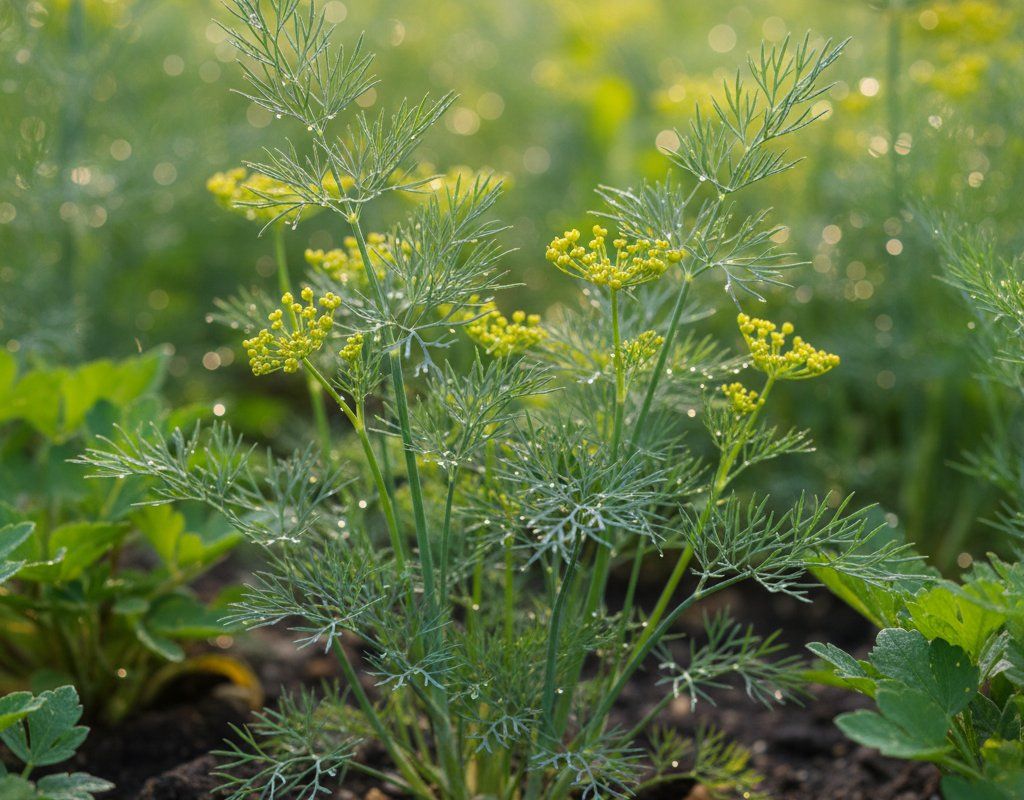
Dill in Zone 7A — Midwest
Anethum graveolens · Your Complete 2026 Planting Guide
Planning Ahead — Great!
You’re ahead of the season. Here’s when to start.
Mark Your Calendar
How to Plant Dill in Zone 7A — Midwest
Here are all your options for getting dill in the ground, from the easiest method to more advanced approaches.
Direct Sow Seeds
RecommendedEarly April through late August
around April 10
Consider succession planting every 2-3 weeks for continuous harvest.
Dill has a taproot and prefers direct sowing, but transplants work if handled carefully.
Start Seeds Indoors
RecommendedMid March through early April
around March 20
Then transplant: Mid April through late May
Start seeds 4-6 weeks before transplanting outdoors.
Buy Starts
Works WellMid April through late May
around April 17
Plant purchased starts after last frost (April 10).
Transplant Outdoors
Timing InfoMid April through late May
around April 17
Can tolerate light frost, but wait for soil to be workable.
You have a nice window — no need to rush.
Fall Planting
Late August through late September
September 8 ideal · Direct sow for fall harvest
Plant a second crop in mid-summer for fall harvest. Dill actually prefers the cooling temperatures of fall.
Overview
Dill brings unmatched flavor to your Midwest kitchen garden, from fresh sprigs for potato salad to aromatic seed for pickling those abundant summer cucumbers. This hardy annual thrives in our fertile soil and appreciates the consistent moisture our region typically provides during the growing season. The feathery foliage adds beautiful texture to garden beds while attracting beneficial insects that help your entire garden thrive.
Your Midwest weather patterns—from variable spring temperatures to summer heat spells—might seem challenging for dill, but this hardy herb actually adapts well to our 193-day growing season. The key is understanding that dill performs best as a cool-weather crop here, making succession planting your secret weapon for fresh dill from late spring through fall.
Starting Seeds Indoors
Starting dill seeds indoors works well in the Midwest, though it's not the primary method most gardeners choose. Start your seeds from mid-March through early April, about 4 weeks before you plan to transplant outdoors. This timing gives you a head start during our moderate-to-late spring while avoiding the risk of late frost damage.
Set up your seed trays in a warm spot (65-70°F) with good light—a south-facing window or grow lights work perfectly. Sow seeds about ¼ inch deep in quality seed starting mix. Bottom watering prevents disturbing these delicate seedlings and reduces the risk of damping off, which can be a problem in our sometimes humid spring conditions.
Keep in mind that dill develops a taproot early, so use deeper cells if possible and plan to transplant while seedlings are still young. This indoor start method works particularly well when you want to get a jump on the season or when spring weather has been especially unpredictable.
Transplanting Outdoors
Transplant your indoor-started dill seedlings outdoors from mid-April through late May, once soil temperatures consistently reach 60°F and the threat of late frost has passed. In our Zone 7A climate, this usually means waiting until after our typical early April last frost date, but watch the weather—those surprise late cold snaps can still catch us.
Harden off seedlings gradually over a week by placing them outside for increasing periods each day. Start with just a few hours in a protected spot, then gradually increase exposure to our sometimes brisk spring winds and temperature swings. This step is crucial in the Midwest where spring weather can be particularly variable.
Space transplants 12 inches apart in well-draining soil with full sun exposure. Handle the seedlings gently since dill's taproot doesn't appreciate disturbance. Water thoroughly after planting and provide some protection if strong storms are forecast—our spring severe weather can be tough on newly transplanted seedlings.
Direct Sowing
Direct sowing is actually dill's preferred method since this herb develops a taproot that doesn't love being disturbed. You can sow seeds from early April through late August, giving you multiple opportunities for succession planting throughout our growing season. This flexibility is perfect for our Midwest climate where spring can be unpredictable and summer heat spells make mid-season sowings tricky.
Prepare your soil by working in some compost to improve drainage—important in our clay-heavy soils that can hold too much moisture. Sow seeds ¼ inch deep when soil temperature reaches 60°F, spacing them about 12 inches apart. In our fertile Midwest soil, dill typically germinates within 7-10 days when conditions are right.
The beauty of direct sowing is that you can make successive plantings every 2-3 weeks through late summer. This works especially well for fall crops when our cooler temperatures return—dill actually prefers the moderate temperatures of early fall over the heat spells of July and August.
Watering Dill in Zone 7A (Midwest)
Dill needs consistent moisture but not soggy conditions, making our typical 30-40 inches of annual rainfall a real advantage. During dry spells, provide about 1 inch of water per week, checking soil moisture with the finger test—stick your finger 2 inches into the soil, and if it's dry, it's time to water. Our moderate-to-humid summers mean you'll often need less supplemental watering than gardeners in drier regions.
Water at the base of plants rather than overhead, especially during our humid summer days. Overhead watering in high humidity can encourage fungal problems, and dill's feathery foliage holds moisture longer than you'd expect. Early morning watering gives plants time to dry before evening, reducing disease risk during those warm, muggy nights.
Watch for signs of stress during summer heat spells when temperatures climb above our typical 86°F highs. Underwatered dill will wilt and bolt quickly to seed, while overwatered plants in our clay soil may develop yellowing lower leaves or root rot. A 2-inch layer of organic mulch helps maintain consistent soil moisture and keeps roots cooler during hot stretches.
The key with dill is preventing drought stress, which triggers bolting faster than almost anything else. In our climate, this is most critical during July and August heat waves—keep the soil consistently moist but not waterlogged, and consider providing afternoon shade during the hottest part of summer.
🧪Fertilizing Dill
Feeding Schedule
Organic Fertilizer Options
Harvest Time
Your first dill harvest typically begins from mid-May through late October, depending on when you planted and our weather patterns. Dill matures quickly—about 40 days from seed—so you'll be snipping fresh leaves sooner than you might expect. Start harvesting when plants reach 6-8 inches tall, cutting outer stems first to encourage continued growth from the center.
For fresh leaf harvest, cut stems early in the morning when essential oils are strongest. Snip just above a leaf node to encourage branching and continued production. You can harvest leaves continuously until the plant begins to flower—once flowering starts, leaves become less flavorful though the flowers themselves are edible and attractive to beneficial insects.
For dill seed, let the plant flower and wait until the seed heads turn brown and papery, usually by late summer in our climate. Cut the entire seed head and shake it into a paper bag—ripe seeds will fall easily. Time this harvest carefully before our mid-October first frost, as seeds won't ripen properly in cold weather.
The beauty of succession planting in our 193-day growing season means you can have fresh dill from spring through fall. Plant new crops every 3-4 weeks through late August, timing your final planting about 6 weeks before expected first frost to ensure full maturity.
Common Problems in Zone 7A (Midwest)
Bolting shows up as a tall flower stalk shooting from the center of your dill plant, often seemingly overnight. The leaves become bitter and lose their fresh flavor once this happens. Our summer heat spells are the primary trigger—when temperatures spike above 85°F for several days, dill shifts from leaf production to seed production mode. Variable spring weather, where cool days are followed by sudden warmth, can also trigger premature bolting. Plant dill during cooler periods (spring and fall), provide afternoon shade during summer heat spells, and keep soil consistently moist. Choose slow-bolting varieties if available, and succession plant every 3-4 weeks for continuous harvests.
Aphids appear as clusters of tiny green, black, or white insects on new growth and stem tips, often leaving sticky honeydew residue on leaves. You'll notice curled or distorted foliage and a general decline in plant vigor. Our warm, humid summers create perfect breeding conditions for these sap-sucking pests, and their populations can explode during July and August. A strong spray from your garden hose knocks them off effectively—do this in early morning so plants dry quickly in our humidity. Encourage beneficial insects like ladybugs and lacewings, and avoid high-nitrogen fertilizers which make plants more attractive to aphids.
Caterpillars, particularly parsley worms and other butterfly larvae, love dill's feathery foliage. You'll see irregular holes in leaves, dark droppings on plants, and sometimes the caterpillars themselves munching away. While some of these (like swallowtail butterfly larvae) are beneficial in the larger ecosystem, heavy feeding can defoliate plants quickly. Hand-pick larger caterpillars in the morning when they're most visible, or use Bt (bacillus thuringiensis) for serious infestations—it's organic and targets only caterpillars.
Midwest Specific Challenges: Our clay soil can hold too much moisture around dill's taproot, leading to rot in wet periods. The combination of summer heat spells followed by afternoon thunderstorms creates stress that triggers bolting, while our moderate-to-humid conditions can promote fungal issues if plants stay wet too long.
Best Companions for Dill
Plant these nearby for healthier Dill and better harvests.


Keep Away From
Companion Planting Details
Dill makes an excellent companion for cabbage family plants, actually improving their flavor while helping repel cabbage worms and other brassica pests. Plant it near your broccoli, cauliflower, and kale for natural pest control that works particularly well in our Midwest gardens where these cool-season crops overlap with dill's growing period. Cucumbers also benefit from nearby dill, which attracts beneficial insects that help with pollination—crucial for good cucumber yields in our climate.
Lettuce and onions grow well alongside dill since they all prefer similar cool, moist conditions and won't compete heavily for nutrients in our fertile soil. However, avoid planting dill near carrots (it can cross-pollinate and affect flavor) or tomatoes, where dill may inhibit growth and attract tomato hornworms. The spacing works out well too—dill's upright habit provides light shade for lettuce during our summer heat spells without overwhelming nearby plants.
🌸Best Flowers to Plant with Dill
These flowers protect your Dill from pests and attract pollinators for better harvests.
For Pest Control




Get a Reminder When It's Time to Plant
We'll email you when key planting windows open for your zone.