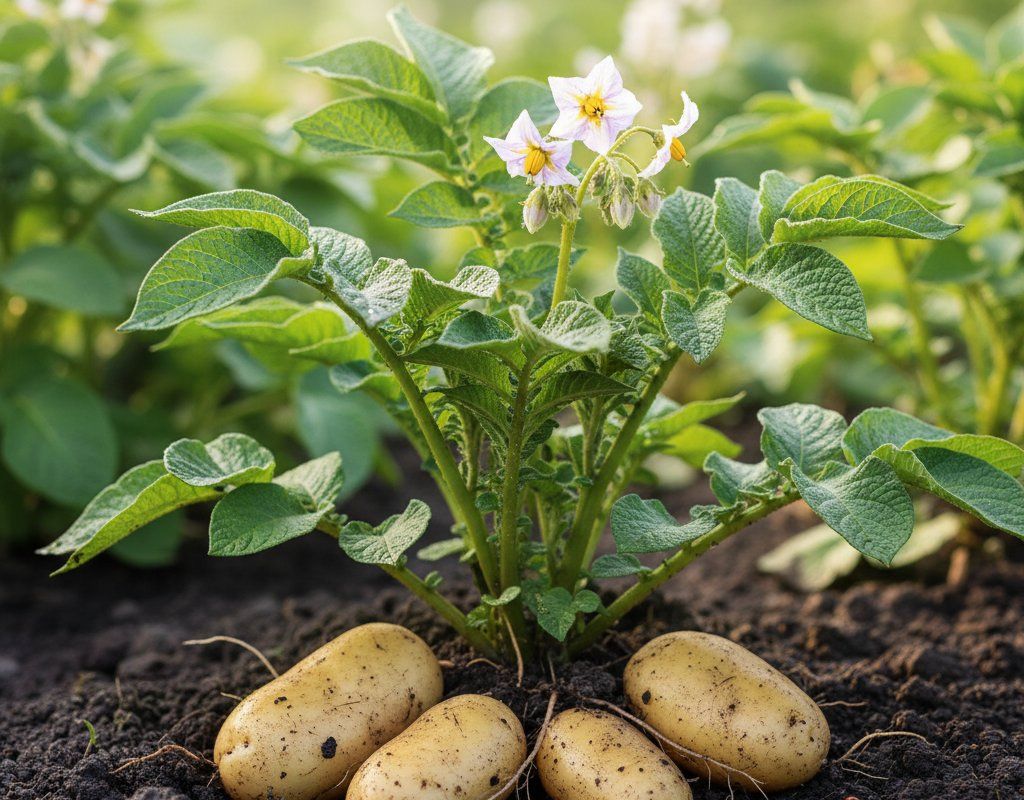
Potato in Zone 5B — Midwest
Solanum tuberosum · Your Complete 2026 Planting Guide
Planning Ahead — Great!
You’re ahead of the season. Here’s when to start.
Mark Your Calendar
How to Plant Potato in Zone 5B — Midwest
Here are all your options for getting potato in the ground, from the easiest method to more advanced approaches.
Direct Sow Seeds
RecommendedMid April through late June
around April 11
Consider succession planting every 2-3 weeks for continuous harvest.
Plant seed potatoes directly in the ground. Not grown from true seed.
Buy Starts
Works WellMid April through early May
around April 11
Plant purchased starts after last frost (April 25).
Start Seeds Indoors
ChallengingThis plant is typically not started indoors.
Transplant Outdoors
Timing InfoMid April through early May
around April 11
Can tolerate light frost, but wait for soil to be workable.
Plan to transplant within a few weeks of your target date.
Overview
Here in the Midwest, potatoes are one of our most rewarding crops, taking full advantage of our fertile soil and reliable summer rainfall. Nothing beats the satisfaction of digging up your own creamy new potatoes in midsummer or storing a winter's worth of russets from your own garden. Our moderate-to-hot summers provide ideal growing conditions for both early and storage varieties, while our rich clay-loam soil delivers the nutrients potatoes crave.
Yes, our variable spring weather and occasional summer heat spells can challenge potato growers, but with proper timing, these tubers thrive in our Zone 5B climate. With a solid 168-day growing season, you have plenty of flexibility to plant multiple varieties and enjoy harvests from early July clear through mid-October.
Transplanting Outdoors
While most gardeners direct-sow potatoes, you can transplant potato starts if you've grown them from true seed (rare) or purchased transplants. Plan to transplant from mid-April through early May, once soil temperatures consistently reach 45°F and the threat of hard frost has passed.
Harden off your transplants gradually over a week, starting with 2-3 hours of morning sun and building up to full outdoor exposure. Space them 12 inches apart in well-prepared beds. Our Midwest spring weather can be unpredictable, so keep row covers handy for unexpected late cold snaps that could damage tender transplants.
Direct Sowing
The recommended method for growing potatoes in the Midwest is planting seed potatoes directly in the ground. You can start planting in mid-April once soil temperatures reach 45°F and continue through late June for succession crops. Remember, potatoes aren't grown from true seeds but from certified seed potatoes cut into pieces with at least one eye each.
Prepare your soil by working in compost or aged manure - our heavy clay benefits from added organic matter for drainage. Plant seed potato pieces 4 inches deep and 12 inches apart in rows. As plants emerge and grow, gradually hill soil around the stems to encourage more tuber formation and prevent greening from sun exposure.
The beauty of our long growing season is you can plant early varieties in mid-to-late April for July harvests, then plant storage varieties in May and June for fall digging. Just ensure your last plantings have 90 days before our typical early October frost.
Watering Potato in Zone 5B (Midwest)
Potatoes need consistent moisture but hate soggy soil - a balance that works well with our typical Midwest rainfall patterns. During our wet spring months, you'll likely need little supplemental watering, but summer heat spells require careful attention. Check soil moisture by inserting your finger 2 inches deep; water when it feels dry at that level.
Provide about 1-2 inches of water weekly, either from rain or irrigation. Water at the base of plants rather than overhead, especially during our humid summer weather when wet foliage invites disease problems. Critical watering time is during flowering when tubers are forming - inconsistent moisture now leads to knobby, cracked potatoes later.
Our moderate-to-humid summers mean you'll want to reduce watering about two weeks before harvest to prevent rot and improve storage quality. Watch for signs of overwatering like yellowing lower leaves or soft stems, which can happen during our wet summer periods. Mulch around plants with straw or grass clippings to maintain even soil moisture and suppress weeds.
If we hit one of those typical summer heat spells with temperatures pushing into the 90s, increase watering frequency but keep individual applications light to avoid waterlogged soil.
🧪Fertilizing Potato
Feeding Schedule
Organic Fertilizer Options
Harvest Time
Your first new potatoes will be ready in early July, about 10-12 weeks after planting those mid-April seed potatoes. You can start harvesting new potatoes once plants begin flowering - carefully dig beside plants and feel for marble-sized tubers, taking just a few from each plant while leaving the rest to mature.
For storage potatoes, wait until the foliage completely dies back naturally, usually late August through September for main crop varieties. The skins should be set and not scrape off easily when rubbed with your thumb. Dig on a dry day when soil isn't muddy - our clay soil can be challenging when wet.
Use a garden fork rather than a shovel to avoid cutting tubers, and dig carefully 8-12 inches from the plant base. Brush off excess soil but don't wash them yet. Let potatoes dry in the sun for a few hours to cure the skins, then move to a cool, dark place for final curing.
As our first frost approaches in early October, make sure to harvest any remaining potatoes. Even if the tops haven't died back completely, frosted foliage signals it's time to dig. Storage potatoes can keep through winter in a cool (35-40°F), dark basement or root cellar.
Common Problems in Zone 5B (Midwest)
Colorado Potato Beetle These orange-and-black striped beetles and their plump orange larvae can defoliate potato plants quickly during our warm summer months. Adults emerge from soil in late May and early June, laying clusters of bright yellow eggs on leaf undersides. The larvae do the most damage, consuming entire leaves. Hand-pick adults and larvae in small gardens, or apply Bt (Bacillus thuringiensis) specifically labeled for Colorado potato beetle. Row covers work well early in the season but must be removed for hilling.
Late Blight This devastating disease shows up as large, dark green-gray water-soaked spots on leaves, often with white fuzzy growth on undersides during our humid summer weather. It spreads incredibly fast during cool, wet periods - exactly the conditions we often see in late June and July. The disease can destroy entire plantings within days and also affects the tubers with firm brown spots. Remove and bag affected plants immediately (never compost them), apply copper-based fungicides preventatively, and ensure good air circulation. Plant resistant varieties and avoid overhead watering during humid periods.
Common Scab This bacterial disease creates rough, corky patches on potato skins, making them unsightly but still edible. Scab thrives in alkaline soil and dry conditions, which can occur in our clay soils during summer heat spells. The disease is more cosmetic than harmful, but still frustrating. Maintain soil pH between 5.2-6.0, provide consistent moisture during tuber development, and add sulfur to acidify soil if needed.
Midwest Specific Challenges: Our moderate-to-humid summers create perfect conditions for fungal diseases like late blight, while our clay soil can lead to scab problems if drainage isn't adequate. The combination of spring temperature swings and summer heat spells can stress plants, making them more susceptible to pest problems.
Best Companions for Potato
Plant these nearby for healthier Potato and better harvests.

Keep Away From

Companion Planting Details
Beans make excellent potato companions because they fix nitrogen that potatoes can use later in the season, while potatoes provide a living mulch that helps retain soil moisture beans appreciate. Corn and potatoes work well together too - plant potatoes between corn rows to maximize space, and both crops benefit from similar hilling and cultivation practices. Brassicas like cabbage and broccoli pair nicely since they have different nutrient needs and pest profiles, plus their growing seasons complement each other in our Midwest climate.
Avoid planting potatoes near tomatoes, as both are susceptible to similar diseases like late blight that can spread quickly during our humid summer weather. Skip squash and cucumber companions since these sprawling crops compete for space and water, while their different watering needs can create problems. Sunflowers should also be avoided as they can allelopathically inhibit potato growth and compete aggressively for nutrients in our fertile soil.
🌸Best Flowers to Plant with Potato
These flowers protect your Potato from pests and attract pollinators for better harvests.


Get a Reminder When It's Time to Plant
We'll email you when key planting windows open for your zone.