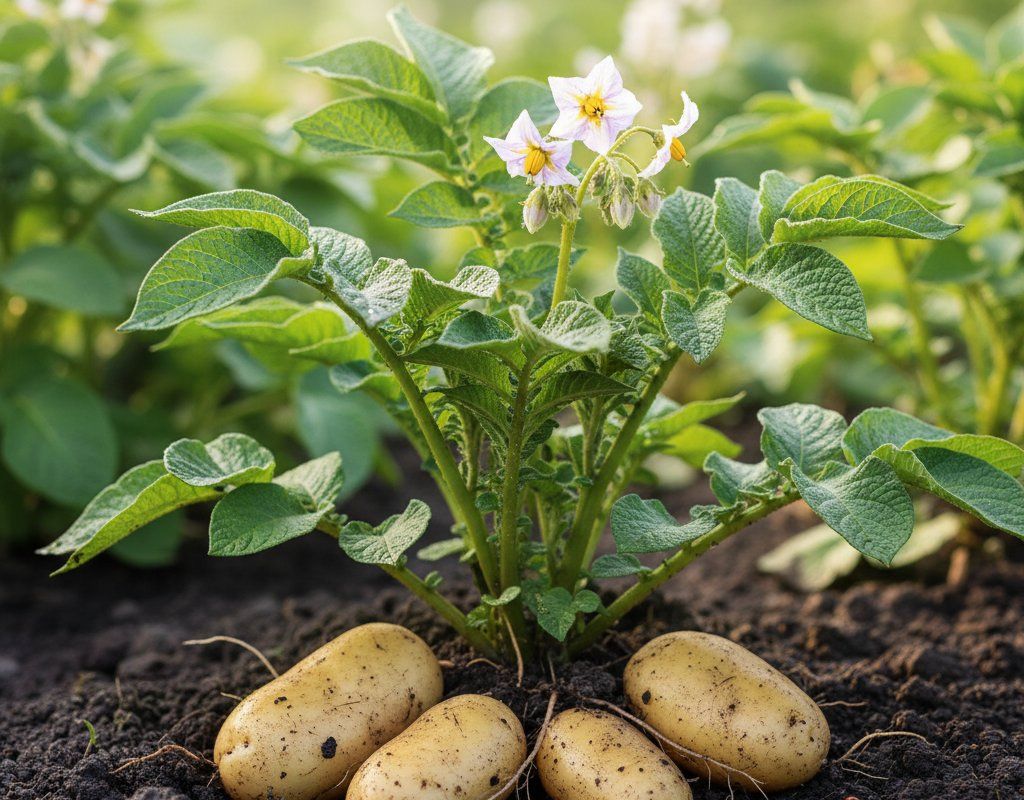
Potato in Zone 6A — Mountain West
Solanum tuberosum · Your Complete 2026 Planting Guide
Planning Ahead — Great!
You’re ahead of the season. Here’s when to start.
Mark Your Calendar
How to Plant Potato in Zone 6A — Mountain West
Here are all your options for getting potato in the ground, from the easiest method to more advanced approaches.
Direct Sow Seeds
RecommendedMid April through mid June
around April 17
Consider succession planting every 2-3 weeks for continuous harvest.
Plant seed potatoes directly in the ground. Not grown from true seed.
Buy Starts
Works WellMid April through early May
around April 17
Plant purchased starts after last frost (May 1).
Start Seeds Indoors
ChallengingThis plant is typically not started indoors.
Transplant Outdoors
Timing InfoMid April through early May
around April 17
Can tolerate light frost, but wait for soil to be workable.
Plan to transplant within a few weeks of your target date.
Overview
Growing potatoes in our Mountain West zone is deeply satisfying — there's nothing quite like digging into cool, alkaline soil and pulling up your own perfectly sized tubers. Our intense high-altitude sun and cool summer nights create ideal conditions for developing potatoes with excellent flavor and keeping quality, while our dry air means significantly less disease pressure than humid regions face.
Our short 153-day growing season might seem limiting, but potatoes are actually well-suited to our Mountain climate. The key is working with our late spring timing and understanding that our moderate-at-altitude summers and cool nights actually benefit potato development. With proper timing, you'll harvest beautiful crops before our early October frost arrives.
Transplanting Outdoors
Transplanting potato plants isn't the typical approach — most Mountain gardeners plant seed potatoes directly. However, if you're starting with potato slips or transplants, plan to move them outdoors from mid-April through early May, once soil temperature reaches 45°F consistently.
Harden off any transplants gradually over a week, bringing them outside for increasing periods. Start with 2-3 hours of morning sun, avoiding our intense midday UV until they're acclimated. Space transplants 12 inches apart in rows or hills.
Watch for late cold snaps common in our Mountain springs. Have row covers ready — even semi-hardy potato plants can suffer damage from unexpected frosts that can hit well into May at our altitude.
Direct Sowing
Plant seed potatoes directly in the ground from mid-April through mid-June — this is the recommended method for our Mountain region. Wait until soil temperature reaches 45°F and you can work the ground without it clumping. Our alkaline soil benefits from added organic matter worked in before planting.
Cut seed potatoes into pieces with 2-3 eyes each, letting cut surfaces dry for 24-48 hours in our low humidity air to prevent rot. Plant pieces 4 inches deep and 12 inches apart. In our intense sun and dry conditions, slightly deeper planting helps maintain soil moisture around developing tubers.
You have flexibility with timing — early plantings (mid-April) give longer growing time, while later plantings (through mid-June) can avoid some pest pressure. Hill soil around plants as they grow to prevent greening from our strong UV exposure.
Watering Potato in Zone 6A (Mountain West)
Potatoes need consistent moisture but hate waterlogged soil — perfect for our well-draining Mountain conditions. Aim for about 1 inch of water per week, which typically means supplemental watering since our annual rainfall runs just 10-20 inches and summer is particularly dry.
Water deeply at soil level rather than overhead to prevent disease issues. The finger test works well — check 2 inches down near the plants. Soil should feel slightly moist but not soggy. During flowering (when tubers form), maintain even moisture as this directly affects your yield and potato quality.
During our intense summer sun and low humidity, mulch around plants with straw or grass clippings to retain moisture and keep soil temperatures moderate. Watch for signs of stress — wilting during afternoon heat even with adequate moisture is normal, but persistent wilting indicates underwatering.
Reduce watering 2 weeks before harvest to allow skins to toughen. Wet soil at harvest leads to rot during storage, and our dry fall air helps cure potatoes naturally once dug.
🧪Fertilizing Potato
Feeding Schedule
Organic Fertilizer Options
Harvest Time
Your first new potatoes will be ready mid-July through early October, roughly 90 days from planting. For baby potatoes, harvest when plants begin flowering — carefully dig around the base and take a few small tubers, leaving the plant to continue producing.
For storage potatoes, wait until foliage dies back completely, which usually happens naturally as our first frost approaches in early October. The dying foliage signals that tubers have reached full size and skin has toughened properly for storage.
Harvest on a dry day when soil isn't muddy from recent watering or rain. Dig carefully with a fork, working from the side to avoid piercing tubers. In our intense UV, get harvested potatoes out of direct sun immediately to prevent greening.
As first frost threatens in early to mid-October, harvest any remaining potatoes even if foliage hasn't completely died back. Our cool, dry air is perfect for curing — spread potatoes in a dark, cool location (45-55°F) for 10-14 days before long-term storage.
Common Problems in Zone 6A (Mountain West)
Colorado Potato Beetle Orange and black striped beetles and their red larvae devour potato foliage, capable of defoliating entire plants within days. You'll see distinctive chewed leaves and orange egg masses on leaf undersides. This pest thrives in our Mountain climate and is often the biggest challenge potato growers face here.
Hand-picking works for small plantings — drop beetles and larvae into soapy water. For larger areas, apply Bt (Bacillus thuringiensis) while larvae are small. Crop rotation helps since beetles overwinter in soil, and our cold winters do eliminate some but not enough to prevent problems.
Late Blight Large, dark green-gray water-soaked spots appear on leaves, often with white fuzzy growth on undersides during humid periods. This devastating disease can destroy entire plantings in days when conditions are right. Our typically dry air provides natural protection, but be vigilant during unusually wet periods or when using overhead watering.
Remove and destroy affected plants immediately — bag them, never compost. Apply copper-based fungicides preventatively if weather turns humid. Plant certified disease-free seed potatoes and ensure good air circulation between plants. Our low humidity is your best defense against this disease.
Scab Rough, corky patches appear on tuber surfaces, making potatoes unsightly though still edible. This bacterial disease thrives in alkaline soil — exactly what we have throughout the Mountain West. While scab doesn't kill plants, it significantly reduces storage quality and market value.
Lower soil pH by adding sulfur or organic matter like compost before planting. Maintain consistent soil moisture during tuber formation, as dry conditions worsen scab. Plant resistant varieties when possible, and avoid fresh manure which raises pH further and provides ideal conditions for scab bacteria.
Mountain West Specific Challenges Our combination of intense UV, alkaline soil, and variable spring weather creates unique potato-growing challenges. The strong sun can green exposed tubers quickly, while our alkaline conditions favor scab development. However, our dry air dramatically reduces disease pressure from blights and rots that plague humid regions, making potatoes generally more successful here than in many other climates.
Best Companions for Potato
Plant these nearby for healthier Potato and better harvests.

Keep Away From

Companion Planting Details
Plant beans near your potatoes — they fix nitrogen that benefits heavy-feeding potatoes, while corn provides natural shade during our intense summer sun. Brassicas like cabbage and broccoli make excellent companions since they don't compete for nutrients and actually help break disease cycles that affect nightshade family plants.
Avoid planting potatoes near tomatoes, peppers, or other nightshades since they share diseases and pests like Colorado potato beetles. Skip squash and cucumber companions too — they're heavy feeders that compete for nutrients, and their sprawling vines can interfere with hilling potatoes. Sunflowers may look attractive nearby, but they're allelopathic and can inhibit potato growth in our already-challenging growing conditions.
🌸Best Flowers to Plant with Potato
These flowers protect your Potato from pests and attract pollinators for better harvests.



Get a Reminder When It's Time to Plant
We'll email you when key planting windows open for your zone.