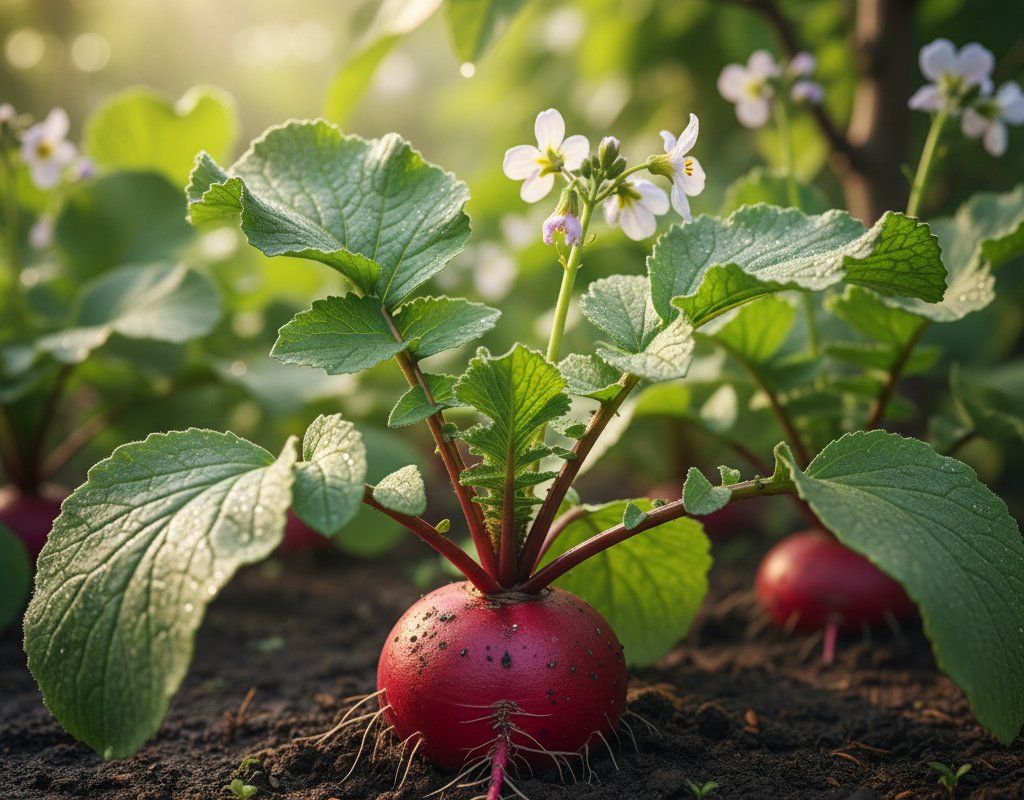
Radish in Zone 6B — Mountain West
Raphanus sativus · Your Complete 2026 Planting Guide
Planning Ahead — Great!
You’re ahead of the season. Here’s when to start.
Mark Your Calendar
How to Plant Radish in Zone 6B — Mountain West
Here are all your options for getting radish in the ground, from the easiest method to more advanced approaches.
Direct Sow Seeds
RecommendedLate March through late August
around March 28
Consider succession planting every 2-3 weeks for continuous harvest.
Fast-growing and easy. No reason to start indoors.
Buy Starts
Works WellLate March through early May
around March 28
Plant purchased starts after last frost (April 25).
Start Seeds Indoors
ChallengingThis plant is typically not started indoors.
Transplant Outdoors
Timing InfoLate March through early May
around March 28
Can tolerate light frost, but wait for soil to be workable.
You have a nice window — no need to rush.
Fall Planting
Early August through early September
August 24 ideal · Direct sow for fall harvest
Plant a second crop in mid-summer for fall harvest. Radish actually prefers the cooling temperatures of fall.
Overview
Radishes are one of the most satisfying crops for Mountain West gardeners, delivering crisp, spicy roots in just 25 days from seed to harvest. Our cool nights and intense high-altitude sun create perfect conditions for these quick-growing brassicas, producing radishes with exceptional flavor and that satisfying snap you just can't get from store-bought varieties. The moderate summer temperatures at altitude mean you can keep planting radishes well into August for continuous harvests through fall.
While our short 163-day growing season and unpredictable spring weather can challenge many crops, radishes actually thrive in these conditions. Their frost-hardy nature lets you get them in the ground while other vegetables are still waiting, and their lightning-fast maturity means you'll be harvesting before the summer heat even peaks. The key is working with our natural temperature swings rather than fighting them.
Transplanting Outdoors
While radishes can be transplanted, there's rarely a good reason to start them indoors in the Mountain West. These fast-growing roots prefer direct sowing and actually perform better when they don't experience transplant shock. If you do choose to transplant seedlings started indoors, you can move them outside from late March through early May.
Give transplants a full week of hardening off, gradually increasing their outdoor exposure. Our intense UV radiation and temperature swings can shock young plants if moved outside too quickly. Space transplants 2-4 inches apart in well-draining soil.
The main challenge with transplanting radishes is that our unpredictable spring weather can stress young plants just when they need to establish quickly. You're better off direct sowing in most cases.
Direct Sowing
Direct sowing is absolutely the best method for growing radishes in the Mountain West. You can sow seeds from late March through late August, taking advantage of our entire growing season for multiple plantings. The key is soil that drains well but holds some moisture – our alkaline mountain soils work fine with a bit of compost worked in.
Sow seeds when soil temperature reaches about 40°F, which usually happens in late March at our elevation. Plant seeds ½ inch deep and space them 2-4 inches apart, or sow more densely and thin later. The intense sun at altitude helps seeds germinate quickly once soil warms up.
For continuous harvests, plant new rows every 2 weeks through summer. Our moderate temperatures mean you can keep sowing much later than lower elevations – your last planting window runs from early August through early September for fall harvest before our first frost in early October.
Watering Radish in Zone 6B (Mountain West)
Radishes need consistent, moderate moisture to develop those crisp, mild roots we're after. In our dry Mountain climate with only 10-20 inches of annual rainfall, you'll need to supplement natural precipitation throughout the growing season. Drought stress turns radishes woody and fiery-hot – not the eating experience you want.
Check soil moisture with the finger test, pushing 2 inches down into the soil near your radish rows. If it feels dry at that depth, it's time to water. During our typical summer weather with highs around 85°F and low humidity, plan to water deeply 2-3 times per week, providing about 1 inch of water total. The key is soaking the soil thoroughly rather than frequent light sprinkles.
Water at soil level rather than overhead to reduce evaporation in our dry air and prevent leaf diseases. A soaker hose or drip irrigation works perfectly for radish beds. Early morning watering gives plants time to dry before our cool nights set in. Watch for signs of stress: wilting during the heat of the day indicates underwatering, while yellowing leaves often mean too much moisture.
A light mulch of straw or shredded leaves helps retain soil moisture and keeps roots cool during our intense midday sun. Just keep mulch thin – about 1 inch – so it doesn't interfere with the radish shoulders pushing above ground as they mature.
🧪Fertilizing Radish
Feeding Schedule
Organic Fertilizer Options
Harvest Time
Your first radishes will be ready for harvest from late April through mid-October, depending on when you planted. Most varieties mature in just 25 days from sowing, making them one of your earliest and most reliable spring crops. You'll know they're ready when the shoulders start pushing above the soil surface and reach about 1 inch in diameter for standard round types.
Pull radishes by grasping the leaves close to the root and giving a firm, straight tug. The entire root should come up cleanly from our well-draining mountain soils. Harvest in the morning when roots are crisp from cool overnight temperatures – our naturally cool nights help maintain that perfect texture.
Don't leave radishes in the ground too long thinking they'll get bigger and better. Once mature, they quickly become woody and develop an unpleasant hot bite that's different from their normal pleasant spiciness. If you can't harvest immediately when they're ready, at least pull them and store in the refrigerator.
As early October approaches and first frost threatens, harvest all remaining radishes regardless of size. Unlike some root crops, radishes don't sweeten up with cold weather and won't survive our hard freezes. Pull them all and enjoy the smaller ones as tender additions to salads.
Common Problems in Zone 6B (Mountain West)
Flea Beetles Small, round holes that look like someone took a shotgun to your radish leaves are the calling card of flea beetles. These tiny, dark beetles jump like fleas when disturbed and can quickly defoliate young seedlings. The damage looks most severe in the first few weeks after germination when plants are most vulnerable.
These beetles thrive in our warm, dry conditions and can be particularly troublesome during hot spells in late spring. Row covers provide excellent protection during the first 2-3 weeks when plants are small. You can also dust seedlings with kaolin clay or spray with neem oil early in the morning when beetles are less active. Interplanting with basil or catnip helps repel them naturally.
Root Maggots If your radishes are riddled with small tunnels and have a generally mushy, unappetizing texture, root maggots are likely the culprit. These small white larvae bore into developing roots, leaving brown tunnels and entry holes. You might also notice stunted growth and yellowing leaves above ground.
Root maggots are worse in cool, wet conditions and can be problematic during our unpredictable spring weather. The adult flies lay eggs at the base of plants in early spring. Floating row covers prevent egg-laying, while beneficial nematodes added to the soil can help control larvae. Crop rotation helps break the cycle – don't plant brassicas in the same spot year after year.
Pithy Roots Instead of crisp, juicy radishes, you're getting woody, dry roots with a cottony texture inside. This happens when radishes experience stress from inconsistent watering, hot weather, or simply being left in the ground too long past maturity.
Our low humidity and intense UV can contribute to this problem, especially during heat waves. Consistent watering is crucial – never let the soil dry out completely, but don't keep it soggy either. Plant varieties suited to your timing and harvest promptly when roots reach proper size.
Mountain West Specific Challenges Our intense high-altitude sun can stress radish leaves if plants don't get adequate water, while our naturally alkaline soils may need amendment with compost to improve texture. The good news is our moderate summer temperatures and low humidity mean fewer disease problems than gardeners deal with in more humid climates.
Best Companions for Radish
Plant these nearby for healthier Radish and better harvests.


Keep Away From
Companion Planting Details
Radishes make excellent companions for carrots in Mountain gardens – they germinate quickly and break up soil for slower-growing carrot seeds, while their fast harvest leaves room for carrots to develop. Plant them with lettuce and peas for a classic cool-season trio that takes advantage of our excellent spring growing conditions before summer heat arrives.
Cucumbers benefit from radishes planted nearby, as the radishes may help deter cucumber beetles and their quick growth doesn't compete with the spreading vines. Avoid planting radishes near hyssop, which can inhibit their growth and affect flavor. The aromatic oils that make hyssop valuable for pest control can actually stunt brassica development when planted too closely together.
🌸Best Flowers to Plant with Radish
These flowers protect your Radish from pests and attract pollinators for better harvests.



Get a Reminder When It's Time to Plant
We'll email you when key planting windows open for your zone.