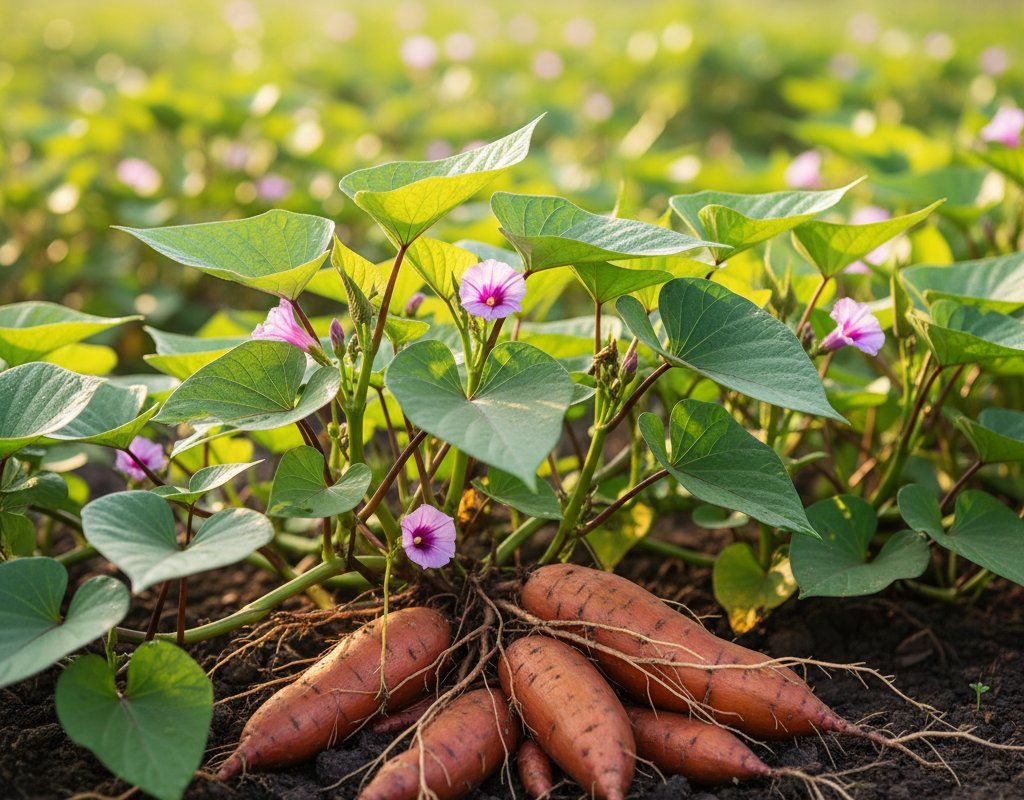
Sweet Potato in Zone 6B — Great Plains
Ipomoea batatas · Your Complete 2026 Planting Guide
Ideal Time: Start Seeds Indoors!
This is the perfect time for the biggest, best harvest.
Start Seeds Now
- Start seeds in trays or pots with seed-starting mix
- Keep soil moist and warm (70-80°F)
- Transplant outdoors Early to late May
Not Starting from Seed?
Buy starts around May 1 — that works great too!
How to Plant Sweet Potato in Zone 6B — Great Plains
Here are all your options for getting sweet potato in the ground, from the easiest method to more advanced approaches.
Buy Starts
RecommendedEarly to late May
around May 1
Plant purchased starts after last frost (April 10).
Plant slips (rooted sprouts) after soil is warm. Buy slips or grow your own from a sweet potato.
Start Seeds Indoors
Works WellLate February through mid March
around March 6
Then transplant: Early to late May
Start seeds 8-10 weeks before transplanting outdoors.
Direct Sow Seeds
ChallengingDirect sowing is not typical for Sweet Potato.
Transplant Outdoors
Timing InfoEarly to late May
around May 1
Wait until nighttime temperatures stay above 50°F.
Plan to transplant within a few weeks of your target date.
Overview
Sweet potatoes thrive in our Great Plains heat and offer something special that regular potatoes can't match — rich, sweet tubers that store beautifully through winter. They're surprisingly well-suited to our intense summer sunshine and actually prefer our hot, dry conditions once established. The satisfaction of digging up these orange treasures in fall makes the wait worthwhile, especially when you taste the difference from anything you'll find in stores.
Growing sweet potatoes here does require some planning around our variable spring weather and that late October frost deadline. With our 198-day growing season, you'll need to start slips early and transplant when soil warms reliably. The timing feels tight at first, but sweet potatoes actually appreciate our summer heat once they're established — it's what makes those tubers so sweet.
Starting Seeds Indoors
Most Great Plains gardeners buy sweet potato slips rather than starting from seed, but you can grow your own slips from last year's tubers. Start this process in late February through mid-March, placing a sweet potato half-submerged in water in a warm, sunny spot. Sprouts will emerge from the potato within 3-4 weeks.
Once sprouts reach 4-6 inches tall, twist them off gently and root them in water for another week before potting up. Use seed-starting mix in small pots and keep them warm — sweet potatoes need consistent warmth to thrive. Bottom watering works best to prevent stem rot, which can be a problem with these tender starts.
Our variable spring weather makes indoor slip production especially valuable since you control the timing. Commercial slips often arrive at inconvenient moments when we're still getting those last cold snaps that can set everything back.
Transplanting Outdoors
Sweet potato slips go out in early to late May, once soil temperature stays above 60°F and night temperatures hold steady above 50°F. This timing coincides with our last frost period, but sweet potatoes are so frost-tender that even a light brush of cold air will damage them. Wait for those warm, settled conditions that feel like summer has truly arrived.
Harden off your slips gradually over a week — our Plains wind can shock tender plants quickly. Start with just an hour outdoors in a protected spot, building up to full exposure. Plant slips 12-18 inches apart in rows, burying two-thirds of the stem including several leaf nodes. This deep planting helps establish a strong root system.
Choose a spot with wind protection if possible, especially for the first few weeks while slips establish. A south-facing location near a fence or building works well. The combination of wind protection and reflected heat from structures actually benefits these heat-loving plants in our climate.
Watering Sweet Potato in Zone 6B (Great Plains)
Sweet potatoes need regular watering during their first month while establishing, then become remarkably drought-tolerant — perfect for our variable Plains rainfall. Give them about an inch of water weekly through early summer, checking soil moisture 2 inches down with your finger. If it's dry at that depth, it's time to water.
Once established by mid-July, sweet potatoes can handle our dry spells better than most garden crops. They'll actually develop sweeter tubers with moderate moisture stress. During typical Plains summers with 93°F days, you might only need to water every 10-14 days if you have decent Prairie soil that holds moisture well.
Water at the base of plants rather than overhead — our low-to-moderate humidity means leaves dry quickly, but focused watering builds a deeper root system. Sweet potatoes spread their vines wide, so soaker hoses work particularly well for covering the growing area efficiently.
Reduce watering significantly 3-4 weeks before your planned harvest in late September. This helps concentrate sugars in the tubers and prevents them from becoming watery. Watch for signs of overwatering like yellowing leaves or soft stems, which can happen if we get heavy late-summer rains.
🧪Fertilizing Sweet Potato
Feeding Schedule
Organic Fertilizer Options
Harvest Time
Sweet potatoes are ready for digging from early August through mid-September in our zone, typically after 100 days from transplanting. Unlike regular potatoes, you can't judge ripeness by the plant's appearance — sweet potato vines stay green until frost kills them. The best indicator is simply counting days and testing a hill or two.
Dig carefully with a spading fork, starting well away from the plant center to avoid piercing tubers. Sweet potatoes can grow surprisingly far from the original plant, sending runners out 3-4 feet in all directions. The tubers bruise easily, so handle them gently and brush off soil rather than washing immediately.
You must harvest before our first frost in late October — even a light freeze will damage the tubers and ruin their storage quality. If frost threatens unexpectedly, prioritize getting sweet potatoes out of the ground over other crops. Damaged sweet potatoes rot quickly and can spoil an entire storage batch.
After digging, cure sweet potatoes in a warm (80-85°F), humid location for 1-2 weeks. A garage or basement room works if you can maintain temperature and add humidity with wet towels. This curing process converts starches to sugars and thickens the skin for better storage — it's what makes sweet potatoes taste sweet rather than starchy.
Common Problems in Zone 6B (Great Plains)
Sweet Potato Weevils Small, dark beetles that bore into tubers, leaving tiny holes and brown tunnels throughout the flesh. Adult weevils lay eggs on exposed tubers or stems, and larvae tunnel through the sweet potato, making it inedible. These pests thrive in our hot Plains summers and can overwinter in stored tubers.
Keep tubers completely covered with soil throughout the growing season — even brief exposure invites egg-laying. Remove any cracked or damaged sweet potatoes immediately since weevils target these first. Clean up all plant debris after harvest and rotate sweet potato plantings to different areas each year.
Wireworms Thin, yellowish-brown larvae that bore perfectly round holes into sweet potato tubers, often multiple holes per tuber. These are click beetle larvae that live in soil for several years, particularly common in areas that were recently in grass or prairie. Our Plains soils, especially those converted from grassland, often harbor significant wireworm populations.
Avoid planting sweet potatoes in areas that were lawn or pasture within the past 3-4 years. Till soil deeply in fall to expose larvae to winter cold and predators. Potato pieces buried in spring can serve as trap crops — dig them up after 2-3 weeks to check wireworm levels before planting.
Cracking Sweet potato tubers split open with deep cracks that expose the flesh to rot and pest damage. Unlike tomato cracking, sweet potato splits are usually lengthwise along the tuber. This happens when heavy rainfall or irrigation follows a dry period, causing rapid water uptake that the tuber skin can't accommodate.
Maintain consistent soil moisture through mulching and regular but moderate watering. Our variable Plains rainfall makes this challenging, so focus on deep, infrequent watering rather than frequent light applications. Harvest promptly when tubers reach maturity rather than leaving them in the ground through unpredictable fall weather patterns.
Great Plains Specific Challenges Our combination of intense heat, low humidity, and variable rainfall actually favors sweet potato production once you understand the timing. The main challenge is getting slips established before summer heat peaks, then managing the harvest timing around our often-sudden first frosts in late October.
Best Companions for Sweet Potato
Plant these nearby for healthier Sweet Potato and better harvests.


Keep Away From
Companion Planting Details
Sweet potatoes work well in traditional "Three Sisters" plantings with beans and corn, where the sweet potato vines serve as living mulch while beans fix nitrogen that benefits all three crops. The sprawling sweet potato vines also help suppress weeds in corn rows, valuable in our windy conditions where loose mulch often blows away. Plant corn first, then sweet potatoes 2-3 weeks later when soil warms, followed by beans.
Avoid planting sweet potatoes near other root crops like regular potatoes or carrots, mainly for harvest convenience rather than any true incompatibility. The extensive sweet potato vine spread makes it difficult to dig other root crops without disturbing the sweet potato runners. Give sweet potatoes their own dedicated space where those spreading vines can ramble freely without interfering with other garden maintenance.
🌸Best Flowers to Plant with Sweet Potato
These flowers protect your Sweet Potato from pests and attract pollinators for better harvests.
For Pest Control




Get a Reminder When It's Time to Plant
We'll email you when key planting windows open for your zone.