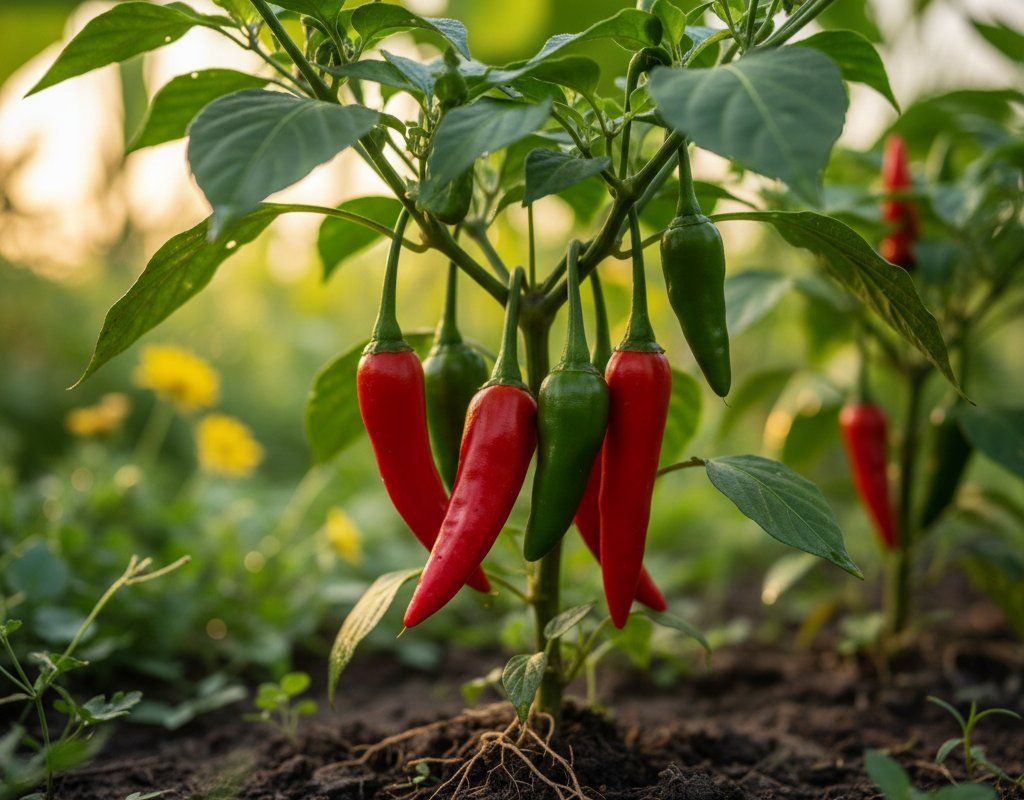
Thai Chili in Zone 9B — Florida
Capsicum annuum 'Thai Dragon' · Your Complete 2026 Planting Guide
Check Planting Details Below
See the full planting guide for timing information.
How to Plant Thai Chili in Zone 9B — Florida
Here are all your options for getting thai chili in the ground, from the easiest method to more advanced approaches.
Start Seeds Indoors
RecommendedEarly to late December
around December 9
Then transplant: Early February through early March
Start seeds 8-10 weeks before transplanting outdoors.
Buy Starts
Works WellEarly February through early March
around February 3
Plant purchased starts after last frost (January 20).
Direct Sow Seeds
ChallengingDirect sowing is not typical for Thai Chili.
Transplant Outdoors
Timing InfoEarly February through early March
around February 3
Wait until nighttime temperatures stay above 50°F.
You have a nice window — no need to rush.
Overview
Thai Chili peppers are a must-grow for any Florida gardener who loves a little heat. These compact plants pack a punch, adding a fiery kick to everything from stir-fries to salsas. Plus, they thrive in containers, making them perfect for patios and balconies, and their ornamental value means they look great while they're producing.
Our Florida gardening calendar is different; summer is the slow season. While the extreme humidity and potential for fungal diseases might seem daunting, timing your Thai Chili crop right allows you to enjoy a bountiful harvest during our extended growing season (344 days!). By starting seeds indoors and transplanting at the right time, you can avoid the worst of the summer heat and humidity, setting yourself up for success.
Starting Seeds Indoors
Starting your Thai Chili seeds indoors is the way to go here in Florida. We aim to get a head start so the plants are ready to take off once the weather cooperates. Start your seeds indoors from early to late December, giving them about 8 weeks to develop before transplanting.
Use seed trays with a good seed-starting mix. Keep them warm (a heat mat helps) and provide plenty of light – a grow light is ideal. Remember, our spring character is reversed. We're trying to get a jump on the warm weather, not avoid a late frost.
Don't forget to water from the bottom! Place the seed trays in a shallow tray of water and let the soil soak it up. This prevents damping-off, a common problem in our humid climate.
Transplanting Outdoors
Transplant your Thai Chili seedlings outdoors from early February through early March. This gives them plenty of time to mature before the intense summer heat arrives.
Before transplanting, harden off your seedlings. Gradually expose them to outdoor conditions for about a week, increasing the amount of time each day. This helps them adjust to the sun and wind, preventing transplant shock.
Plant them 18-24 inches apart in well-draining soil. Even though our winters are mild, watch out for unexpected cool snaps, especially in early February. A frost blanket can be a lifesaver.
Watering Thai Chili in Zone 9B (Florida)
Thai Chili peppers need consistent moisture, but they don't like to be waterlogged, especially with our humidity. "Moderate" is the key. During our drier spring (late February through May), water deeply once or twice a week, providing about 1 inch of water each time. Stick your finger about 2 inches deep into the soil; if it feels dry, it's time to water.
In the wet summer months (June through September), you might not need to water at all, unless you're growing in containers. Our rainfall is often sufficient. However, be sure to check the soil moisture regularly. Always water at the base of the plant to avoid wetting the foliage, which can encourage fungal diseases in our humid climate.
Signs of underwatering include wilting leaves and slow growth. Overwatering can lead to yellowing leaves and root rot. A good layer of mulch, like pine straw or wood chips, can help retain moisture in the soil and suppress weeds, which is especially helpful during our hot, dry spells.
Supporting Your Thai Chili
Thai Chili plants are relatively compact, but they can become top-heavy when loaded with peppers. Giving them some support is a good idea, especially if you live in an area prone to strong winds or hurricanes.
A small stake or tomato cage works well. Install the support at planting time to avoid damaging the roots later. Gently tie the main stem to the stake with soft twine as the plant grows.
These plants are prolific producers, so the extra support will help prevent branches from breaking under the weight of the peppers.
Pruning & Maintaining Thai Chili
Pruning Thai Chili peppers is minimal, but a little attention can encourage bushier growth and more peppers. Pinch off any early flowers that appear before the plant is well-established. This directs the plant's energy into developing a strong root system and foliage.
Throughout the season, you can also remove any yellowing or dead leaves. As the first frost approaches in late December, you can cut the plant back to encourage new growth if you plan to overwinter it indoors.
Thai Chili peppers are ornamental as well as edible, so feel free to prune them to maintain a desired shape.
🧪Fertilizing Thai Chili
Feeding Schedule
Organic Fertilizer Options
Harvest Time
You can expect your first harvest of Thai Chili peppers from late April through mid June, about 80 days after transplanting. The peppers are ready to harvest when they turn from green to bright red. They point upwards on the plant, which adds to their ornamental appeal.
Use scissors or pruning shears to cut the peppers from the plant, leaving a small stem attached. This helps prevent damage to the plant and encourages continued production. Harvest regularly to encourage more peppers to develop.
Even as late December approaches, you may still have peppers on the plant. If frost threatens, harvest any remaining peppers, even if they are still green. They will ripen indoors if placed in a paper bag with a ripe banana or apple.
Common Problems in Zone 9B (Florida)
Here in Florida, we face a few common problems when growing Thai Chili peppers:
Aphids:
- What it looks like: Clusters of tiny green, black, or white insects on stems and leaf undersides. Sticky honeydew residue and curled or distorted new growth.
- What causes it: Rapid-reproducing sap-sucking insects that thrive in warm weather. Ant colonies may farm them for honeydew.
- How to fix/prevent it: Strong water spray to knock them off. Encourage ladybugs and lacewings. Insecticidal soap for heavy infestations. Neem oil works systemically. Avoid excess nitrogen fertilizer.
Blossom Drop in Heat:
- What it looks like: Flowers fall off the plant without setting fruit.
- What causes it: High temperatures (above 90°F) and high humidity interfere with pollination.
- How to fix/prevent it: Provide afternoon shade during the hottest part of the day. Ensure adequate watering. Hand-pollinate flowers in the early morning. Choose heat-tolerant varieties.
Spider Mites:
- What it looks like: Fine stippling on leaves (tiny white dots). Fine webbing on leaf undersides and between stems. Leaves turn bronze or yellow.
- What causes it: Tiny arachnids that thrive in hot, dry conditions. Populations explode in drought stress.
- How to fix/prevent it: Strong water spray (daily for a week) is the best treatment. Increase humidity around plants. Neem oil or insecticidal soap. Release predatory mites. Avoid broad-spectrum pesticides that kill predators.
Florida Specific Challenges: Our hot, humid summers and wet-summer rainfall can create ideal conditions for fungal diseases, so make sure to provide good air circulation around your plants and avoid overhead watering. Nematodes can also be a problem in our sandy soil, so consider growing in containers or using nematode-resistant varieties.
Best Companions for Thai Chili
Plant these nearby for healthier Thai Chili and better harvests.




Keep Away From

Companion Planting Details
Companion planting can be a great way to improve the health and productivity of your Thai Chili peppers. Tomatoes are excellent companions because they share similar growing requirements and can help deter pests. Basil is another great choice, as it repels aphids and other insects.
Carrots and onions are also beneficial companions, as they help to loosen the soil and deter nematodes. Avoid planting fennel near Thai Chili peppers, as it can inhibit their growth. Brassicas, like cabbage and broccoli, can also compete for nutrients and attract pests that can harm your peppers.
🌸Best Flowers to Plant with Thai Chili
These flowers protect your Thai Chili from pests and attract pollinators for better harvests.
For Pest Control


For Pollinators


Get a Reminder When It's Time to Plant
We'll email you when key planting windows open for your zone.