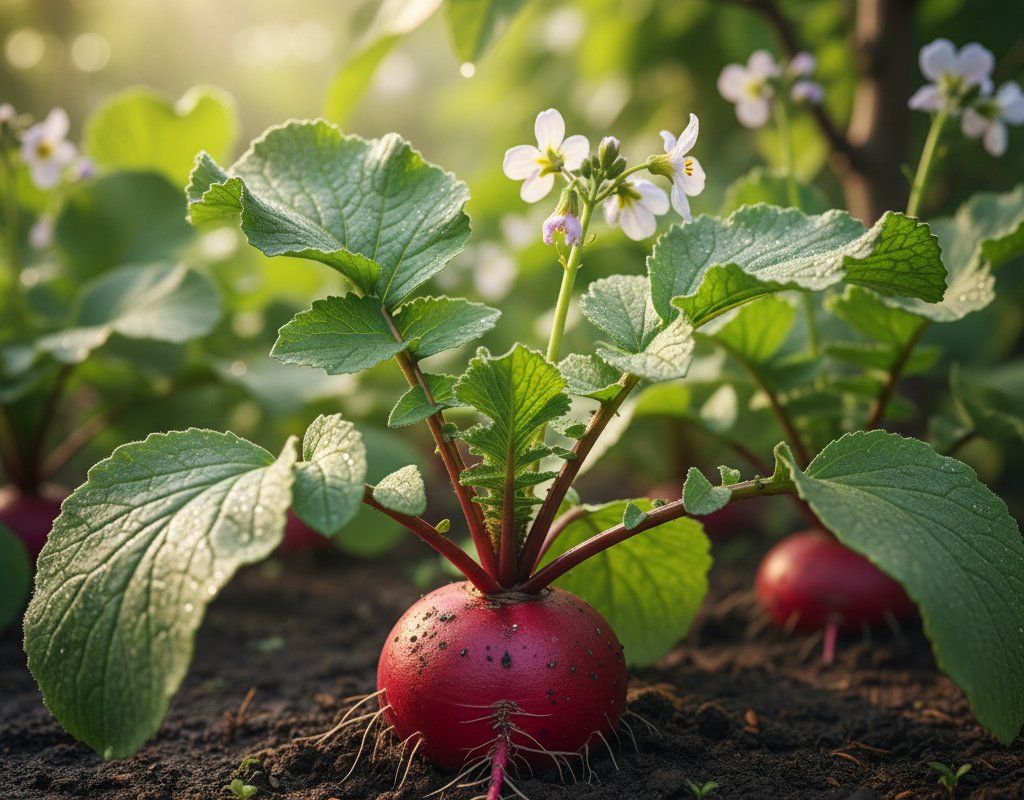
Radish in Zone 3A — Mountain West
Raphanus sativus · Your Complete 2026 Planting Guide
Planning Ahead — Great!
You’re ahead of the season. Here’s when to start.
Mark Your Calendar
How to Plant Radish in Zone 3A — Mountain West
Here are all your options for getting radish in the ground, from the easiest method to more advanced approaches.
Direct Sow Seeds
RecommendedEarly May through late July
around May 4
Consider succession planting every 2-3 weeks for continuous harvest.
Fast-growing and easy. No reason to start indoors.
Buy Starts
Works WellEarly May through mid June
around May 4
Plant purchased starts after last frost (June 1).
Start Seeds Indoors
ChallengingThis plant is typically not started indoors.
Transplant Outdoors
Timing InfoEarly May through mid June
around May 4
Can tolerate light frost, but wait for soil to be workable.
You have a nice window — no need to rush.
Fall Planting
Mid July through early August
July 25 ideal · Direct sow for fall harvest
Plant a second crop in mid-summer for fall harvest. Radish actually prefers the cooling temperatures of fall.
Overview
Radishes are the perfect confidence booster for Mountain West gardens, delivering crisp, peppery roots in just 25 days from seed to harvest. In our short 96-day growing season, these quick producers let you squeeze in multiple plantings between last frost in early June and first frost in early September. Our cool nights actually improve their flavor, preventing the woody, overly hot roots that plague gardeners in warmer regions.
Don't let our challenging high-altitude conditions intimidate you with radishes. While our intense UV and alkaline soil can stress many crops, radishes are surprisingly adaptable and actually benefit from our cool nights and moderate summer temperatures. The key is understanding our unique timing windows and keeping them consistently watered in our dry climate.
Transplanting Outdoors
While radishes can be transplanted, it's rarely worth the effort given how quickly they grow from seed. If you do choose to transplant, you can move seedlings outdoors from early May through mid June, once soil temperatures reach 45°F and nighttime lows stay above 25°F consistently.
Harden off transplants for a full week, gradually increasing their outdoor exposure. Start with 2-3 hours of morning sun, then build up to full days outdoors. This helps them adjust to our intense UV and temperature swings.
Space transplants 2-4 inches apart in rows or blocks. Be gentle with the taproot during planting - any damage will result in forked or stunted roots. Given our unpredictable late spring weather patterns, keep row covers handy to protect from unexpected temperature drops or hail.
Direct Sowing
Direct sowing is absolutely the way to go with radishes in the Mountain West. You can sow seeds from early May through late July, giving you multiple harvests throughout our growing season. Wait until soil temperature reaches 45°F - usually by early to mid-May at our altitude.
Prepare your planting area by working compost into the soil, which helps with both drainage and moisture retention in our dry climate. Our naturally alkaline soil is actually fine for radishes, though adding organic matter never hurts. Plant seeds ½ inch deep and space them 2-4 inches apart, or scatter-sow and thin later.
The beauty of radishes is their speed - you'll see germination in 4-7 days and harvest in just 25 days. This makes them perfect for succession planting every 2-3 weeks through mid-July. Skip starting them indoors; direct sowing is faster and avoids transplant shock that can cause root problems.
Watering Radish in Zone 3A (Mountain West)
Consistent moisture is absolutely critical for radishes in our dry Mountain climate. Unlike gardeners in humid regions who might get away with irregular watering, our low humidity and 10-20 inches of annual rainfall mean you'll need to water regularly throughout the growing season. Aim for about 1 inch of water per week, including any rainfall.
Check soil moisture using the finger test - stick your finger 2 inches down into the soil. If it's dry at that depth, it's time to water. In our intense sun and low humidity, this usually means watering every 2-3 days during peak summer. Water stress is radishes' worst enemy, turning crisp, mild roots into woody, fiery-hot disappointments.
Water at soil level rather than overhead to maximize efficiency in our dry air. Soaker hoses or drip irrigation work well, or simply water slowly at the base of plants. Morning watering allows plants to absorb moisture before our intense afternoon sun hits. Watch for wilting leaves (underwatering) or yellowing, mushy roots (overwatering).
A thin layer of straw mulch helps retain soil moisture and keeps roots cool during our warm afternoons. Don't mulch too heavily though - radishes prefer slightly cooler soil than many crops, and our cool nights provide natural temperature relief.
🧪Fertilizing Radish
Feeding Schedule
Organic Fertilizer Options
Harvest Time
Your first radishes will be ready from late May through mid-September, depending on planting date. With our 96-day growing season, you can easily fit in 3-4 successive plantings by sowing every few weeks through mid-July. Look for the shoulders of spring radishes to push above the soil surface when they're about 1 inch in diameter.
Pull radishes promptly when mature - they don't hold well in the ground like some root crops. In our intense sun and dry conditions, overripe radishes quickly become woody and unpleasantly hot. Test-harvest one or two first to check size and flavor before pulling the whole crop.
Harvest by grasping the leaves close to the root and pulling straight up with a gentle twisting motion. If the soil is compacted, loosen it first with a fork to avoid breaking roots. Morning harvest gives you the crispest roots, as they'll have absorbed maximum moisture from overnight watering or dew.
As first frost approaches in early September, harvest any remaining radishes regardless of size. They won't survive our sudden temperature drops, and even small radishes are perfectly edible. Unlike tomatoes, radishes won't continue ripening after harvest, so what you see is what you get.
Common Problems in Zone 3A (Mountain West)
Flea Beetles Small round holes pepering the leaves like shotgun damage signal flea beetles - tiny dark beetles that jump when disturbed. You'll see the most damage on young seedlings, which can be stunted or killed by heavy feeding. These pests thrive in our warm, dry conditions and can be particularly troublesome during late spring warm spells. Use lightweight row covers over newly planted seeds and seedlings, removing them once plants are established. Interplanting with basil or catnip helps repel them naturally, and healthy plants usually outgrow the damage quickly.
Root Maggots Stunted growth and wilting plants may indicate root maggots - small white larvae that tunnel into radish roots, creating brown scarring and entry points for rot. These are worse in cool, wet spring conditions, which we occasionally get despite our generally dry climate. The adult flies lay eggs at the soil surface near plant stems. Prevent problems by using row covers during egg-laying period in late spring, rotating crops yearly, and avoiding fresh manure which attracts the flies. Yellow sticky traps can help monitor adult fly activity.
Pithy Roots Hard, woody, or hollow radish centers indicate pithy roots - usually caused by inconsistent watering or leaving them in the ground too long. This is especially common in our dry climate when gardeners underwater or water irregularly. Our intense sun can also stress plants and accelerate this problem. Maintain consistent soil moisture, harvest promptly when mature, and consider light shade cloth during the hottest part of summer if this becomes a recurring issue.
Mountain West Specific Challenges Our alkaline soil, intense UV, and dramatic temperature swings between day and night can stress radishes if not managed properly. The low humidity means plants lose moisture quickly, making consistent watering even more critical than in other regions. Fortunately, our naturally cool nights help prevent many heat-stress problems that plague gardeners at lower elevations.
Best Companions for Radish
Plant these nearby for healthier Radish and better harvests.


Keep Away From
Companion Planting Details
Radishes make excellent companions for slower-growing crops in Mountain gardens. Plant them with carrots - radishes break up compacted soil and are harvested before carrots need the space. They also pair well with lettuce and other greens, providing natural pest deterrence while making efficient use of space in our short growing season. Peas and radishes work particularly well together since both prefer our cool spring conditions.
Avoid planting radishes near hyssop, which can inhibit their growth through allelopathic compounds. In our challenging growing conditions, radishes need every advantage they can get, so skip any potentially problematic companions. The fast-growing nature of radishes means you can tuck them into spaces between larger plants like cucumbers, giving you a quick harvest while the cukes establish themselves.
🌸Best Flowers to Plant with Radish
These flowers protect your Radish from pests and attract pollinators for better harvests.



Get a Reminder When It's Time to Plant
We'll email you when key planting windows open for your zone.